Posted in Big Democracy

February 2, 2016

Micro-inclusion: A small step to include someone

Since the origins of this country we have been embedded in a belief about the hierarchy of human value, a belief that some lives are more important than others. Two examples of this clearly expressed are racism and sexism. As long as this belief system persists, it will undermine democracy.  One way it shows up is as microaggressions, those little bitty acts that say to someone, “you don’t belong, you can’t be trusted, you’re less-than”. It’s a message a black man gets crossing the street in front of a car when people lock their doors. Or the catcalls a woman gets walking down the street. Brain scientists are teaching us that these types of aggressions are deeply wired in our brain and to change them we actually have to change the experiences that people have.

An antidote to microaggressions are micro-inclusions. These are little symbolic actions that force us to recall our humanity. They’re acts of humanity that signal to those at the margins they are included.

Micro-Inclusions_Definition-SocialMediaGraphic_Final

Read More

4 Comments
January 13, 2016

Democracy from the Margins

Ceasar McDowell at TEDx Indiana University 

“We can create a public that includes us all, and together bring in a new form of democracy.” -Ceasar McDowell #BigDemocracy

FOR IMMEDIATE RELEASE

IISC President Ceasar McDowell brought Big Democracy to TEDx Indiana University on November 13, 2015. The talk explores how disconnections in narrative, communications, and design stand in the way of democracy and what today’s global social movements are doing to repair these connections. McDowell articulates that we are in a new era called Big Democracy, one which can hold the diversity and complexity of people in the world.

McDowell calls on the audience of 4,000 to begin the change today by practicing a micro-inclusion, or small way to show someone “you’re included, I can see you’re there.”

The talk closed a powerful evening of speakers around the theme “Eyes on the Stars, Feet on the Ground.” Thanks to everyone at TEDx Indiana University for the invitation to speak and for an incredibly well-produced event.

Read More

1 Comment
January 13, 2016

The Work of Community Reflection

The Ikeda Center Podcast is releasing an interview series with Ceasar McDowell.

Listen here

In the first of this three part interview with Dr. Ceasar McDowell, he describes the central focus of his work in the development of community knowledge systems and civic engagement.  He also shares some examples of how that focus has manifested.  In his words, “I can boil it down to one thing. My work, my research interests, my life, is about voice. And particularly how people—and specifically the people who are at the margins of society–are able to both name their experience in the world, have that naming be recognized, and also open themselves up to the experience of others.”

Leave a comment
December 16, 2015

Courageous Race Conversations Shift Justice System

Our eyes met and locked a split second after we noticed the feet of two young men sitting next to each other in the circle – both had a pant leg rolled up to show an ankle monitor. In the same circle, sat two sheriffs with guns and tasers strapped to their hips and covered by their untucked shirts. It was day three of our training, Moving Forward in Addressing Race, Power and Privilege, and we were now harvesting the fruits of many hours of challenging mental, emotional and spiritual work.

“I have learned to see that not all police officers are rude and mean,” shared a 14 year-old Latina girl. “I have learned that some officers care about me and want to be fair; this is the first time I’ve been in a space where I felt heard by adults (in the system).” 

Having law enforcement at the table with an openness to change is important. Systems are made up of individuals. Individuals centered on equity values and skilled in moving policy forward, in partnership with multi-sector networks towards common goals, can create long term change.

“I have gained sight and vision where before I was blind,” shared a white male law enforcement officer, “and I am willing to give what ever it takes personally and professionally to our cause.” 

This same individual had entered into the circle two days before carefully monitoring his every word, letting us know that he was stretching to understand what others were saying. This man’s perspective was literally transformed over the course of three days; it was an amazing shift to witness. Lifting the veil that usually hides the ways in which white people have benefitted from racism and other forms of oppression, as well as the ways that white people unintentionally reinforce discrimination and mistreatment can be shocking.

Why does confronting racism in the juvenile justice system matter?

  • The U.S. stands out in its use of youth incarceration. We incarcerate youth at higher rates than anywhere in the world: five times the rate of South Africa; 15 times the rate of Germany and 30 times the rate of Italy. With more than 75 percent of youth locked up for non-violent offenses, the U.S does not have an alarming crime problem; we have an alarming incarceration problem. And it’s a problem primarily for youth of color. We know that our current youth justice system is not equitable, excellent, or used sparingly and appropriately. Nearly 55,000 youth were incarcerated on any given night in 2013, most (87 percent) for non-violent offenses. The majority (66 percent) were youth of color. Nationwide, youth of color are significantly more likely to be incarcerated than White youth. In 2013:
    • Black youth were 4.6 times as likely;
    • Native American youth were 3.3 times as likely; and
    • Latino youth were 1.7 times as likely.[1]
  • An adolescent who has spent time in secure detention is far less likely to attain a high school diploma or consistently participate in the labor force in the future.[2]

When the youth of color created and performed a skit to illustrate the everyday harassment they face at the hands of police in this room full of adults, some of whom have a role in incarcerating them, all involved were transformed. The unfair treatment of people of color and at the hands of law enforcement is and has always been a life or death issue, and while public outcry lifting up this issue is important, finding ways to build bridges across this divide is even more crucial.

In our circle sat law enforcement, juvenile justice system-involved youth and parents, detention center and juvenile probation staff, non-profit leaders, leaders in the school district and staff from the district attorney’s office. We were all there with a single purpose, to decrease the disproportionate level of incarceration of African American, Native American and Latino youth. This was a crucial moment: a group of 30 people living and working in the same county with a rich diversity of perspectives, roles in the community and life experiences spent three whole days learning about the history and current manifestations of racism, listening to each other’s stories, and beginning to build a deeper level of trust.

“I hadn’t wanted to build relationships with the people in this group. I thought I could do the work with you and not necessarily like you. Many of us came to this table thinking that we were not playing a part in the negative impact we were having on youth. My biggest learning is that we need to have a level of trust and if we do not allow the education and vulnerability, we will not be open to own the part that each of us is playing in the dynamics of racial disparities. Without the relationship building and trust we can not move the work forward.” – Committee Chair

Nine months before this day, we met this group because they were in the midst of an intense racialized conflict between two leaders at this table, and the group’s long-time work had come to a halt. Years of tensions bubbling between “community” folks and “systems” people, between white folks and people of color, had risen to the point of ugly accusations and deep hurts. People who had been leading this work were seriously considering walking away.

How did the group get to this point? Years before, community stakeholders in this county formed a committee to address the overrepresentation of youth of color in their county’s juvenile justice system. New partners were asked to be part of that committee, including community stakeholders who had never been included in justice system reform. Traditional meeting locations and times at the courthouse were changed, and Judges, public defenders, prosecutors, juvenile probation and detention staff began going to meetings in the community, sometimes in the evenings, with youth and families who were directly impacted by the justice system. Although the disproportion of youth of color in the system was acknowledged by all, the initial strategies developed by the subcommittee for reducing that overrepresentation had limited impact and fell apart quickly. Furthermore, a lack of a common understanding of racial and ethnic disparities or agreed upon manner to communicate through hard conversations about racism had caused a divide between system stakeholders and community partners.

The dramatic shifts we saw the group take were rooted in the hard work by many people at this table and those that had supported them in the past. For five years they learned to work together as well as build cooperation across sectors. We supported the group to take a step back, rethink assumptions, account for the impact of their actions, and recommit to repairing relationships and backing up each others’ integrity and leadership. The stakeholders now have a renewed capacity to honor their commitment to the youth in their community, address institutional and structural racism together, and are in the process of implementing new practices within their Juvenile Probation Department informed by young people themselves.

“We talk about restorative justice for young people, but we also went through a restorative justice process ourselves. We are more able to have the difficult conversations about racism and I think this has shifted the power in the group. I feel I can bring my full self to the space now.” – Committee Chair

We, the trainers in this scenario, are two people who have devoted our lives to holding space for people to do the deep, challenging, and life-affirming work of understanding how racism operates and of actualizing a commitment to racial equity. As we led this training, it was not lost on us the vast differences we too were bridging. One of us is a formally undocumented immigrant who grew up in poverty and has been deeply targeted by oppression, and the other is a white person whose ancestors migrated to the U.S. with legal privileges from various parts of Europe in the 1600-1800s and has benefited from countless race and class-based advantages.

We are trained in different methodologies for leadership, collaboration and racial equity. One of us is a VISIONS Inc. trainer who has learned how to manage and support individuals to process and shift at personal and interpersonal levels while at the same time shift the culture and structure that lead to disparate racial outcomes. The other is a consultant and trainer at the Interaction Institute for Social Change who has supported groups that have a desire to do racial equity work but are unsure how to make it real. Many such groups have gone through an anti-racism training and then get stuck in a soup of spiraling emotions and an inability to translate the learning into action. Others have made some progress toward reducing racial disparities and are coming up against the roadblocks of cultural clashes that prevent a deeper level of cross-sector collaboration and change. Bringing the sets of tools both organizations have developed to a group that was ready to take their work to a new level of depth was the magic sauce that allowed for the incredible learning and shifts people experienced at this training.

“And now it’s time to get real again and roll up our sleeves, because [even though we have been working on this together for years already] this is just the beginning. There is still a tremendous lack of accountability in our system, a lack of consistency and practice. There are a few people in the entire system that get it – and so we got a long way to go. It is so refreshing and healing to be where we are now and we can take that medicine to keep going. The truth is that young people in our state are being mistreated. I am not going anywhere and neither is the institution we are trying to reconstruct. Language development, protocol, procedure, culture — all of that needs to be a continuous part of the work going forward.” – Committee Chair

During these three days, a few lessons about what it takes for this work to be successful became clear to us:

  • Break out of our silos – people from all parts of a system need to be at the table, including a critical mass of those most affected by the inequities (in this case that meant having more than one or two system-involved youth of color participate)
  • Take the time to build a shared understanding of what racism is, and how it operates at the internalized, interpersonal, institutional, structural and cultural levels as well as at the intersection of these
  • Make room for people to share their stories, and to show up as complex human beings (beyond job titles)
  • Create a space that allows people to show up with their minds, bodies, and spirits (an interactive learning environment that requires everyone to show up with vulnerability and openness is required; lectures and surface level activities don’t cut it)
  • Lean into disagreements and misunderstandings in order to build trust and a deeper level of collaboration, which makes the real work possible
  • Commit to the long-term nature of this work

In our country, images of young people of color being killed or harassed by law enforcement are commonplace. Growing numbers of youth and men of color in prison continue to skyrocket. As the Movement for Black Lives grows across the country, racial tensions simmer. People of color are afraid for their lives. White people are afraid to acknowledge the ways racism continues to define our country and to courageously and non-defensively do their part to undo racism. Bringing young people together with adults who work in the juvenile justice system and other adults that are part of extended ecosystems of support and contact is crucial to address the racial divide that has continued to divide our country and that has maintained the disparities that ultimately hurt us all.

What does it take for people of color, adults and youth to feel safe to fully speak about the negative impact of racism on their lives and for white folks and adults to hear this with out reacting defensively and sinking into guilt? What will it take for young people of color, those most affected by the juvenile justice system, to be seen as experts about the way racism plays out in the current system and about how to create a system where young people of color are not unduly punished for their mistakes, but treated like human beings?

About the Interaction Institute for Social Change: IISC increases the collaborative capacity of individuals, organizations, and institutions so they can find solutions to social problems. Over the past 25 years, we have developed a lens through which we facilitate social change and we bring it to every engagement. IISC invites groups and leaders to shift power dynamics, focus on building networks, and magnify love as a force for social change. Using this collaborative change lens, we see leaders overcome challenges and have astound-ing impact.

Never before have people with such varied histories been so intimately connected, whether because they live in a densely populated urban area or because they are linked online. Communities are struggling together with immense complex problems, from childcare to climate change. This makes being willing and able to facilitate meaningful discussions across differences one of the most important leadership skills of the 21st century.

Solving complex problems means understanding they have a systemic nature. Powerful leaders offer ways to investigate the root causes, in order to look for high leverage solutions and engage non-traditional allies.

IISC is building Big Democracy, the collaborative infrastructure to facilitate sustained engagement by leaders in their organizations and cities.  

About VISIONS Inc: Founded in 1984, VISIONS, Inc. (www.visions-inc.org)  is a non-profit training and consulting organization, specializing in diversity and inclusion. We have offices in Dorchester, MA; Rocky Mount, NC; and Fresno, CA; and are supported by our highly skilled and diverse team of consultants located throughout the United States and abroad. VISIONS mission is to:

  • equip individuals, organizations, and communities with the tools needed to thrive in a diverse world.
  • remove structural and cultural barriers that prevent full and equitable participation.
  • help create environments where differences are recognized, understood, appreciated, and utilized for the benefit of all.

We  realize this mission by implementing a time-tested, insight-driven, process model of  consulting and training that  supports  our clients in becoming catalysts for change and effectively engages all people in the deep, challenging, and rewarding work of authentic inclusion, personally and within their organizations and communities.

[1] The W. Haywood Burns Institute for Juvenile Justice Fairness and Equity, http://data.burnsinstitute.org/about

[2] The Sentencing Project,  http://www.sentencingproject.org/doc/publications/jj_Disproportionate%20Minority%20Contact.pdf

1 Comment
December 11, 2015

Design, Development, and Democracy

FOR IMMEDIATE RELEASE

Today community activists, designers, planners, and public officials convene for a day-long event, Design, Development, and Democracy. They are called to imagine connected, democratically-driven design and development processes that can expand and deepen our democracy.

“It is important that we recognize city planning decisions as democracy opportunities,” said IISC President, Ceasar McDowell. “These decisions are not now, and never have been, separate from political matters.”

Cities are complex places where competing interests influence quality of life. To build just and resilient cities, people across sectors—not only planners—must influence decisions related to the built environment, community health and interconnected social issues.

That is why IISC has joined with Sasaki Associates, MIT’s Dept. of Urban Studies and Planning, the Boston Society of Architects, and Harvard University Graduate school of Design to host Design, Development, and Democracy (DDD) at the Bruce C. Bolling building in Roxbury.
DDD

Read More

Leave a comment
October 22, 2015

Moving From Inclusion to Collaborative Solidarity

“If you have come here to help me, you are wasting your time. But if you have come because your liberation is bound up with mine, then let us work together.”

Lilla Watson
platform

http://movementnetlab.org/new-platform-statement/

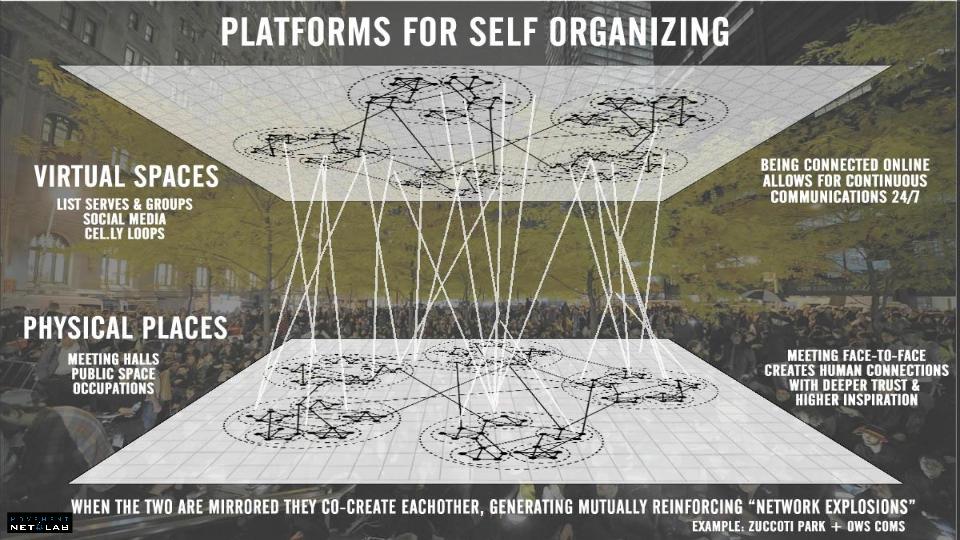
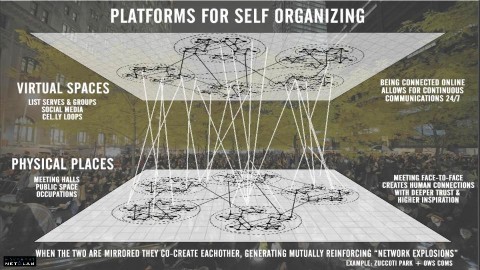
Last week I attended a gathering of network funders and practitioners in Oakland, CA hosted by Leadership Learning Community. Surrounded by so many bright lights, it was hard to get enough of any given individual or conversation. That said, one interaction that continues to stick out for me occurred with Allen Kwabena Frimpong and June Holley of Movement Netlab. Allen, June and I share an interest in supporting collaborative platforms (virtual and in-person) that can help to facilitate resource movement and exchanges of all kinds among diverse actors for the benefit of structural change. Read More

5 Comments
October 10, 2015

Big Democracy at TedX Hamilton

FOR IMMEDIATE RELEASE

Ceasar McDowell Speaks at TedX Event from 3-6PM EST on October 10.

See the TedX presentation here.

Hamilton College has produced a TedX to remember, with speakers united under the theme “Curiosity and Creativity Uninhibited.” It was an honor for IISC President Ceasar McDowell to be invited, and supported by Hamilton student Chidera Onyeiziri.

Ceasar’s talk is entitled, “Big Democracy: A Fundamental Shift.” See him open with the vastness of wonder that exists in the universe, literally displaying a photographic representation of the Big Bang. He then presents the comparison to the Human Universe with its constellation of different races, ethnicities, languages, sexual orientations, and belief systems. So while the complexity of the universe inspires, the complexity of the Human Universe feels daunting.”

His answer to help us see and understand the complexity of the human universe is Big Democracy. Ceasar describes the artifacts democracy produces and interactions needed for an equitable society. He invites we frame our collective agenda using inquiry, explores why we need to design for the margins, and shares his latest idea for inter-personal change: micro-inclusions.

The talk calls on the audience to acknowledge the choice-point we are at as a society, and to imagine a new series of actions and interactions for social change.
GoBoston_2

1 Comment
May 5, 2015

This Is What Democracy Looks Like

We’ve heard this call and response chant echo down boulevards from St Louis to Baltimore as the #BlackLivesMatter movement takes to the streets. This is what democracy looks like, when the people most affected by a situation organize for change. They call out to us from the streets to remind us that democracy is not about the mechanics for voting for representation.

We don’t all have to march in the streets to use our power and privilege to push for a more just society. I received a copy of a wonderful letter last night. A friend who lives in Baltimore was deeply disturbed by a video that appears to show a Baltimore city police officer violently assaulting a man from behind, even though his hands are raised in surrender. Read More

1 Comment
March 19, 2015

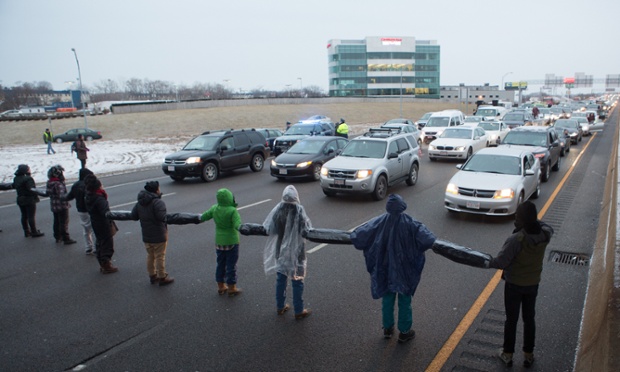
Big Democracy and Protest

Image credit: The Guardian

Here is the fact: one segment of the population suffers daily humiliation from the sanctioned authorities. These humiliations too often lead to the most tragic of outcomes – murder by police. Another segment of the population, a much larger and dominant segment, does not have any direct experience of this sort of injustice. So they deny that it exists or that really matters that much. And here is where we find ourselves. Read More

Leave a comment
February 4, 2015

What’s Your Question Truck

The most unique feature of the Go Boston 2030 Question Campaign is happening: a glass truck is collecting questions in Boston’s neighborhoods, making two stops a day through Feb. 7. To find the truck in your neighborhood, visit GoBoston2030.org.
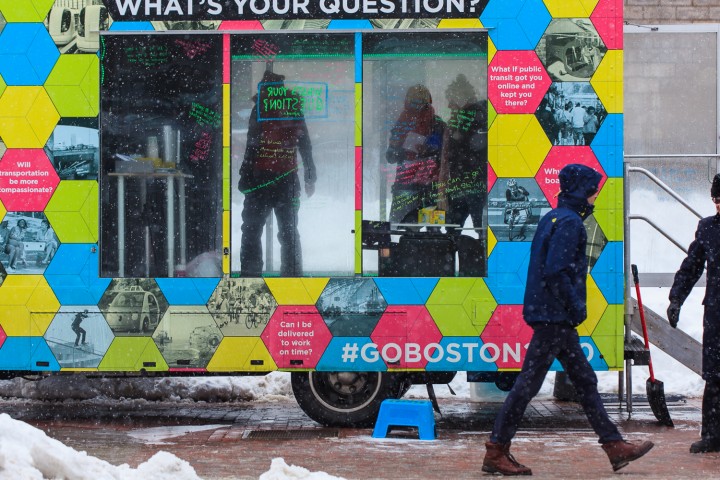
goboston2030_739The Mayor’s office announced the What’s Your Question truck and it debuted at City Hall Plaza. 

“The Go Boston 2030 initiative is using the latest technology and real grass roots activity to achieve an unprecedented level of community engagement. We’re hearing directly from a broad group of people about what their needs and hopes are for Boston’s transportation future,” said Mayor Walsh. “Together, through this initiative, the public and city officials will build a bold and innovative plan that will improve mobility for residents, commuters, and visitors.”

Read More

3 Comments
January 28, 2015

What’s Your Question?

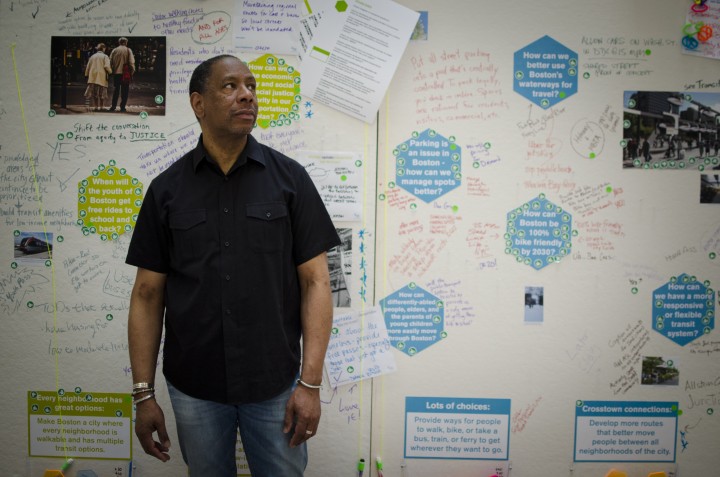
This summer my daughter and I collected questions for Go Boston 2030 at an event in Roxbury. We walked up to people and asked them, what’s your question about getting around Boston in the future? It usually takes folks a minute to orient themselves to what they have just been asked. “So, you want a question?” Yes! Questions open up possibilities and thoughtful consideration – and that is why they are the starting point for Go Boston 2030.
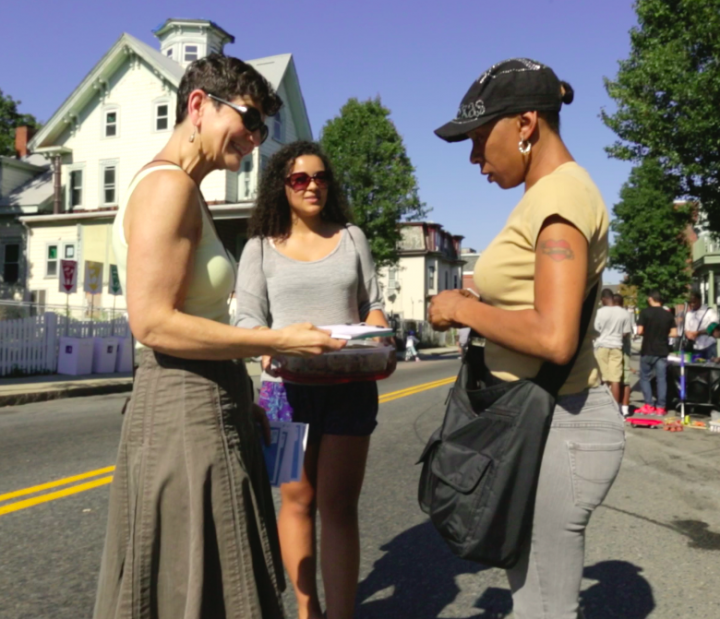
Andrea_openStreets

GoBoston2030 is a visioning initiative, led by Mayor Marty Walsh and the Boston Transportation Department. The project will inspire a bold transportation future for the city in the next 10-15 years, grounded in commitments to equity, environment and economy as well as driven by an unprecedented public engagement process. As a  partner to the city in this, IISC designed and launched a Question Campaign which is a communication and engagement strategy. The Question Campaign promotes the practice of asking questions and sharing stories of mobility and transportation to engage the creativity and ideas of all people in Boston, with particular attention to the the margins of society, those traditionally excluded. Read More

Leave a comment