October 29, 2014
Take a look at some of the groups, initiatives, and blogs that are catching our attention these days!
Center for Whole Communities is a land-based leadership development organization that nurtures multi-disciplinary responses to challenges such as climate change and building economically competitive and equitable communities. at the same time, CWC’s leadership programs directly confront the fragmentation that exists in American society around politics, race, class and privilege.
The nationally recognized Rockwood Leadership Institute specializes in delivering the best practices and methodologies in leadership development to the nonprofit community. Rockwood has a vision of thousands of inspired social change agents trained in partnership, communication, conflict resolution, team building, planning and producing powerful results; and thousands of nonprofit organizations endowed with the skill and heart to bring out the best in their people, collaborate effectively with allies of all kinds and produce lasting change.
The Kirwan Institute partners with people, communities, and institutions worldwide to think about, talk about, and engage issues of race and ethnicity in ways that create and expand opportunity for all. Through interdisciplinary research and other working partnerships, the Institute aims to deepen the understanding of the causes and consequences of racial and ethnic disparities, in order to stimulate change to bring about a society that is fair and just for all people.
Movement Strategy Center. Throughout history, social movements have brought about the most significant changes for racial, economic and gender justice. It has been the actions of people most impacted by injustice that transformed our society’s systems and institutions, as well as our hearts and minds. Today, new ways of building power and creating deep change are unfolding across the country. The Movement Strategy Center works to strengthen these emerging efforts and build the progressive social justice movement by supporting individuals, organizations, alliances and sectors to be more strategic, collaborative and sustainable.
Race Forward: The Center for Racial Justice Innovationadvances racial justice through research, media, and practice. Founded in 1981, Race Forward brings systematic analysis and an innovative approach to complex race issues to help people take effective action toward racial equity. Race Forward was formerly known as the Applied Research Center (ARC).
Colorlines is Race Forward’s daily news site “where race matters.” It is produced by a multiracial team of writers who cover stories from the perspective of community, rather than through the lens of power brokers. Folks at Colorlines.com believe that instead of being defined and divided by racism, we can become uplifted and united by racial justice by confronting explicitly the racism that is so often at the core of our society’s challenges.
We all have people we love who are at risk of losing the support they need to live with dignity. Caring Across Generations is building a movement to defend what we have and create what we need for future generations so we can be a nation that takes care of one another across generations.
Rebuild the Dream. The American Dream Movement is growing stronger by the day, and it’s not going away until Americans can find jobs, afford to go to college, retire with dignity, and secure a future for their children and their communities. Rebuild the Dream is a way to join and support that movement.
Seth Godin has written fourteen books that have been translated into more than thirty languages. Every one has been a bestseller. He writes about the post-industrial revolution, the way ideas spread, marketing, quitting, leadership, and most of all, changing everything. We particularly like his blog.
Our partner organization:
Interaction Associates founded IISC in 1993 as an expression of its commitment to social change and as a way of bringing its collaborative methodologies into the social sector. IA literally wrote the books on group process, facilitation, and building collaborative cultures:How to Make Meetings Work by our co-founders David Straus and Michael Doyle; and How to Make Collaboration Work by David Straus. IA’s legacy of innovation continues today in the development of collaborative approaches to coaching, leadership and team development, and change management.
October 29, 2014
“Our success is built on partnership, sharing success and sharing credit.”
– Sec. Chuck Ross
“The mojo is in the motto.” With these words, Secretary of Agriculture Chuck Ross opened the doors and conversation on the fourth annual Vermont Farm to Plate Network convening last Thursday in Killington. Each of the past four years Secretary Ross has brought some critical words of encouragement and motivation to this fall convening, and by invoking the state motto – “Freedom and Unity” – at this year’s opening he seemed to hit the right chords at a critical moment in the evolution of the network.
In 2011, Farm to Plate launched to great excitement and some anxiety as it positioned itself as a cross-sector collaborative network to carry out a strategic plan to double local food production in Vermont in 10 years time, contributing to job and economic growth as well as food access in a state that sees high rates of poverty. Since then, as both Ellen Kahler of the Vermont Sustainable Jobs Fund (the backbone organization for Farm to Plate) observed and remarked through a plenary retrospective, it has managed to find its collaborative footing and grow significantly in numbers (more than 300 organizations strong). And importantly, it has seen real results in terms of direct, indirect and induced job growth resulting in 9,000 new jobs in the agricultural and food sector in Vermont. Furthermore, success is evident in individual members using network goals to inform and align their organizational goals. Read More
September 10, 2014

Photo by Guy Renard 25
My friend Joel Glanzberg is a constant source of provocation and insight. The way he sees the world, through a living systems and pattern-seeking lens, is not only refreshing but unnerving in that it is evident how simultaneously critical and rare his perspective is. Joel is great at helping me and others to see beyond objects and structures to underlying patterns and processes, and how these are what animate living systems. Read More
September 3, 2014

Photo by Tela Chhe
One mantra I have for working with groups is, “If you’ve seen one group, you’ve seen one group.” Part of the welcome and challenging nature of collaboration is that in each instance we are dealing with a unique organism or constellation of human beings coming together to get something done. As complex living systems, groups of people are not prone to simple “best practices” for getting them working in a prescribed way. There certainly are some “promising practices,” including what we teach at IISC in our Facilitative Leadership for Social Change courses. Still collaboration, including the practice of group facilitation, is a heuristic undertaking – an experience-based approach to problem solving, learning, and discovery that suggests solutions which are not guaranteed to be optimal. Read More
August 11, 2014

Photo by Synopia
A number of readings I’ve come across lately reference the important consideration of organizational structure and how it encourages or discourages collaboration. In a post from last week, I highlighted the book Reinventing Organizations by Frederic Laloux, which focuses on “evolutionary (Teal) organizations” that embrace an ethic of self-organization to facilitate more purpose-driven, holistic and responsible engagement on the part of organizational members. In order to encourage self-organization and intrinsic motivation, these entities adopt less formally hierarchical and fixed-role structures in favor of fluidity and networked leadership. According to Laloux, this brings more timeliness and relevance to the inner workings and responsiveness of these organizations. Read More
July 29, 2014
I just facilitated the 6th Creative Change Retreat at the Sundance Institute in Utah. The amazing experience leaves me grateful to my friends at the Opportunity Agenda for trusting me with the design and facilitation of such a significant convening.
Today more than ever I am convinced that the change we want to see in the world is a change that demands the evolution of consciousness and culture. As the artist and the activist come together – as they become one – we will be able to join into a different kind of intervention.
 Read More
July 22, 2014
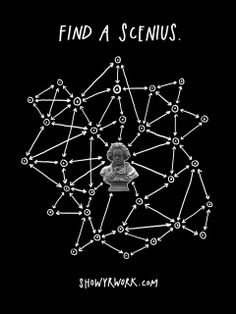
I recently read an opinion piece that seems to validate the work we have been doing for the last number of years. In “The end of genius” Joshua Wolf Shenk successfully argues that “the lone genius is a myth that has outlived its usefulness. Fortunately, a more truthful model is emerging: the creative network.”
THIS! My friends, is what we have been working on.
Read More
July 9, 2014
Two recent graduates of a Facilitative Leadership for Social Change workshop Mistinguette Smith and I led in New York, Alison Gold and Juan Sebastian Arias from Living Cities, recently wrote to us about a creative way they are bringing the frameworks and tools they learned back to their organization. So many of you ask us for advice about how to apply this stuff that we thought you’d want to know about it too! Read More
June 24, 2014
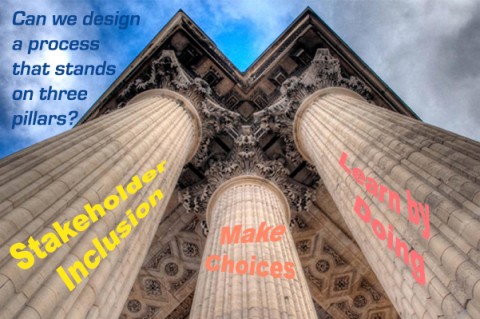
You might have picked up that I’m down on too much process and too much meeting. It’s a funny place for someone that makes a living facilitating. It is part of a semi-conscious effort to look at the opposite of my core assumptions and seek the wisdom there.
Read More
June 17, 2014
I like to describe the Interaction Institute for Social Change as a collaboration shop. I like to describe my work as helping people work better together. Certainly any article tilted “The Collaboration Paradox: Why Working Together Often Yields Weaker Results” is bound to get my attention.
I find this to be a powerful piece, and it confirms intuitions and observations from my ten years of doing this work. It is too often that we collaborate for collaboration’s sake. And it is too often that we fall into the tyranny of a consensus that yields subpar results.

Illustration: Oscar Ramos Orozco Read More
June 3, 2014
If you are a regular reader you’ve heard me talk about the Barr Fellows. It is one of the most powerful experiments in developing a leadership network within a geographic context – the City of Boston. I have the privilege of being on the design and facilitation team for this remarkable project.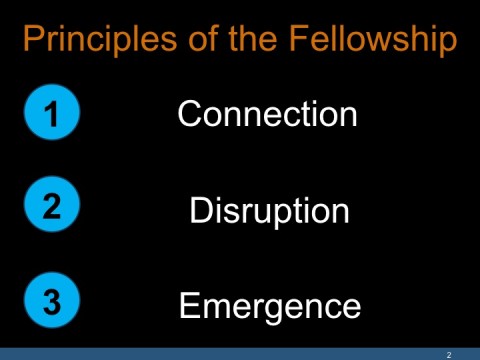 Read More
May 21, 2014

Photo by Waqas Mustafeez
A question I find myself asking quite a bit of those with whom I am doing network building and collaborative change consulting is some version of, “So whose party is this?” A change or developmental initiative may be born in the mind of a single person or small group of people. And she/he/they invite others to that party, her/his/their party. Then over time, the idea may arise on the part of the invitees that this isn’t just “your” party, but “ours” (collectively). This may not come up so much as a direct statement but through questions about and behavior around power dynamics, how the effort is framed, who to engage, etc. Now what? Depending upon the goal, sometimes your party needs to stay your party, and sometimes it needs to shift, through the emergence of a better question or opportunity. Of course, people may make the decision for you by taking the party with them. Or maybe there are two (or more) parties that ensue, in which case, the question becomes, if you are still welcome, “So whose party am I at right now?” The question is not simply meant to be about ownership, but intent, transparency and equity, and how people can show up in value-adding ways.