Tag Archive: justice
February 28, 2014
“In principle, empathy can override every rule about how to treat others.”
-Frans de Waal

Photo by Vamsi Krishna
Yesterday’s post considered the importance and power of the empathic turn in networks-as-change, to ground people in deep connection with living realities, for the sake of greater imagination, justice, resilience and responsibility. Taking cues from experience and the work and studies of others, here are some thoughts for how to cultivate radical “affection” (to quote Wendell Berry) in networks:
- Go beyond abstraction to interaction – go to and meet in real places, explore them, consider how life happens there (see for example Story of Place and Heart and Soul)
Read More
February 27, 2014
In “networks-as-change,” effectiveness is grounded in affectiveness.

In an essay that I continue to revisit, the poet/essayist/novelist/farmer/ conservationist and champion of overall sanity, Wendell Berry, talks about what he calls “the turn towards affection.” Having spent many years reflecting on and pushing back against the unfortunate demonstrated human tendency to despoil landscapes and “the other,” he takes a strong stand for both deep rooted connection and . . . imagination: Read More
February 18, 2014

8/14/14 Update: Sadly the list of names in this post has grown in the past week with the deaths of Eric Barnes and Mike Brown. In both cases it appears that aggressive policing of minor offenses escalated, resulting in deaths that did not need to happen. #blacklivesmatter
I find the fact that we need a conversation called #BlackLivesMatter disturbing. But it’s a badly needed conversation and one that needs to catalyze effective action. It’s urgent that we create a context where it’s no longer “understandable” that someone could be afraid enough of an unarmed black person to justify killing him or her.
Read More
February 3, 2014

The following post has been written by Royve Holladay at The Adaptive Action. We hope you enjoy it as much as we did!
Can three questions really change the world? Well, maybe. Let’s think about it for a minute. One thing we know about schools is that nothing stays the same for long. Each year brings the latest “best practice.” Each week brings a new procedure and its paperwork. Each day, our students pose new challenges. Each hour, the media bombards us with news about the latest crisis. What might possibly help us keep our balance as the world shifts beneath us?
Read More
December 24, 2013
“Transformation comes more from pursuing profound questions than seeking practical answers.”
– Peter Block

|Photo by Bilal Kamoon|http://www.flickr.com/photos/55255903@N07/6835060992/in/photolist-bpZtvb-8A6i9c-8p2AtP-do8Bez-do8JT3-7RiJTU-ao63dG-7Cjh9a-7Co7Fm-ihgH2m-9dXKU2-bgGa4c-8CkodQ-azGM3y-cBFFBS-8ChFDT-bX6EoZ-fPzNoo-9PBH3p-7GZn1X-9iKHnC-8nxop8-9tQh9o-9tMiYv-9tMj4F-7QpV8y-do8JVU-7Co7vW-7Gh8sv-8qQBZ9-eUDNUt-7Gh3sp-9ESmzs-8nAwhG-8nxom2-8nxonr-8nAwhf-8nAwgm|
Three of our IISC blogger-practitioners have been in conversation about 3 questions they are each carrying with them into 2014 to guide and develop their practice to support social change. We invite your reflections on and additions to these: Read More
December 10, 2013

“A Temporary Autonomous Zone is a liberated area of land, time or imagination where one can be for something, not just against, and where new ways of being human together can be explored and experimented with. Locating itself in the cracks and fault lines in the global grid of control and alienation, a T.A.Z. is an eruption of free culture where life is experienced at maximum intensity. It should feel like an exceptional party where for a brief moment our desires are made manifest and we all become the creators of the art of everyday life.”
via beautifultrouble.org
Read More
December 6, 2013
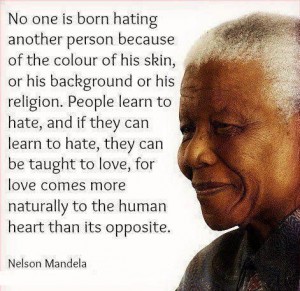
VIDEO LINK: South Africans speak to the Meaning of Mandela
We join the world in mourning the passing of Nelson Mandela; a giant of a man; the very embodiment of the intimate link between power, networks and love. His grace and humility was unrivaled, his insistence on reconciliation was an inspiration to millions. Read More
November 11, 2013

What we now know as Veterans Day began as Armistice Day or Remembrance Day, commemorating the end of “The War to End All Wars.” Sadly, World War I paved the way and was quickly followed by World War II. And countless lives have been lost in wars since. Sara Robinson’s description of the relationship between Remembrance Day and pacifism in Canada struck me as a powerful reminder on this Veteran’s Day. Here’s an excerpt from a longer post.
Read More
October 4, 2013
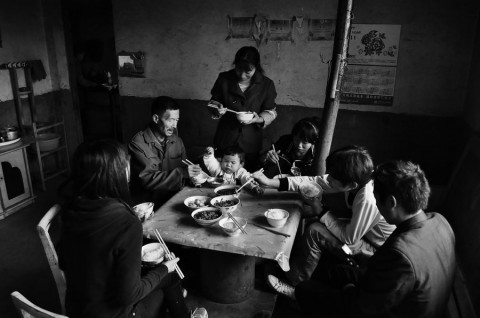
The origins of hospitality as a sacred and esteemed practice are rooted in providing shelter and safety to the stranger. It is the ancient art and practice of offering your very best to another, with no expectation of reward. Whether you learned this practice in your grandmother’s parlor or at an Art of Hosting workshop, you know that hospitality is the essence of facilitative leadership.
Read More
September 24, 2013

I always describe IISC as a “Collaboration Shop.” The founder of Interaction Associates, David Strauss, authored the seminal book “How to Make Collaboration Work.” I’m all for people working together to achieve a common goal. I make a living helping them do that.
Read More
September 15, 2013

The following post is part 2 of a 2 part series on some collaborative tools and strategies to help us change our selves, change our organizations and change the world. We hope you find it helpful. We encourage you to join the conversation!
We are compelled by a quote from Theory U, attributed to William O’Brien “The success of an intervention depends on the interior condition of the intervener.” Collaborative tools and strategies are only truly useful in the hands of practitioners whose hearts are big enough to hold the complexities, struggles, hopes and fears that accompany the work of transforming racism. Read More
September 2, 2013

Appreciating this reflection by my friend Augusto Cuginotti. In the context of the USA I can already the resistance, “I came to work, not to be vulnerable.” In fact, we spend a lot of time designing spaces that protect us from vulnerability. But then, how will we ever sail towards what we do not yet know?
“Love comes when manipulation stops; when you think more about the other person than about his or her reactions to you. When you dare to reveal yourself fully. When you dare to be vulnerable” -Joyce Brothers
Read More