They say being a change agent is an inside job. This summer, we invite you to sharpen your tools and rejuvenate your capacity for leadership through a values-based professional development opportunity in a beautiful retreat setting! Center for Whole Communities (CWC) and Interaction Institute for Social Change (IISC) are collaborating to offer a four-day residential Whole Measures Workshop July 10 – 13, at CWC’s retreat center at beautiful Knoll Farm in Fayston, VT. Read More
It’s been my pleasure over the last few years to have been of service to and learned from Antioch New England students and staff. The video above is the product of Antioch graduate student Emily Read Daniels, who has been in some of our discussions about networks.
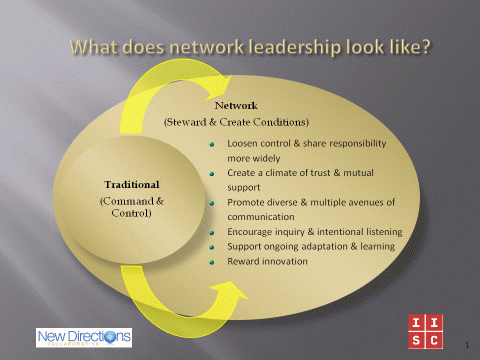
As I prepare to do a couple of trainings for leadership in multi-stakeholder networks in the New England region (focus being on the skills of facilitation, process design, and managing decision-making), I intend to frame our conversations with some exploration of the differences between traditional organizational leadership and what is required to steward networks towards positive impact. I begin with the presumption that network form and function are chosen strategically for the ability to accomplish something that could not be done at all or as well through other approaches. Whether trying to develop a food system to eliminate food insecurity or change an educational system to yield more equitable opportunities and outcomes, the attraction to a network approach is likely due to a desire for some combination of the following: Read More
Racial justice work can be soul depleting or soul enriching. A lot depends on how we do the work and who we do it with.
Last week, six of us from the Boston area gathered to reflect on our experiences at Transforming Race. Sponsored by the Kirwan Institute for the Study of Race and Ethnicity, Transforming Race brought together academics, students, advocates and leaders of a wide range of nonprofit organizations to explore Visions of Change. We were challenged to consider: What would a generation or two of racial progress look like? What seeds of change are in place right now? How do we get from here to there? The theme was inspiring all by itself, and the many speakers, workshops and activities engaged our hearts as well as our and minds. All of that was very good.
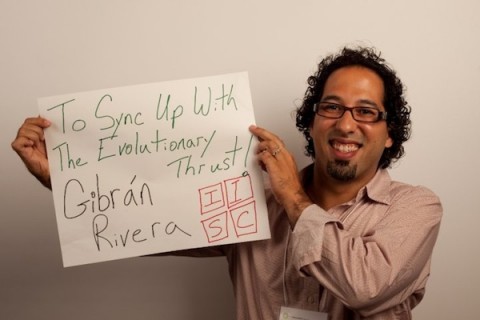
I am so proud of my colleague, Gibran Rivera, for the due recognition that he has received lately in various quarters for his deep thinking and transformative work. And I am grateful for how eloquently he captures the nature and intention of our collective work the Interaction Institute for Social Change in a recent interview:
“IISC seeks to make the invisible visible. When we are successful, people find themselves working in ways that are life-giving, generative, and unlike most of their experiences of working together. We achieve this by paying close attention to process. Process works best when everyone knows what it is and where we are [in] it. But process is not enough. We seek to create spaces and conditions that foster connectivity at the level of authentic relationship. When we are working in authentic relationship with one another, when we learn to connect to each other in the place where our shared purpose meets, then it can feel like the work is happening all by itself. But these spaces have to be designed; they have to be held and they have to be tended to. This is where we come in. And this is how interconnectedness becomes palpable.”
After nearly twenty years leading the Interaction Institute for Social Change (IISC)—and loving every minute of it—I will be transitioning from my role as IISC’s executive director as of July of this year. After a couple of months off, I will return as an independent consultant to continue doing this work that I love so much—both on my own and on behalf of IISC.
It has been an honor and a privilege to work shoulder to shoulder with people like you—extraordinary change agents who labor every day to make the world a better place.
IISC is now in search of someone to take what might be one of the best jobs on earth—leading IISC as it partners with organizations, communities and networks to move from shared vision to collective action toward building a more just and sustainable world. Please pass the word along. View the job listing here.
|Photo by Amani Hasan|http://www.flickr.com/photos/amani1306/2357549928|
A blog post on the Management Innovation Exchange site has got me thinking. In a post entitled, “Forget Empowerment – Aim for Exhilaration,” Polly LaBarre profiles Ricardo Semler of Brazil’s Semco Group. Semco is noted for its dramatic turnaround as a business, and for its unusual way of managing itself under Semler’s leadership, as noted by LaBarre -“no organizational chart, no fixed offices or working hours, no fixed CEO, no HR department, no five-year plan (or two- or one-year-plan), no job descriptions or permanent positions, no approvals necessary.” All of this is geared towards increasing individual autonomy and agency, participation at every level, and trust. The results are reported to be quite astounding with respect to business outcomes as well as employee fulfillment, with a long line of interested prospects at the door. Semler himself has even freed himself up to pursue interests in the realm of helping to reform primary education and the legal system! So how can I not help but be curious about some of what I/we might bring into our organizational life and work at IISC? Read More
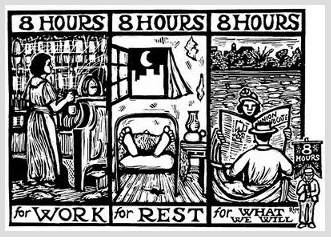
Today is May Day. A few weeks ago I had the unique opportunity to share some ideas about working with complexity with a group of funders who are committed to social justice. It was quite an honor to sit in the same panel as the great Frances Fox Piven and the amazing Ai-Jen Poo.
Ai-Jen was recently named among Time magazine’s 100 most influential people in the world. I’ve been following her work for a while and I can tell you that the mention is well deserved. Frances has influenced, informed and inspired thousands of people who have committed their life to this work.
In the presence of such an elder and a luminary anyone would be a fool not to take notes. I thought I would share some highlights from Frances’ talk with you: Read More
We often focus on the understanding of power as a process and as a social construct. As Beth Roy says, “power is not something you have; it’s something you do.” I was struck by a contrast as I listened to a brief story this morning about Lyndon B. Johnson.
Biographer Robert Caro described Johnson as having “no power” as Vice President because the Kennedy’s didn’t want him to have any. When President Kennedy was assassinated, he suddenly had all the power conferred by that office. Read More
The following post is reblogged from Seth’s Blog. Short and simple , yet full of wisdom. We hope that it will enrich your life and much as it has ours.
Techniques and skill and even a point of view are often handed down, formally or not. It’s easier to get started if you’re taught, of course.
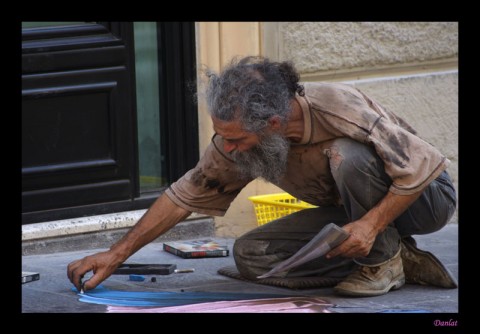
But art, the new, the ability to connect the dots and to make an impact–sooner or later, that can only come from one who creates, not from a teacher and not from a book.
I’ve been enjoying David Rock’s Quiet Leadership: Six Steps to Transforming Performance at Work, a book that pulls from neuroscience literature in an attempt to help us understand ourselves better, and to create new pathways to creativity, productivity, and . . . social change! Rock leads with the idea that the highest point of leverage to help someone change behavior is at the level of their thinking – to help them think better for themselves. He goes on to illustrate how what we pay attention to and how largely determines the content and quality of our lives. This includes the way that we pay attention to problems. Read More
Last weekend I had a most unique privilege. I facilitated the final retreat of a three-year process. I have been working with the Barrboletas, the Barr Fellows cohort of 2009, since their inaugural learning journey to Brazil in June of that year. We have a book worth of documentation. The fellowship as a whole will be highlighted in the May issue of the Stanford Social Innovation Review. This post is a celebration of their last retreat as a cohort – they will continue to participate in an exciting plethora of network activities as they are moved and able.