Image Description: Illustration of a person standing with their hands on their hips in front of multiple brightly colored doors floating in a dark, star-filled space. Curving pink pathways weave between the doors. By Adriandra Karuniawan via Unsplash.
In our last blog, we explored the importance of clarifying your North Star: the purpose, values, and vision that anchor your organization in times of uncertainty. That clarity is essential. But clarity alone is not enough.
When predictions are shaky and change is constant, nonprofit leaders are navigating conditions that feel more complex than ever:
Shifting funding and political landscapes
Increasing demand for services
Workforce burnout and capacity constraints
Rapid political, social, and technological change
Traditional strategic planning, built on stability and predictability, no longer meets this moment. This is why we are seeing organizations shift toward strategic direction-setting: an approach where the direction is clear, but the path remains flexible
Within strategic direction setting:
North Star = Direction (what stays constant)
Scenario Planning = Conditions (what may change)
Strategies = How we move (what adapts)
And within this approach, scenario planning is a critical practice. But the question remains: How do we stay purposeful when the conditions around us are constantly shifting?
Why Scenario Planning Matters
In times of uncertainty, our ability to radically imagine multiple futures becomes essential. Not only to stay grounded and hopeful, but also to prepare for changing conditions while holding onto our North Star.
Scenario planning is one of the most useful tools for doing exactly that.
Our colleagues at Building Movement Project, in their 2026 Brief on Solidarity: Lessons from a Year of Crisis and Change, noted that organizations can no longer afford to treat scenario planning as an occasional exercise. Increasingly, it is becoming a necessary practice for preparing, protecting, and adapting in these times.
At its core, scenario planning is the process of imagining and exploring multiple potential futures based on a range of uncertainties. Organizations often try to plan for one expected future, but in times of uncertainty, it is more useful to prepare for multiple possible futures while staying grounded in your core purpose, values, and North Star.
Scenario planning helps us imagine and shape the future we want, rather than only reacting to the future we get.
Ask: What do we know, what can we imagine, and what remains uncertain? How can we hold the future lightly as we plan and move with purpose?
This is what makes scenario planning for multiple futures such a powerful component of strategic direction setting. It helps organizations maintain both clarity and flexibility.
Making Scenario Planning Real
Scenario planning does not require predicting the future perfectly. Instead, it invites organizations to reflect on a range of possible conditions and consider how they might respond while staying grounded in their values, purpose, and North Star.
This can look like:
Identifying the external forces most likely to shape your work
Exploring a few plausible future scenarios
Reflecting on what opportunities, risks, and decisions each scenario raises
Identifying strategies and priorities that would remain important across multiple futures
Organizations might ask:
What happens if funding decreases significantly?
What if community needs increase faster than capacity?
What political, technological, or social shifts could affect our strategy?
What remains essential no matter the conditions?
The goal is not to predict exactly what will happen. The goal is to build readiness, adaptability, and shared understanding so organizations can move with greater clarity.
What Scenario Planning Makes Possible
The scenario planning process provides organizations with an opportunity to:
Stay Grounded in your North Star across different possible futures. This process clarifies what is core to your organization’s purpose and what cannot be compromised, even when strategies need to shift.
Move from Prediction to Preparation. In moments like these, with shifting conditions, scenario planning helps provide clear direction while remaining flexible to changing circumstances. Instead of trying to predict exactly what will happen, organizations can focus on building readiness and flexibility for changing conditions.
Strengthen Decision-Making by reflecting on what decision makes sense across multiple futures and conditions. This leads to resilient long-term decisions, rather than reacting only to immediate pressures.
Build Organizational Nimbleness & Emergence. By anticipating change and responding early, organizations can become more adaptive, identify risks sooner, and better recognize emerging opportunities.
Deepen Strategic Thinking & Collaboration across the organization. Scenario planning encourages organizations to move beyond timelines, tasks, and fixed long-term plans to reflect on current realities, risks, opportunities, possibilities, and strategic actions. In doing so, organizations strengthen their capacity for shared sense-making, collaborative leadership, and collective action.
No matter the scenarios you explore. We don’t need to have all aspects certain to move forward. You need clarity of purpose and readiness to adapt.
If you or the people in your organization are fraying or even crumbling, ask yourself why wouldn’t you be? After over a year of a vicious virus, political disruption, and continued racist trauma, of course we are unraveling. What does fraying look like in organizations?
Staff needing to call in sick more often or take leave from their jobs to heal, restore, and pivot
Employees quitting or moving onto other opportunities, including relocating to other states as they reevaluate their priorities after a year of survival
Staff engaged in greater conflict with each other as the tensions they have tucked away come into fuller view
Individuals lacking patience as Zoom fatigue deepens to intolerable levels
People complaining of new physical pains, aches, and challenges arising from working in home offices that are not adequately set up to support physical well-being
Too many meetings and projects and not enough people to manage them, which causes stress in the workplace under the best of circumstances
An increase in racial microaggressions as stress burrows into workplaces
Lack of purposeful attention to relationships as people focus on quickly moving into reopening
Staff taking care of children or others unwilling to return to in person work and old office norms that don’t support flexible work options
As we navigate the space between how things used to be – the “old normal” – and the emergence of a new way of being and working with one another – the “new normal”- we are essentially emerging from a metaphorical portal. Indian novelist Arundhati Roy introduced the concept of the pandemic as a portal when COVID-19 first broke. She shared, “Historically, pandemics have forced humans to break with the past and imagine their world anew. This one is no different. It is a portal, a gateway between one world and the next.” I believe that we are emerging from the portal like a shaking and vulnerable rocket ship returning back to earth after it breaks through the sound barrier.
What can we do to support ourselves and our teams to emerge from this portal?
There’s braiding to be done. Bringing people back into connection and collaboration to build toward the future. And it will be gradual.
We can validate the experience of others. We can help those who work for us, as well as our peers and partners, to understand that it’s normal to feel the fraying and crumbling that comes with being isolated and in survival mode for so long.
We can reflect and re-collaborate. This involves regrouping as a staff, reflecting on what’s happening to us and our organizations, and recommitting ourselves to operating in the spirit of human and community care and collaboration. We need to focus on building and sustaining relationships while we build better processes and strive for results that can build a better future.
We can give people a sense of control and hope. Ask staff and communities, what new opportunities do they envision for themselves and organizations and networks as we emerge from this portal?
We can close down our offices. For a week or two, or even a month, several times this year to replenish. If everyone’s not working, everyone can attend to themselves without distraction. It’s like a mini sabbatical for all.
We can continue work-from-home options. For many jobs, offering flexibility through continued remote work will be critical in retaining high-performing staff and boosting morale. Twenty-nine percent of working professionals say they would quit their jobs if they couldn’t continue working remotely.[1]
We can center Black, Indigenous, and other People of Color in all of what we do. Whether it’s in our planning processes, implementation, organizational culture, or visioning, we can follow their innovation, ideas, and leadership to deepen our strategies and approaches. Our workplaces can benefit from the traditions of BIPOC cultures to slow down and take time to reconnect in human ways. Strategies informed by a racial equity lens will be relevant and timely to all the decisions we are making in this moment.
We can come together in-person as soon as people are fully vaccinated. It’s not too early to plan the reunion which will offer connection and signal a new beginning. Consider planning a ritual or exercise during the time together to leave behind the old and bring in the new.
People are exhausted, mentally and physically. Expect the crumble. It’s coming, if it hasn’t already. Plan for the crumbling and consider new ways to braid people, yourself, and your community back together.
[1] According to an online survey of 1,022 professionals by LiveCareer, an online resume and job search consulting service.
On June 11, 2019, IISC successfully celebrated twenty-five years of
building collaborative capacity for social justice and racial equity. It was a
beautiful and soulful party with over 200 supporters at the historic Hibernian
Hall in Roxbury, Massachusetts, a largely Black and working-class community in
the heart of Boston. It was IISC’s first time planning an event of this
magnitude, let alone celebrating such a major milestone as our quarter-century
birthday.
As you know, part of IISC’s core and signature contribution to the
field is that we bring people together to collaborate, lead, and design processes
for social change and racial equity. Therefore, like a true IISC’er, I have
been pondering some questions. What did
we learn about collaboration, racial equity, process, and leadership through
this event? What did this event teach or re-teach us about collective planning
for change?
There are five observations that come to mind. Not so much about the mechanics of the event (get a great event coordinator is the short answer to that!), but rather about the important intentions around the event.
Clear collaboration got us through every challenge. It was important for us to have a clear purpose for our event, a set of shared values to guide our planning, and a collective vision for our success. Our willingness to share leadership brought wisdom and effective action to our task. We also understood that our collaboration could be efficient. At IISC we remind people that not every decision needs to be made by consensus and this was true in our process. In the case of our event, we delegated the role of planning the event to a committee of diverse stakeholders by role, age, and race that could work nimbly with a relatively small number of constraints such as budget. Other than that, the sky was the limit. We solicited input from each other and other stakeholders as we went along so that we could harness the collective genius and perspectives needed to make this a truly special and unique event. When we hit a block or wall, we would ask the group, what do you think?
Women of color leadership makes the difference. At IISC we are challenging our clients and ourselves to make and honor spaces for women of color to share their voices, to lead, and to flourish. Our event coordinator was a Black woman and at any given time, 70% of the event committee was comprised of women of color. These women of color brought intersectional approaches to everything, making connections between IISC’s equity values and our event vision and execution. We ensured that we had diverse voices on our event stage, and that we hired people of color, women, and Boston residents as vendors. Women of color have often had to make do with very little and to work on every task from bottom to top. With that, our skills kicked in, helping us to nail the small and big details. Collectively, we turned over every stone to solve every challenge along the way.
Set an inspiring goal. At IISC, we promote facilitative leadership, and a major facet of this kind of leadership is inspiring people with vision. We decided to set a fundraising goal that was a stretch but not one that would strike fear in us if we didn’t meet it. We chose a goal that if reached, would allow us to accomplish what had otherwise seemed impossible: a goal that would provide long imagined funding for innovation and product development. And we not only met our fundraising goal, we shattered it!
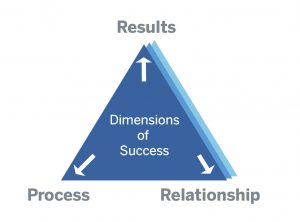
RPR works. At IISC, we talk about the three dimensions of success in any collaboration. Tending to relationships, designing artful and meaningful process, and achieving results. At each stage of our work as an event committee, we made space for each event committee member to personally check in about their lives and to learn about non-IISC interests and pursuits. We made sure to have focused and detailed meeting agendas with strong facilitation so that we could process all the event details before us and achieve our desired outcomes. We focused on achieving results. We set targets of $125,000 in fundraising and 150 event participants, and we exceeded both our goals. All three dimensions were essential to our event’s success.
5. Speak and show your values. At IISC our values include equity, networks, shared power, and love and we made sure our event program directly reflected these values. Event participants not only walked away knowing something about IISC’s historical accomplishments and what we do here at IISC, but also about the values that hold our work. Our special 25th anniversary video and program speakers spoke to racial equity, the value of networks, and of love as a force for social change. We had three tiers of event ticket prices along with scholarships, so that we could meet our fundraising goal and still make the event accessible to everyone. Our values were also displayed by hugs, laughing, dancing, and making connections between people around the room. It’s no fun to work on racial equity and social justice if you don’t get to live out and experience those actions and values.
There are many more lessons to learn, but this I know: love, commitment, collaboration, adaptability, connection, and ambitious goals had everything to do with our success. It’s actually hard to accept that our planning has come to an end. Our event planning committee members loved working with each other and experienced a sense of accomplishment that we hope to replicate throughout the organization in the next twenty-five years!
Make Change Stick Beyond the MeetingTurn ideas into agreements that stick, and keep change going after the meeting ends. Perfect for teams stuck in “great conversation, little action.”