Here at IISC we talk about having three lenses for the work of collaboration. One of those lenses is the lens of love. I have worked and played with Anasa Troutman in all kinds of formations over the years, most recently as part of the same Networks and Decentralized Organizing Community of Practice.
I thought that her stance for Love is a very real call for those of us interested in the practice of social transformation. What do you think?
I have previously written in this space about a state-wide early childhood system change effort in Connecticut, for which my colleague Melinda Weekes and I are currently serving as the lead process designers and facilitators. For the past year, we have been engaged in a robust and somewhat emergent process of exploring some of the underlying systemic dynamics surrounding early childhood development and care in the state, and beginning to re-imagine that system, in all of its complexity as it holds the vision of nurturing whole children, from informal to formal elements, from grassroots to grasstops.
At this point, we are poised to think more deeply about what it would mean to create a “blueprint” for that system, acknowledging that this blueprint could never cover every component and dynamic in the system, nor would we want it to be static. Read More
All right friends, it’s time. I’m going to write my first e-book. I’m going to do it in 30 days using the process outlined here. Today is day 1. I will be posting daily updates to my Facebook and twitter feeds.
I need your help. I want to write about “teams, work and complexity,” I don’t have a title yet. But it doesn’t matter what I want to write about if you don’t want to read about it! The first two days of the process are about asking you for a topic. See what copyblogger says:
Join Ashley Welch of Interaction Associates Wednesday, December 14, at 1 pm Eastern time, for a timely conversation with her colleague from the Interaction Institute for Social Change, Melinda Weekes. They will discuss Strategies for Designing Social Change, exploring ways leaders in any sector can succeed when leading change. Melinda is a senior consultant who works with foundations, NGO’s and community leaders. Recently she has been supporting Occupy Wall Street. As a former lawyer, gospel music theorist and ordained clergy person, Melinda brings a unique perspective to social change.
“I am enthusiastic over humanity’s extraordinary and sometimes very timely ingenuities.
If you are in a shipwreck and all the boats are gone, a piano top buoyant enough to keep you afloat may come along and make a fortuitous life preserver. This is not to say, though, that the best way to design a life preserver is in the form of a piano top.
I think we are clinging to a great many piano tops in accepting yesterday’s fortuitous contrivings as constituting the only means for solving a given problem.”
Nikky Finney recently won the National Book Award in Poetry for her collection Head Off and Split. If you have not seen or heard her acceptance speech, it is to be seen/heard (if you go to the link, you will have to fast forward a bit through John Lithgow and Elizabeth Alexander). In so many poignant and wonderful ways, she reminds us that, as Audre Lorde once wrote, “Poetry is not a luxury.”
In the video segment above, Finney brings greater dimension (and a sense of history) to the creative writing and speech act, by describing her affinity for blackboards as a way of engaging in more visual and tactile ways with her craft. Her words remind me of what I think many of us at IISC love about visual facilitation and graphic recording in our collaborative capacity building work, of putting marker to butcher block paper, rather than simply or exclusively relying upon conversation, PowerPoint and/or video projected word processing. Process design and facilitation is a contact sport.
|Photo by David Shankbone|http://www.flickr.com/photos/shankbone/6219944289|
Let me start by saying that I am well aware of the inherent irony of posting a piece with this title in the blogosphere and furthermore tweeting about it to my “followers.” That said, I offer this in the same spirit of the saying, “If you meet the Buddha on the road, kill the Buddha.” In other words, thanks in advance for reading/sharing, and then let’s get back to the work of being our own lights.
As I turn thoughts to this week’s holiday, I am thankful for so much: for health, for family, for friends, for the opportunity to do the work I do, where and with whom I get to do it. And I am also grateful to be living in these uncertain, trying, and exciting times. If we would believe history and the views of certain amateur and professional philosophers, we might see our current circumstances as the makings of a great age and evolutionary leap forward. Read More
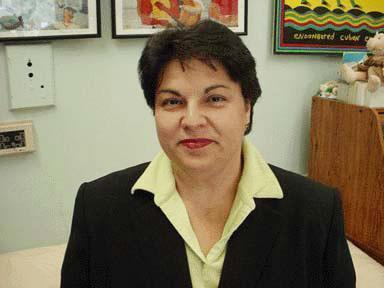
The Interaction Institute for Social Change remembers Margarita Muñiz, educator, leader, champion- as well as one of our beloved Barr Fellows. The following is reposted from the Boston Globe column written by Yvonne Abraham. We could not have said it better.
How do you turn an abandoned school in a crime-ridden neighborhood into a gleaming beacon drawing children and grateful parents from across the city?
“Many people need desperately to receive this message: ‘I feel and think much as you do, care about many of the things you care about . . . . You are not alone.'”
Make Change Stick Beyond the MeetingTurn ideas into agreements that stick, and keep change going after the meeting ends. Perfect for teams stuck in “great conversation, little action.”