|Image from Ritwik Dey|http://www.flickr.com/photos/ritwikdey/425995583/in/photostream|
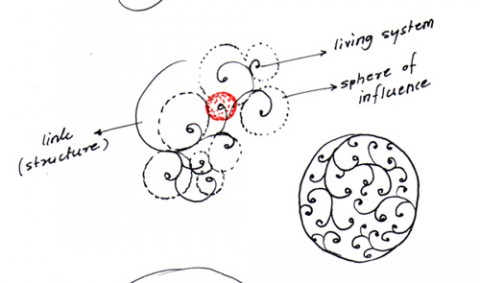
At the end of last year, I posted a piece about our work with an early childhood system change initiative through the Graustein Memorial Fund in Connecticut. At the time we were exploring different formats and technologies for creating a new “system blueprint” for early childhood development in the state. Our post and related tweets asked for possible resources to conceptualize and create a living blueprint for this dynamic system, and I wanted to give an update about what we have heard so far and where we stand in our conversations.
As the Core Team has engaged in its research about all this, we’ve realized that there are three separate but possibly connected aspects to this “blueprint”conversation”: Read More
I am made greater by the sum of my connections, and so are my connections
– Stowe Boyd
Today, Curtis Odgen and I will be hosting an LLC Webinar on Collective Leadership. We are talking about a significant shift in how we organize our work for social transformation. Stowe Boyd, the net’s social anthropologist, recently posted what he calls the beginnings of an elevator pitch on “New Mutualism.” I found it resonant, relevant and tremendously exciting; here it goes:
In a world where our traditional institutions — and their leaders — are hopelessly out of date and failing at insuring our well being, we know that something new has to take their place. And fast.
Whatever the individual paths that led us to this insight, we need to first find solidarity in a challenging and chaotically changing world, because the financial and political forces that are increasingly influencing our economic and political systems seem to have small concern for us. Consider the growing income inequality in the US, as an example.
We, those of us that have come to realize that we are living precariously, living at great and increasing risk due the actions of failed institutions and broken policies, must rapidly move past the passive, consumerist, individualist mindset of the industrial era.
We, the Precariat, need to create alternative institutions, controlled by us and dedicated to investing in activities that will benefit us, rather than global corporations and the magnates that control them. We need to find common cause and grow local, regional, national, and international mutual associations, owned by the members and dedicated to decreasing the staggering risks that confront us, individually and in common. These organizations can be as diverse as unions dedicated to protecting the interests of freelancers (like the Freelancer’s Union), local food cooperatives, or international policy organizations.
Mutualist Manifesto:
We need to commit ourselves — individually and collectively — to finding common cause and the general recourse to a mutualist response to problems that confront us at every scale: in our neighborhoods, cities, regions, nations and globally. We can’t wait to be saved by others.
Core mutualist principles:
Ownership and governance of new institutions by members.
Benefits-based, not profit-based, organizational principles.
Cooperative orientation toward asset allocation, investment, and distribution of benefits.
Mutual support of the activities of other mutualist organizations.
This is the 26th official celebration of the national holiday honoring Dr. Martin Luther King, Jr. I remember the struggle to establish the holiday and wonder what Dr. King himself might think of what it has become.
On the cusp of the Martin Luther King Jr. day of remembrance and celebration, IISC is gearing up to lead a webinar on the day after the Monday holiday focused on a very relevant topic – collective leadership. Much is being made of the Occupy Movement and its potential for showing us a new way to lead (we would call it leader-full, not leader-less). Prior to this important civic groundswell, many have been looking at how to create the conditions for emergent and collaborative leadership to move us in more just and life-affirming directions. Given the complexity of the issues we face and the diversity of perspectives in our various systems, it has been recognized that we cannot rely on individual, expert, or command-and-control leadership to move us forward. We must unleash more robust and adaptive collective intelligence. If this conversation interests you, come join Gibran Rivera and me as we explore stories of and practices for creating the conditions to unleash leader-full momentum that embodies and leads to the social change we seek. More information about this free opportunity can be found here.
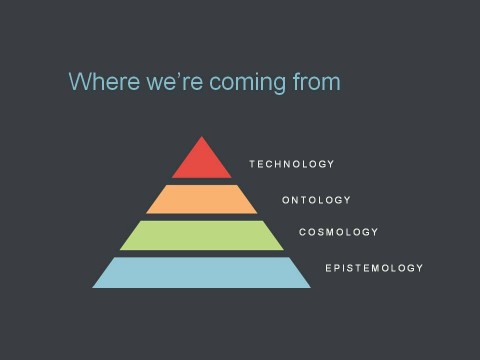
Next Tuesday, my colleague Gibran Rivera and I are excited to lead a webinar hosted by our friends at the Leadership Learning Community called “If You Till It They Will Come: Nurturing Collective Leadership.” The above slide is a bit of a sneak peak, and certainly one of the headier, nonetheless important, elements we will cover. The idea behind this graphic comes from the work of Carol Sanford, who has highlighted the fact that our leadership and change methodologies are always grounded in an underlying belief system about what we hold to be true about the world and humanity. Not being aware of or transparent about this can get us into difficulty when we are mixing and matching techniques/methods that may contradict one another, or when we are not operating from the same system of beliefs as others. So here is how we are tracing the roots of our approach to cultivating collective leadership for social change: Read More
. . . and much more! Melinda Weekes and I are currently partnering with the good people at Grantmakers for Effective Organizations to facilitate another offering of “Engage for Results,” a workshop that builds on our work together 5 years ago through the Change Agent Project. During this initial work convening grantmakers and nonprofits around the country, we heard loud and clear that addressing power dynamics and engaging in authentic relationships would be key to ensuring that grantmaking is more relevant and impactful with respect to the work of nonprofits and outcomes for communities.
The following post is reblogged from Seth’s Blog. We hope that it will enrich your life and much as it has ours.
The pain of a lousy boss, of careless mistakes, of insufficient credit. The pain of instability, of bullying, of inadequate tools. The pain of poor cash flow, corrosive feedback and work that isn’t worthy of you.
What has been the most important epiphany in your life?
Today is the Feast of the Epiphany and I’m from Puerto Rico where we celebrate it as Three Kings Day. In fact, I’ve just heard it argued that Puerto Rico is the country with the strongest tradition of “Día de los Reyes.” Our Christmas gifts used to come on this date instead of December 25. We would leave grass under our beds so that their camels could eat as they went from house to house. I grew up in a nationalist household, so my family was among the last hold outs as “Americanization” (which was really commercialism and marketing) led more and more people to get into Santa Claus. To this day my father hates Santa – it’s actually kind of funny.
I have written a few times in this space (see “Right from the Start” and “The System is Us”) about our work with the Graustein Memorial Fund and stakeholders from around Connecticut to re-conceptualize and change the early childhood development system in the state so that all families and children are thriving. We are currently in the midst of a visioning process, whereby members of the System Design Team are engaging various constituents in conversations about what it would look like if the system were truly providing equitable and excellent support and opportunities to all children, regardless of race, ability, and income. In addition, we are asking what foundational beliefs, or values, would under-gird such a reality brought to life. This phase kicked off with a series of interviews with participants in the Memorial Fund’s annual Stone Soup Conference. This included parents, child care providers, elected officials, advocates of all kinds, and the keynote speaker – Ralph Smith. Check out the series above, along with others posted on the Right from the Start site. There is an emerging picture forming here, that speaks to the power of collective visioning. What do you see?
|Image by Dionne Hartnett|http://www.flickr.com/photos/dionnehartnett/6289336176|
I spent time over the break reading through Howard Bloom’s robust Global Brain: The Evolution of Mass Mind from the Big Bang to the 21st Century. Described as a “lusty tome” by evolutionary biologist Lynn Margulis, the book is an exploration of history through the lens of group rather than simply individual selection. Bloom’s concept of collective information processing is eye-opening, provocative, and possibility-inspiring. It is also very timely given the growing emphasis on networks and collective approaches to change. Here is a taste, found in the opening pages:Read More
One of the many things I like about celebrating New Year’s Day is that for a moment in time the awareness of millions of people is simultaneously focused on the same point of transition. We conspire to create an opening. We align ourselves with the cycle of the planets. We leap into a future that is necessarily new.
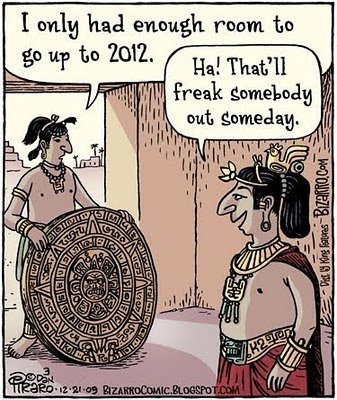
I’m not big on apocalypse or fear mongering. But I am often in awe of the stars. 2012 is going to be a big year for the stars. We’ll hear a lot of silliness, but creative are good alchemists. Let’s allow ourselves to toy with the idea of transition – of shift, of developmental leaps.