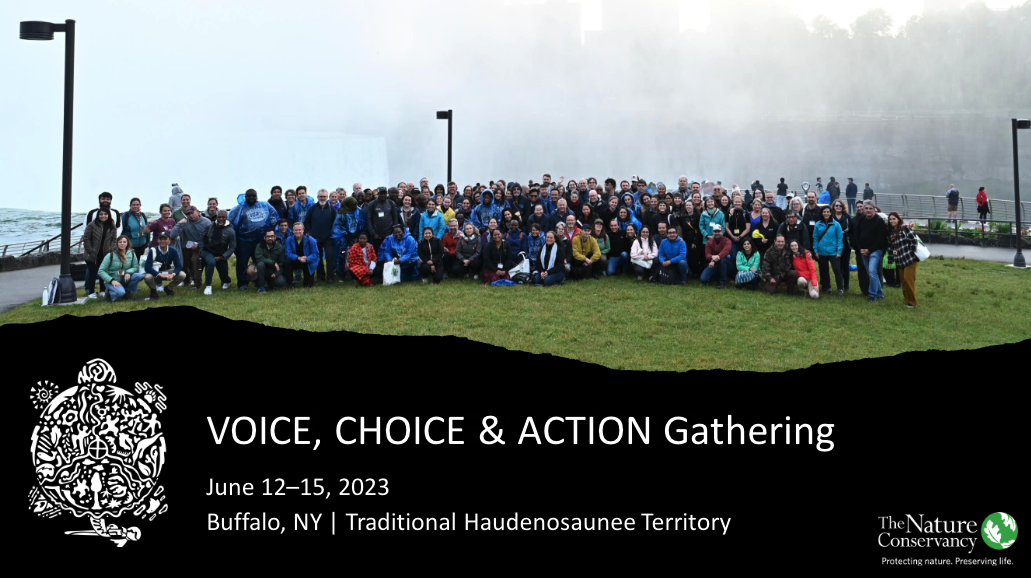
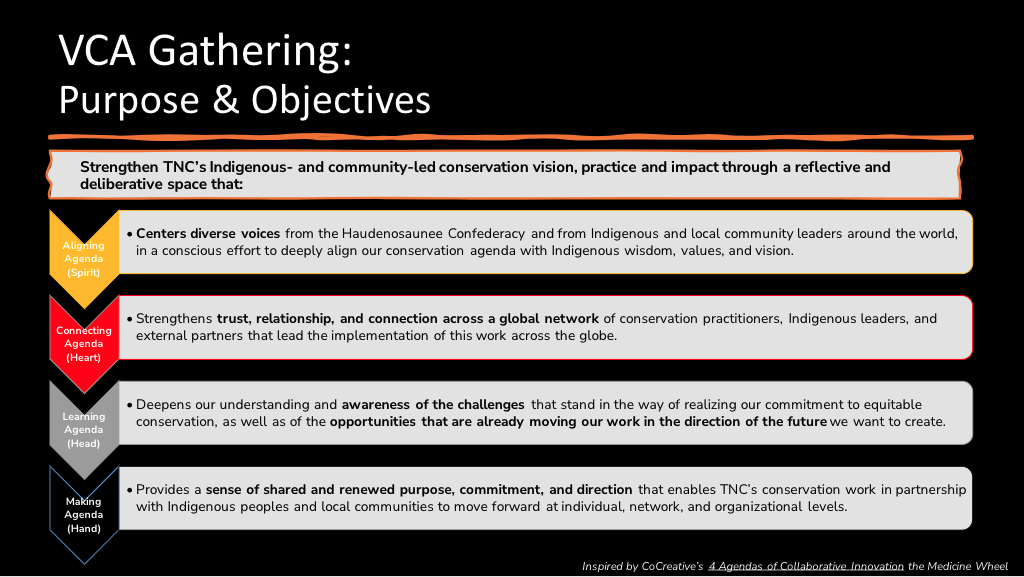
Earlier this year I had the honor and privilege of being invited to support the second Voice, Choice and Action gathering of the Indigenous Peoples and Local Communities Network. A project of The Nature Conservancy, the IPLC is devoted to centering Indigenous and local knowledge and leadership in land conservation work.
Back in 2019, I worked with lead organizer Mariana Velez Laris to support the design of the first convening, held in Bend, Oregon, but was unable to attend. Four years later, again working with Mariana and her team, we found ourselves in new territory, living in a COVID-rattled and fire-and-water-ravaged world with turbulence on many other fronts – political, economic and cultural. We also found ourselves in the midst of many promising developments, including advancements in the realm of braiding, “Indigenous knowledge” with the better practices of Westernized conservation.
This time around I was able to support the team as both a co-designer and co-facilitator with Mariana and the co-leaders of the IPLC, Andrea Akall’eq Burgess and Briannon Fraley, of a gathering that was hosted on Haudenosaunee lands in Buffalo, New York (which also happens to be my birthplace). The decision to hold it in this powerful location (think Niagara Falls, gateway to the Great Lakes, old industrial city experiencing a rebirth, the lands of the oldest standing confederacy in the world) was really the result of Mariana’s vision, and it would yield untold benefits.
We were clear from the outset that this convening was not meant to be a stand-alone event, but would build on the first VCA convening, along with all the work prior to and since that gathering in Oregon. We were also clear that to be in alignment with a “right relations” commitment, as embraced by our Haudenosaunee hosts and other Indigenous participants, we would need to operate in accordance with Haudenosaunee protocols. Much care was taken to establish trust and understanding, including with the host institution, the University of Buffalo, which is home to this country’s oldest Indigenous studies and environmental studies programs.
The agenda itself, under Mariana’s thoughtful and caring stewardship, became a story of spaciousness and flow, a slow moving river that carried us early on into a Haudenosaunee-led opening with the traditional Thanksgiving Address, or the Words Spoken Before All Else. During this time we were welcomed by faithkeeper Oren Lyons, who has seen such immense change in our world during his 93 years on this planet, and who declared our current situation as a deep spiritual battle. And we were greeted over the course of the first two of the four days by other Haudenosaunee leaders, including Gae ho Hwako Norma Jacobs, a Cayuga elder who writes in her recently released book, Odagahodhes, “We have forgotten about that Sacred meeting space between the Settler ship and the Indigenous canoe, where we originally agreed on the Two Row [wampum agreement], and where today we need to return to talk about the impacts of its violation.”
Much of our time made space to dig deeper into this violation, how it was perpetrated in different places in different though related ways, and how it is perpetuated through certain contemporary mainstream (Westernized) conservation practices. Importantly, we also pivoted towards what it would take to heal the rifts and divisions amongst the relations and the nations and to move forward together. Part of this occurred through a ritual that Mariana and I co-led, pulling from the practices of Fierce Civility and Respectful Confrontation, grounding people in their bodies and breath, and inviting us all to honor self, community, Mother Earth and future generations. This was intended to mark a “crossing of a threshold” to open up new possibilities in the community that was gathered. We framed this ritual around some of the teachings we had heard directly or indirectly from the Elders and other speakers to that point, including:
“One of the greatest gifts is to re-member.”
“Everything is built on reciprocal relationships.”
“Nature is one big family, working together to sustain Life.”
“The best way to learn is in ceremony; it pulls you together.”
“Feel our feelings. Feel the love of the Creator. Love ourselves.”
Participants also heard from a couple of powerful panels of Indigenous women leaders from around the world on their visions for reckoning and rematriation, which included these appeals:
Lead with care
Reduce competition
Protect bio-cultural systems
Embrace networks and new structures
Support women’s participation and equality
Let Indigenous groups speak for themselves
Recognize more territories that pre-existed current boundaries
In addition, we participated in other Indigenous-led rituals for healing and joy (optional sunrise ceremonies, a Listening to Niagara Falls visit, a high energy Seneca-led social dance) and ultimately to a session on “planting seeds for the future.” It was not your usual conference, to say the least, and I can safely say that it was one of the most powerful experiences of my life, in no small part because of our Haudenosaunee hosts, and the invitation to “see” (feel and sense) the world from an Indigenous perspective. And I was not alone.
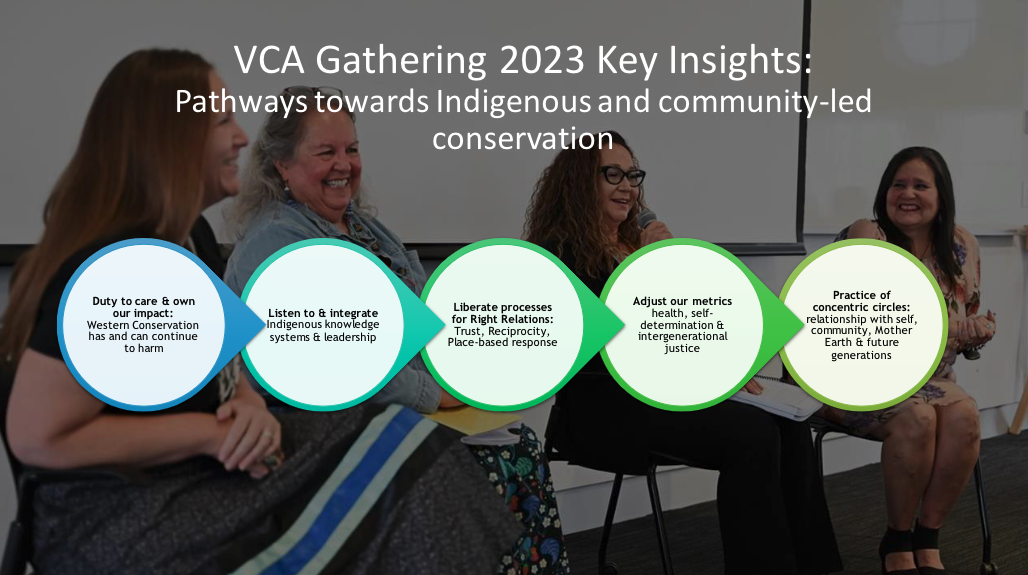
A few months after the convening, Mariana and I held a couple of follow-up sessions, to share what was gleaned from post-gathering evaluations and learn what had moved for participants since we were together. What flowed from those conversations was quite inspiring and encouraging. In the image above you can see some of the major insights that emerged regarding pathways towards Indigenous and community-led conservation. Beyond this, as we listened to those participating in our two Zoom calls share about what they still carried with them and were committing to in terms of action, this is what I heard and noted on a piece of paper:
❤️ Expand the teachings, rather than simply repeating what and how they were given to us.
❤️ Protect and nurture endangered experiences, beyond endangered species.
Earlier this summer, I walked into the Boston Convention Center with thousands milling about and locked eyes with a Black woman who had the kindest smile. As I learned later, she, like me, had been to hundreds of conferences in our lifetimes but we felt shy. The exhibits weren’t open yet so we started chatting about our work and lives. I learned she is the president of a local chapter of the NAACP in the south, and a Black woman president at that. Her power has been challenged daily by white power structures resisting change and by male leadership within her ranks who assume they know better, but she didn’t look tired. She was ready for the convention and she was proud of her youth leaders who were participating. She was here, at the NAACP convention, working to build a better future and that was all that mattered.
New friends at the NAACP convention
If the convention had stopped there, I would have learned something. When you get to my stage of life and attend events like this, you often spend time with people you already know. That day, I spent time with people I didn’t know and at workshops in which the content was unfamiliar. I came away enriched with a new relationship, with new ideas, and – most importantly – with new-found hope. And I learned a lot about what advocates working for change most need in these times.
Here are three takeaways:
These times are not new, and we have the people and tools to break through this painful America we are living in right now. Shavone Arline-Bradley, president of the National Council of Negro Women, brought the house down at the women’s luncheon when she ran down the list of conservative white supremacists that Black leaders have reckoned with – including George Wallace, former Governor of Alabama, who was an ardent advocate for school segregation in the 60s and 70s. Despite his efforts to keep in place Plessy v. Ferguson, which legalized school segregation in 1896, it was overturned 58-years later by the US Supreme Court in Brown v. Board of Education. She argued that we have seen the likes of supremacists like Donald Trump and Ron Desantis before and we have stopped their progress through organizing, get out the vote efforts, and in the courts. And she credited the strategy and strength of Black women who waged these fights.
The climate crisis must be viewed as immediate and dangerous, and as a critical racial justice issue. Boston environmental and racial justice activist Reverend Mariama White-Hammond and other climate leaders clearly laid out the climate and weather shifts that we are now facing. We learned that the impacts are disproportionately centered in Black, Brown, and low-income communities where residents don’t have access to sufficient air conditioning or plentiful and drinkable water in hot conditions, or places to go when flooding hits apartments and homes because of poor water mitigation systems.
As I listened to the inequities, I realized that there should be no “change” in climate change because it’s now a crisis, and there is no “threat” because climate chaos is already damaging our cities and rural communities in the form of extreme heat, wildfires, floods, and droughts. What gets in my way and the way of others who are in this fight is that it’s just so hard to face. We need to stare the climate reality in the eyes, and as indigenous people and people rooted to land know, we must focus on healing our planet and taking the best care of it we can.
We must bring young people to our tables. There were hundreds of youth at the convention, all attending workshops and participating in events designed to develop their leadership at all levels of the NAACP and in local communities. It was clear from the panel conversations and the myriad of people I spoke with that if we’re going to fight modern-day supremacists and their successors, we need young people leading the way. And we need to train and support them with strategies, tools, and resources for social change and racial justice. Our legacy will continue through their passion and ideas and we have a responsibility to support them, teach them what we know, learn what we don’t, and follow their great ideas.
I am walking away inspired by the knowledge that we absolutely have what it takes for the fights ahead, as long as we continue to build the strength of our networks and prioritize the leadership and energy of young people. We can – and we will – do this.
IISC President Kelly Frances Bates was honored this Juneteenth holiday as part of the groundbreaking launch of a new exhibit titled “Living History Makers of Color in Hyde Park”, a pictorial installation of Boston residents and leaders of color who have made historical contributions locally and nationally.
The exhibit features 13 Hyde Park residents of color who are having a positive and enduring impact in the local and national arena and who have committed themselves to service in addressing marginalization, disparities, and inequities. Consisting of larger-than-life pictorial stands of each honoree, the exhibit is scheduled to travel to various sites around the state over the coming months and will have its home during the winter months at the Hyde Park Branch of the Boston Public Library.
The exhibit was conceived and produced by the Forum for Racial Equity in Hyde Park, led by Marcia Kimm-Jackson. The Forum for Racial Equity in Hyde Park via Educational Experiences (FREEE) believes that acknowledging modern Black and Brown contributions and history is important for many reasons. First, it allows us to eradicate the pervasive and damaging myth of inferiority that has been perpetuated throughout history about communities of color. By highlighting the achievements and successes of Black and Brown residents, we challenge this false narrative and promote a more truthful and positive view of the residents and the broader community in Hyde Park and beyond. Second, by recognizing the valuable contributions of Black and Brown residents, we can help to create a more inclusive city and state that values and respects the diverse experiences and perspectives of all individuals. And third, acknowledging the contributions and history of Black and Brown residents is a crucial step towards achieving racial justice and equity.
The full list of honorees, in addition to Kelly Frances Bates, includes:
Reverend Dr. Bruce H. Wall – “Defining the Church Without Walls” – Groundbreaking pastor/activist/changemaker
Aisha Francis-Samuels, Ph.D – “Educator at Heart” – First female college president at Franklin Cummings Institute of Technology
Conan Harris – “Purveyor of Fortitude and Foresight” – Esteemed purpose-driven leader and mentor
Segun Idowu – “Man of the Moment” – Exemplary economic and equity leader
Wyatt Jackson/Dianne Walker – “Ambassadors of Black Creativity, Giants in the Arts” – Impactful educators and award winning and historic artists
Ruthzee Louijeune, Esq. – “Working for the People, Advancing Equity” – First Haitian American city councilor; accomplished attorney
José C. Massó III/José Fabio Massó – “Voices for Change, Pride and Unity” – Award-winning broadcasters for equity and unity and living the legacy of love in service
Pat Odom – “Trailblazer” – First female of color in Massachusetts Army National Guard
Imari Paris Jeffries, Ph.D – “Keeper of Stories” – Exemplary and influential nonprofit leader & equity advocate
Ayanna Pressley – “Policy is my Love Language” – First Black woman elected to represent Massachusetts in Congress
Tanisha Sullivan, Esq. – “Courageous Leader and Fighter for Collective Advancement” – Visionary and impactful attorney, humanitarian and civil rights leader
Ricardo Arroyo, Esq. – “Making Space for All” – First city councilor of color in Hyde Park
Congratulations to all!
Kelly with her familyKelly with colleagues Miriam & SaraKelly and her son, PaulLeave a commentFebruary 2, 2023
In June of 2022, IISC decided to experiment with a four-day work week. First, it was just for the summer. Then we extended it into the fall. Eventually, after careful review of its impacts on multiple levels, we decided to make it permanent.
Here is the original post about this decision, which provides important context.
For years, our visionary president, Kelly Bates, dreamed of implementing a four-day work week at IISC. But it wasn’t until Covid broke open every preconception we had about work that it actually seemed possible. While Covid has led to a lot of heartbreak, it has also given us a once-in-a-lifetime opportunity to completely reimagine our work, from where and when we work to how we manage our time and productivity and more. And so…we are trying an experiment this summer. From mid-June through August we are implementing a four-day work week at IISC.
Some background to this decision might be useful to share.
During Covid we went fully remote as an organization, as did so many others. And eventually, as we grappled with the impact of the pandemic on our work and personal lives, we implemented monthly restoration days (one Friday off each month) and started ending the workday on Fridays at 2 p.m. (essentially giving staff a 37-hour work week). These interim steps made a four-day work week experiment seem possible.
Before taking this step, we took a look around and learned from a lot of other organizations who have done this and we talked extensively with our staff. We learned that four-day work weeks are not a perfect solution to all that challenges us and that sometimes people will still work some on Fridays. But we also learned that a four-day work week can make the work/life balance significantly more manageable; multiple staff from other organizations that had implemented it shared that they’d not now have it any other way.
Another stop on this journey has been a simplification of our goals here at IISC to our intention to become sustainable, whole, and purposeful. Trying out a four-day work week is just one of the steps we are taking in pursuit of these goals. A four-day work week will require us to be more purposeful and intentional with our time and, ultimately, we hope that it means our staff who work diligently for racial justice will feel their work is more sustainable and that they are better able to show up as whole people.
We enter into this experiment with a lot of questions. Will it reduce stress or cause more? Will we be able to get our work done by getting better at prioritizing how we use our work time? Will it impact our finances? We are also entering into this experiment with a sense of gratitude for the out-of-the-box thinking it has taken to get us here, and with the hope that this change will better support our staff as vibrant humans who are living, being, and working in myriad ways to make the world a better place – within IISC and beyond.
The myth of the nonprofit sector is that we achieve our mission and creativity through a 9-5 workday. And if we have learned anything during the pandemic, it is that we all need to be better supported to live into our full potential. This policy change is in deep alignment with our values of love, networks, and racial justice and we are excited to launch an experiment that challenges us to live out these values in new ways.
Maybe some of you are already doing this, or will soon join us? If so, let us know how things are working out – you can use the comment section below. And check out this TedTalk with Juliet Schor discussing the value of the four-day work week – from retention of employees to enhanced productivity and overall wellness for people and families.
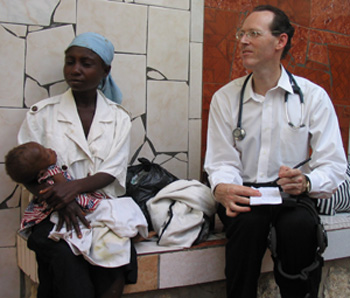
A magnificent star went dark when Paul Farmer, the great humanitarian, physician, and anthropologist, died in his sleep last Monday, February 21, on the grounds of a hilltop university health complex he’d helped establish in rural Rwanda.
He was only 62. It seems he suffered a massive heart attack.
Since I first learned of Dr. Farmer’s work with Partner’s in Health (PIH), the extraordinary nonprofit he co-founded back in 1987, I was inspired by his vision, mission, and values which go to the heart of every social justice credo I’ve ever read.
It’s easy to write lofty mission and belief statements. The walls of the cynical and sanctimonious are filled with them.
It’s another matter to muster the collaborative energy and force of character that willsthem into being. Few have done it with such skill, courage, and resilience as Paul Farmer, in the face of daunting obstacles. Only Gandhi and Martin Luther King, Jr. come to mind when one considers who else might fit in this pantheon of humanitarian giants.
To get a feel for the magnitude of Paul Farmer’s achievement, try this imaginal experiment.
Gaia calls you forth and charges you with the following mission (excerpted from PIH’s website): Provide a preferential option for the poor of this planet in health care. At its root, your mission is both medical and moral. It is to be based on solidarity, rather than charity alone.
You ask: What moral precepts shall I adopt to guide our work?
Gaia answers: Your success will be evaluated by the degree to which you implement the following moral tenets:
1. All human lives have the same value, and every human being has the inalienable right to be healthy to fulfill their potential.
2. The right to health is not the only right held by our patients. Other fundamental human rights are interrelated and just as inalienable.
3. All people need to stand in solidarity with those who find themselves at the margins of modern society.
4. The playing field needs to be leveled for those individuals who are born at a disadvantage (equity vs equality).
5. Injustice is not accidental but a direct result of structural violence and oppression. We can fight injustice by changing those dynamics.
6. It is our moral call to action to expose social injustice and to work toward correcting those systemic forces that create inequalities, no matter how impossible or challenging this task might look.
Though we approach the challenge of social injustice from different angles, I’ve always been struck by the congruence of IISC’s mission —”to build collaborative capacity in individuals, organizations, and networks working for social justice and racial equity” — with that of Partners in Health. And there is no doubt that we share the same set of moral convictions in going about our work.
Tracy Kidder documented this labor of love in “Mountains Beyond Mountains” in 2003, shadowing Farmer through rural Haiti, Cuba, Peru, Siberia, Rwanda, and Lesotho, as he hiked hours to the homes of patients to be sure they were taking their medicine. From the prisons and barrios of Lima to the gulag of Siberia, and throughout rural Africa, he shone his light where the world had turned an indifferent eye. Thousands are alive today because Paul Farmer lived; his love for his patients will forever be his legacy.
As long-standing friends and partners who’ve known of my admiration and commitment to Dr. Farmer’s work, I invite you to take a few moments to peruse Partners in Health’s website and consider making a donation in honor of his life and work — one of great love, generosity, and courage that made the world a better place.
Now it’s up to the rest of us to ensure that his spirit lives on — his moral flame an eternal sanctuary for the marginalized.
May he rest in peace.
Thomas J. Rice, Co-founder and former IISC Board Chair (1992-2012)
After shedding joyful tears, I was thrilled to share this news with our team. Many years ago, we aspired to attract an angel investor, but never had the capacity to pursue one rigorously. Since then, we occasionally joked about this possibility, but never really thought we would be on the receiving end of the biggest charitable donation of our careers. The $2 million gift, with no strings attached, was validation for a team whose members have been humble over the past thirty years as we worked to build collaborative capacity for social justice and racial equity.
In the midst of the excitement and overwhelm of the unexpected gift, we also recognized the responsibility that comes with our windfall. For many organizations led by Black, Indigenous, & other people of color (BIPOC) — like ours, operating on relatively small budgets — a cash infusion of this magnitude could enable us to grow our programmatic work while also focusing on often neglected internal needs. Yet, rather than rejigger our budget, we are choosing to take a long pause before doing anything with the grant. We are faced with answering an otherwise hypothetical question that we often pose to the networks and organizations we work with: ‘What would your non-profit do with $1 million?’ In our case, what would we actually do with an unrestricted $2 million grant?
We are keenly aware of the freedom to make expansive choices and explore new possibilities now available to us. At the same time, we are also aware of: 1) the countless entities we support or are in partnership with that did not get a grant as we did, and 2) that the grant has created an implicit power and equity differential between IISC and those with whom we work. So what is the way forward?
To guide our response, we are drawing on our organizational values — to ensure that this gift benefits not just our organization but also the ecosystem within which we operate including our clients and partners.
Social change is possible through shared power and equity, network building, and love — our lens for collaborative change which guides our internal and external work. As we consider how we will spend these grant funds, and what we want to do with them, we hope to foster a sense of power-sharing, ensure equitable outcomes, build relationships and networks, and express love in action.
With that in mind, we are clear that decisions on how we spend the money will be led by BIPOC staff, including our affiliate consultants and trainers and our board members, with input from other IISC stakeholders. We want to ensure that historically marginalized and racially oppressed groups and communities have an equitable share in the power and control of organizational and societal resources. This is particularly important to us because BIPOC are typically not centered in big money spending decisions. Furthermore, centering BIPOC is an act of trust, with the understanding that the people involved in the decision-making will do so with the strengths, aspirations, and needs of their organizations, networks, and our communities in mind.
Transformative leadership is the kind of leadership we need in the 21st century. With this organizational value, we are considering how this potentially transformational gift to IISC is an opportunity for us to lift up organizations and networks that were not chosen for the grant. We are already using our position to leverage funds for other great organizations. We are excited that this is one way we can expand our circle of influence and promote greater equity in philanthropy.
The change we seek in the world ultimately comes down to the decisions we make about how we expend resources in our lives from the individual to community, organizational, and societal levels. IISC envisions a healthy planet where people thrive, value their differences, and work together for peace and justice and we are committed to leveraging the gift from MacKenzie Scott towards realizing this vision. As we come out of our pause and initiate conversations on how we will utilize the grant, we invite you to stay tuned as we share what we are learning and where we land.
On June 11, 2019, IISC successfully celebrated twenty-five years of
building collaborative capacity for social justice and racial equity. It was a
beautiful and soulful party with over 200 supporters at the historic Hibernian
Hall in Roxbury, Massachusetts, a largely Black and working-class community in
the heart of Boston. It was IISC’s first time planning an event of this
magnitude, let alone celebrating such a major milestone as our quarter-century
birthday.
As you know, part of IISC’s core and signature contribution to the
field is that we bring people together to collaborate, lead, and design processes
for social change and racial equity. Therefore, like a true IISC’er, I have
been pondering some questions. What did
we learn about collaboration, racial equity, process, and leadership through
this event? What did this event teach or re-teach us about collective planning
for change?
There are five observations that come to mind. Not so much about the mechanics of the event (get a great event coordinator is the short answer to that!), but rather about the important intentions around the event.
Clear collaboration got us through every challenge. It was important for us to have a clear purpose for our event, a set of shared values to guide our planning, and a collective vision for our success. Our willingness to share leadership brought wisdom and effective action to our task. We also understood that our collaboration could be efficient. At IISC we remind people that not every decision needs to be made by consensus and this was true in our process. In the case of our event, we delegated the role of planning the event to a committee of diverse stakeholders by role, age, and race that could work nimbly with a relatively small number of constraints such as budget. Other than that, the sky was the limit. We solicited input from each other and other stakeholders as we went along so that we could harness the collective genius and perspectives needed to make this a truly special and unique event. When we hit a block or wall, we would ask the group, what do you think?
Women of color leadership makes the difference. At IISC we are challenging our clients and ourselves to make and honor spaces for women of color to share their voices, to lead, and to flourish. Our event coordinator was a Black woman and at any given time, 70% of the event committee was comprised of women of color. These women of color brought intersectional approaches to everything, making connections between IISC’s equity values and our event vision and execution. We ensured that we had diverse voices on our event stage, and that we hired people of color, women, and Boston residents as vendors. Women of color have often had to make do with very little and to work on every task from bottom to top. With that, our skills kicked in, helping us to nail the small and big details. Collectively, we turned over every stone to solve every challenge along the way.
Set an inspiring goal. At IISC, we promote facilitative leadership, and a major facet of this kind of leadership is inspiring people with vision. We decided to set a fundraising goal that was a stretch but not one that would strike fear in us if we didn’t meet it. We chose a goal that if reached, would allow us to accomplish what had otherwise seemed impossible: a goal that would provide long imagined funding for innovation and product development. And we not only met our fundraising goal, we shattered it!
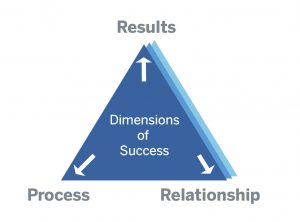
RPR works. At IISC, we talk about the three dimensions of success in any collaboration. Tending to relationships, designing artful and meaningful process, and achieving results. At each stage of our work as an event committee, we made space for each event committee member to personally check in about their lives and to learn about non-IISC interests and pursuits. We made sure to have focused and detailed meeting agendas with strong facilitation so that we could process all the event details before us and achieve our desired outcomes. We focused on achieving results. We set targets of $125,000 in fundraising and 150 event participants, and we exceeded both our goals. All three dimensions were essential to our event’s success.
5. Speak and show your values. At IISC our values include equity, networks, shared power, and love and we made sure our event program directly reflected these values. Event participants not only walked away knowing something about IISC’s historical accomplishments and what we do here at IISC, but also about the values that hold our work. Our special 25th anniversary video and program speakers spoke to racial equity, the value of networks, and of love as a force for social change. We had three tiers of event ticket prices along with scholarships, so that we could meet our fundraising goal and still make the event accessible to everyone. Our values were also displayed by hugs, laughing, dancing, and making connections between people around the room. It’s no fun to work on racial equity and social justice if you don’t get to live out and experience those actions and values.
There are many more lessons to learn, but this I know: love, commitment, collaboration, adaptability, connection, and ambitious goals had everything to do with our success. It’s actually hard to accept that our planning has come to an end. Our event planning committee members loved working with each other and experienced a sense of accomplishment that we hope to replicate throughout the organization in the next twenty-five years!
A secret I don’t share with many people is that I have trouble reading books. When I went to law school, they made us read so many dense pages of legal reasoning I lost my love of story – until I discovered the podcast. In the comfortable confines of my car I stand witness to stories of personal accomplishment, quirks in our daily lives, and social commentary about our world. The other day one really caught my attention.
It was about Toys R Us, the biggest toy store in America. I love toys and I thought everyone else did, too. So I was surprised to learn that Toys R Us had filed for bankruptcy. Turns out, Toys R Us had invested in bricks and mortar without seriously expanding into the internet sales market. And at the same time, they kept those physical spaces disorganized, stale, and predictable. Amazon swooped in and sold toys at a record pace.
A toy and business analyst said if Toys R Us could have jumped in early and creatively into internet sales they would have avoided their decline. And if they had made their stores places of experience, fun, mystery, and discovery, they could have saved their business that way. He believed they should have created large and open areas where kids could ride around on bikes and play with other toys. He thought another miss was not thinking about how to combine physical toys with technological interactions.
As I was driving on the highway heading into traffic, I started thinking about lessons IISC or our network of clients and partners could learn from this story. Are we missing opportunities for integrating our knowledge and expertise with web-based learning and social media? Are we creating experiences in physical rooms and meetings that kick leaders and participants out of the norm and into experiences of fun, exploration, and surprise? Are we combining online and in-person strategies to more effectively and creatively share learning and ideas around collaboration, leadership, equity, and network building?
IISC is not a for-profit corporation like Toys R Us, and we have different values and approaches from them, but we can benefit from understanding that the way we do our work now and how we do our work may not be the standard for the decades to come.
IISC has started piloting some unique approaches in our workshops, in our consulting work, and through our experimentation with public engagement that use web-based learning, social media memes, and narrative. We are cooking up ways to fashion our training and consulting expertise in modular and less expensive ways so we can share it more broadly. I think that’s an early sign of us growing and stretching. We are pushing ourselves to domore experimenting and I know it’s going to help us stay relevant and live into the power of the future.
What experiments might you try out that will help you live into your future? What’s the risk of not doing so? Supporting leaders, organizations, systems, and networks to engage in social change is never out of date, but the way we as consultants and leaders approach that work might be. We may know at a gut level that something new and different is called for, but are we leaning into what’s necessary to make the leap?
Check out how Toys R Us plans to turn around: https://www.reuters.com/article/us-toysr-us-bankruptcy-brandon/toys-r-us-ceo-sees-future-with-smaller-shops-idUSKCN1BV2Y7
Keynote at Grantmakers for Effective Organizations Conference on June 11, 2015.
Direct Experience
This story begins for me when I was in Central America and had terrible fall and I could hardly walk. I was medi-vaced back to the US where doctors gave me x-rays, bone scans, and cat scans, but they were unable to discover what was wrong. Everything changed for me when I visited a holistic doctor. She laid me on the table and proceeded to touch my body all over.
What I realized at that point was that up until then, doctors were trying to understand me by looking mainly at representations of my body. It was not until someone engaged my body physically that the missing information was included that led to a pathway to health. This experience of representative data failing and direct experience finding a solution to a problem left a lasting impression on me—literally. As you can see, I am moving and healthy now. It helped me understand that what we know how to measure is not all we need to know in order to understand.
Thank you for the opportunity to talk with and have a conversation with you about community knowledge and voice. One thing I have learned is that this topic is not just a concern for grant makers. It is also the core issue for building a just and inclusive democracy.
To illustrate this and open a dialogue on the implications for grant making, I am going to tell you about an innovative approach to bring community knowledge and voice to a central public policy issue going on right now here in Boston.
All In
I have spent my life practicing and innovating what it takes to bring community knowledge to how we build equitable and just societies; or, as I like to say, for us all to be all in. All in framing issues. All in providing the information and knowledge needed to understand the issues that affect us. All in making decisions that impact us all. All in, especially those who are most often always left out.
In this and many other countries, we do not have the infrastructure nor process in place that will allow us to be all in, and to bring the full force of what we know to inform our understanding of the world.
And so we are left wondering—How can we build the will and develop the skill of the diverse public to collectively create a just society? How can people live in peace on a healthy planet, balancing their individual interests and complex differences? I call this quest to create a new infrastructure and process to bring us all in BIG DEMOCRACY.
Right now, in Boston, we are using transportation planning to demonstrate that Big Democracy is possible. And we can do this because it’s a new day in Boston with a new Mayor, Marty Walsh, who has a desire to hear more voices than ever before. Go Boston 2030 is a project of the Mayor’s Office, the Boston Transportation Department, and the Barr Foundation to develop a vision for Boston’s transportation future that is defined by the diverse Boston public.
There are four components to this effort:
Creating a new context for public participation
Using questions to engage the public
Making meaning of public knowledge
Creating a shared vision
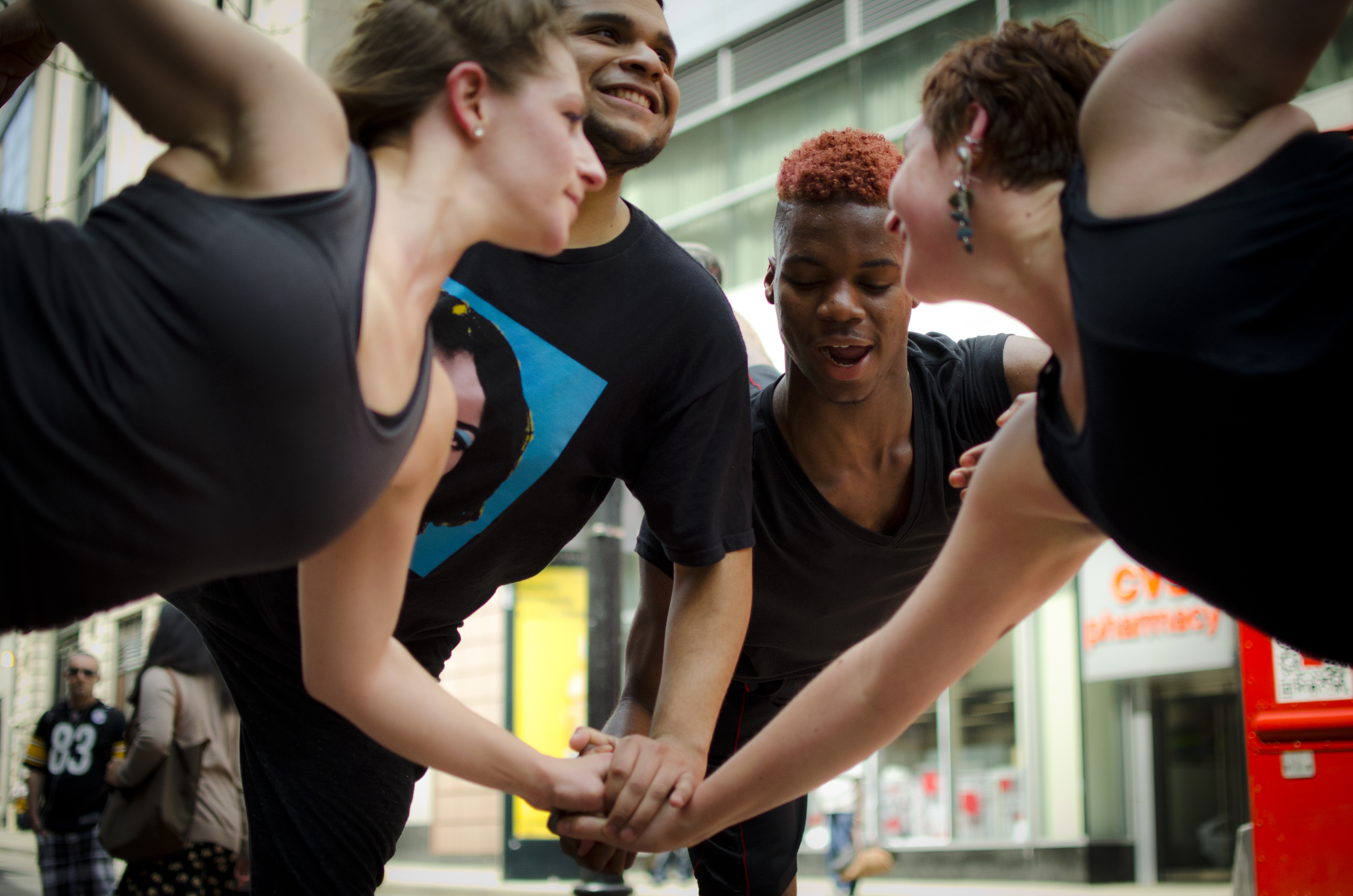
Present Day Dance Theater performs outside the Go Boston 2030 Visioning Lab on May 9, 2015. Photo by Rafael Feliciano Cumbas.
Creating a New Context
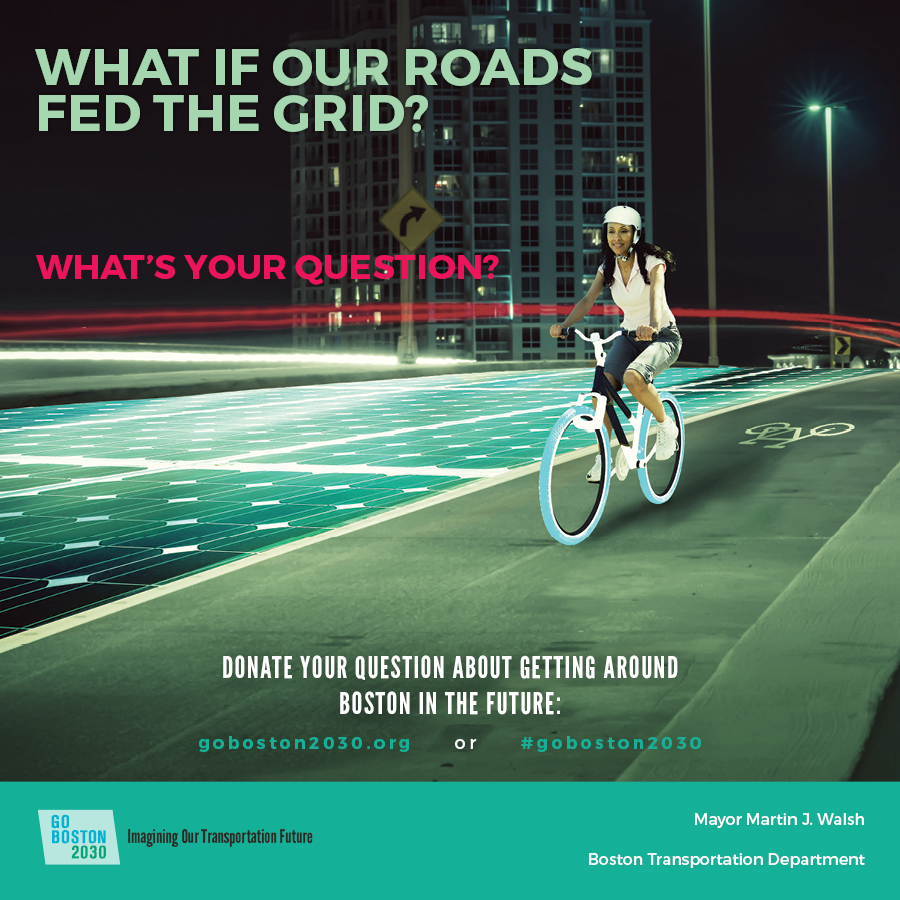
For it to truly be a new day in Boston, we had to let the public know we were serious about letting them frame the transportation vision for Boston. We used our Question Campaign technique to get people who live, work, and visit Boston to donate their answer to the following question—”What’s your question about getting around Boston in the future?” We started with a blank canvas and asked the public to fill it in from its own experience.
To let the public know the city was serious about hearing from everyone, we created an ad campaign designed to let the public know they were being invited into something different. If this was January, you would have already encountered ads, as they were all over the public transportation, digital billboards, even the trash cans in the city had ads.
The ads were designed to be provocative and to get people thinking about what’s possible beyond their current reality. The ads were also designed to elicit an affective response, to touch people, because we believe that to engage people, we need to engage both their hearts and minds. The ads are also designed to let them know what they needed to do to participate; and all of this because we want to tap into the creative energy and deep knowledge of the public.
What we understand about democracy is that most people have opted out. They believe it is impossible for the demographically complex and diverse public of this country to work together. The counter intuitive action is that, to bring people together, you first create the opportunity for each person to speak for themselves, and, over time, with each other.
Advertisement by Ad Hoc Industries.
Using Questions To Engage The Public
We put our ads throughout the city to demonstrate that anyone can have a question even if they don’t see themselves as an expert in transportation planning. All anyone had to do to participate was donate a question. We use the word donate purposefully to let people know that we recognize their question has value.
To engage people in the process of democracy, you have to lower the barrier to participation. And what we have found is that asking people what their question is about something allows anyone, regardless of age and language, to participate. Even the six-year-old boy who asked the question, “Will dinosaurs be a source of transportation in the future?”
Listening to people’s questions is a way to understand what the breadth of the issue is, what people’s diverse experiences are, and what they most value. Because we believe it is critical for people to see themselves and their reality in the ads, we used our digital channels to reflect back to the public images of people with their questions. We do this to present a counter to the general narrative that is out there that the public is not smart.
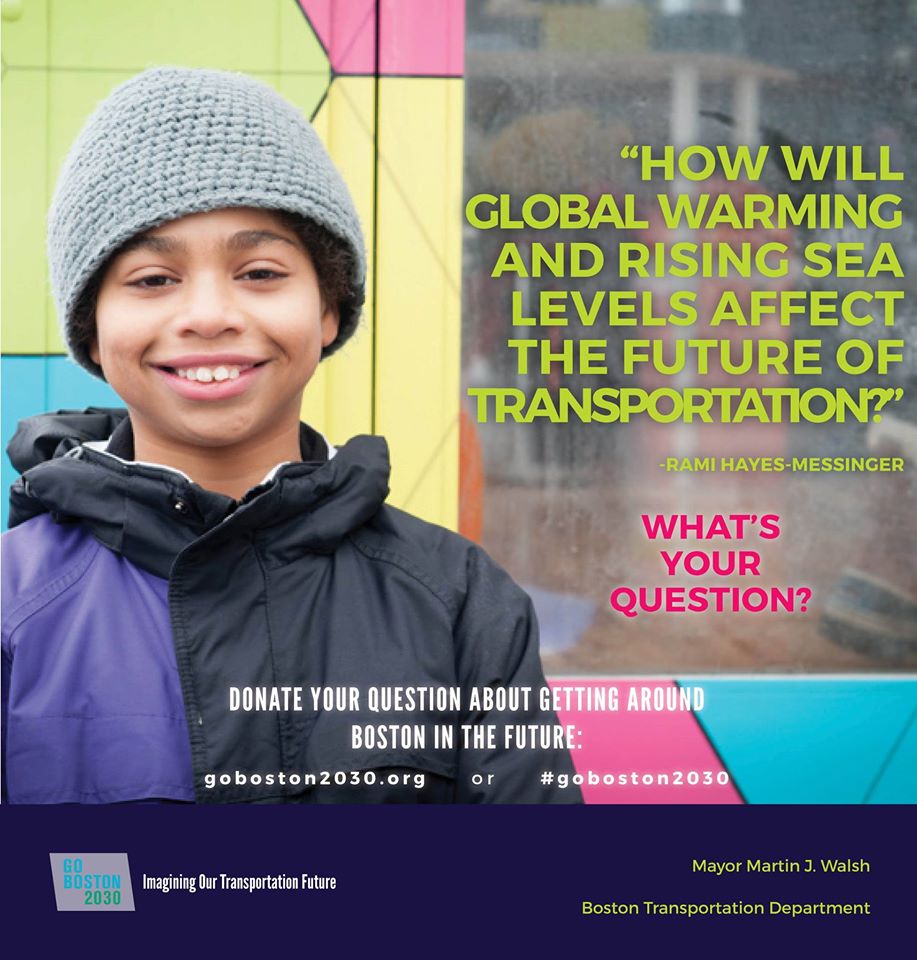
In one ad, Rami an 11 year old African-American boy is pictured with the words from his question. “How will global warming and rising sea levels affect the future of transportation?” Knowing that this is the kind of question that he has, how does this change what you think he needs and what’s important in his life?
Big Democracy requires us to shift our thinking and to realize that people, no matter where they are or what their station in life, actually have valuable knowledge to contribute. We learn to value The Other.
Rami Hayes-Messinger quoted in Dudley Square at the What’s Your Question Truck. Photo by Leise Jones.
We collected over 5,000 questions and touched every neighborhood in Boston. We did this by letting people submit a question in a way that makes sense to them and meeting people where they are.
For example:
People could submit questions via text, email, handwritten cards, Tweet, Instagram, Facebook, and other ways.
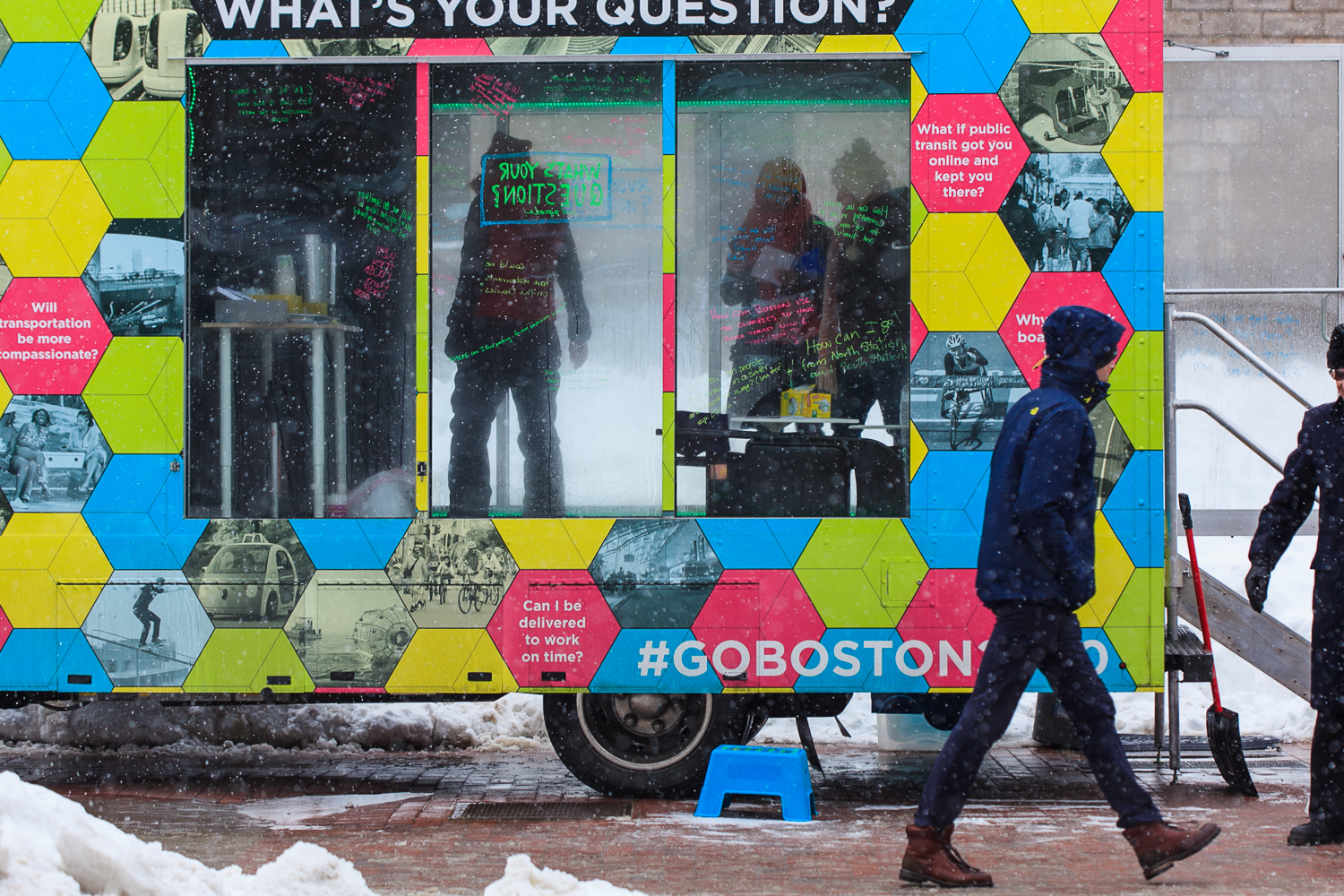
We designed an interactive glass truck that went to 15 neighborhoods.
We used digital media to publicize on the city’s social media pages, built a following, and attracted thousands of questions.
We had over 80 partners from city agencies to grassroots organizations committed to bringing their networks into the campaign.
We participated in existing events all over the city.
We knew it was working because we’d show up at a non-transportation event in the city and get asked for questions. This is something we were part of starting, but the public owned it.
In democracy, in order to solicit the knowledge that the public has, you have to ask people in the form they’re used to having conversations in, and you have to show up where they are. The opportunities for participation have to exist within the normal flow of ones daily life. This doesn’t necessarily mean you, but you have to create the opportunity for the request to show up.
Videos shot and edited by Oluwaseun Ajewole.
What’s Your Question Truck parks in neighborhoods to collect questions. Photo by Allana Tarranto
Making Meaning of Public Knowledge
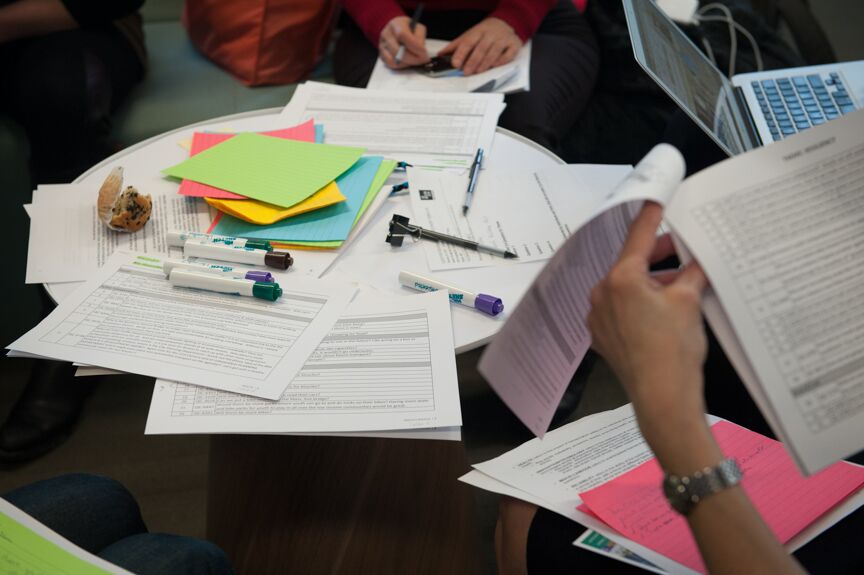
As the questions came in, they were organized by emerging themes and zip code, and made available for viewing on the website. But how do you move from 5,000 questions to something people can anchor around and build a vision? The Question Review Session was a half-day convening of city officials and community leaders who reviewed all of the questions and worked together to understand and articulate what the public was saying. Participants identified sets of questions that best represented what was most recurrent, provocative, and visionary amongst everything people had said.
What is important to note here is that the primary responsibility we ask is that of discernment. They had a responsibility to weigh each question the same and try to discern the shared meaning emerging from what the public had to offer—and they took it seriously. What they produced was later verified by the public at the Visioning Lab. The public will work hard to support open and inclusive democratic processes, and if you are transparent, the public will actually trust the process.
Democracy requires that we have open, transparent processes so when community knowledge is refined by others, it is not set in stone. Once refined, it requires a process of affirmation from the public again.
Every question was read at The Go Boston 2030 Question Review Session on February 24, 2015. Photo by Leise Jones.
Creating a Shared Vision
The Visioning Lab was a place for people to share their vision of our transportation future. It was designed to test the resonance of the themes, questions, and vision ideas that emerged from the Question Campaign and Question Review Session. People were invited to answer some of the key questions and to articulate how they imagine seeing each vision idea come to life.
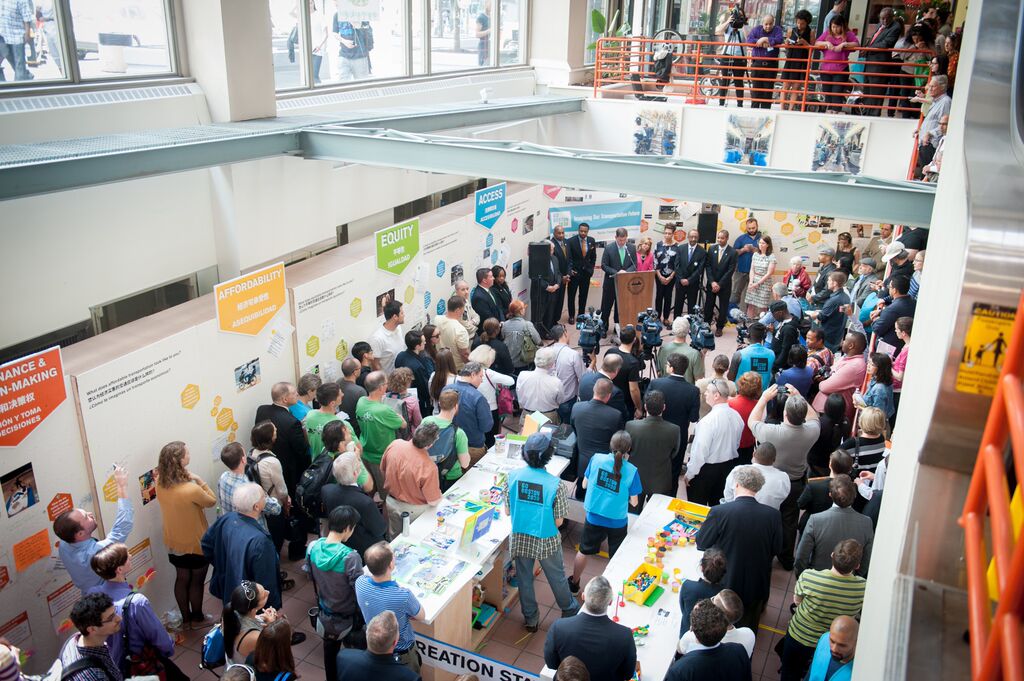
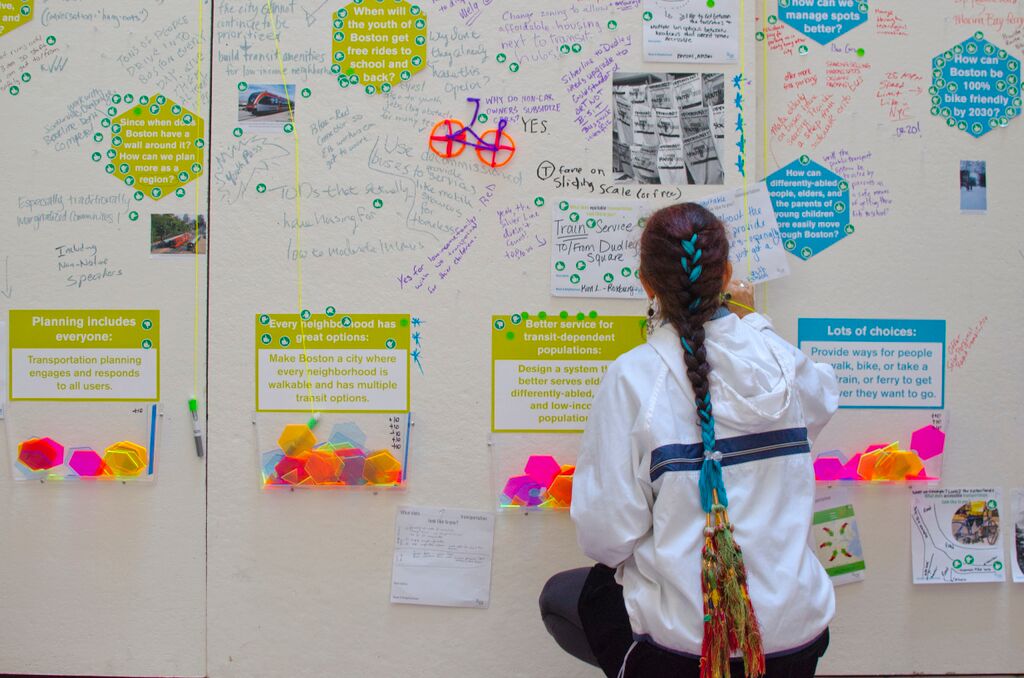
The 2-day event was highly interactive. Large, multi-lingual walls were created for each theme that emerged from the Question Campaign. Participants could offer their own vision through words or images, build on other people’s ideas, and indicate what content most resonated with them. The walls also included images that were submitted from the public online via the website. In the same area were info graphics drawn from multiple data sets showing how people get around Boston. This input became the basis for informing the goals and targets of the transportation plan.
Mayor Walsh opens Go Boston 2030 Visioning Lab at China Trade Center on May 8, 2015. Photo by Leise Jones.
The vision lab reveals an important point of Big Democracy. If you were to look at one of the theme panels you would notice that at the top is the theme, below are the framing questions, then people’s ideas represented in different forms, and, at the very bottom, a place to vote. In Big Democracy, voting is an artifact of democracy because the real work of democracy is creating the opportunities for people to lift up their knowledge and make meaning together. This is the opposite of where we currently place our emphasis in supporting democracy. As the next presidential election comes into focus, funders will begin to prioritize much needed Get Out the Vote campaigns. However, if we understood voting as an artifact of democracy, we would also be supporting efforts to have the public frame and discuss the key issues that inform the presidential election.
Right now all the information from the Visioning Lab is being pulled together to set the goals and targets for Boston’s transportation plan, and those votes that people cast have actually set the priorities of the themes. They are informed decisions. In January 2016, the city will start designing projects to meet these goals and targets, and open a new process to engage the public in that phase of the work. Interaction Institute for Social Change is in the process of continuing the public engagement in that effort, continuing to help build the public’s muscle for democracy. The questions that have been collected have been organized and coded in such a way that, as projects are identified, we can call up the questions connected to that project and use them to define effective solutions.
Go Boston 2030 Visioning Lab participant. Photo by Rafael Feliciano Cumbas.
Interventions in Democracy
I started out this talk by lifting up the distinction between Big Data and community knowledge. We live in an information economy and data will always be an important part of what we need to consider in making decisions. However, if we want to strengthen democracy, data alone is not sufficient. We need more robust interventions in democracy.
Like the holistic doctor who figured out what was wrong with my back by touching it, we need to reach out and understand communities. We need interventions in democracy. That holistic doctor has a deep knowledge system in place that allows her to do that. We need to work to develop a knowledge system for working with the public.
Just as we are creating the infrastructure to both lift up a holistic approach to health and integrate it with traditional medicine, we need to do the same thing with building democracy. We need to intentionally build an infrastructure that is going to support community knowledge to sit with data. Holistic medicine is growing. It’s widening. It’s deepening. It’s integrating with and becoming part of how we think of traditional medicine. Just as we’re getting more conscious about holistic health, we’re also valuing and getting better at traditional forms of health and data.
So what does this tell us? It tells us that the public is hungry for Big Democracy, but for it to work, every institution that touches the public must take on the responsibility of building the democratic muscle of the public. Every institution that touches the public has the possibility of building the democratic muscle of the public.
To do so we need to:
Design processes that allow the public to bring their knowledge into the conversation.
Create imaginative ways to let people know they are being invited into something different.
Invite conversations that honor what people already know.
Refine what comes out of public process openly, checked by the public.
Structure accountability methods into the implementation phase.
Much of what I have presented here is about what structural things we need to create in support of democracy, but the path is not all structural. There is a simple step that each of use can take every day to make sure that, through our actions, we are creating a world in which everyone is in. Just as we know that to undo structural racism we have to attend to the micro-aggressions that happen every day. In building a democracy where everyone is in, we have to create micro-inclusions—daily actions that signal to a person that they are included. We have to build Big Democracy and demonstrate that it is possible for the public to be all in.
Two recent graduates of a Facilitative Leadership for Social Change workshop Mistinguette Smith and I led in New York, Alison Gold and Juan Sebastian Arias from Living Cities, recently wrote to us about a creative way they are bringing the frameworks and tools they learned back to their organization. So many of you ask us for advice about how to apply this stuff that we thought you’d want to know about it too! Read More
Elena Letona is the former Executive Director of Centro Presente a member-driven, state-wide Latin American immigrant organization dedicated to the self-determination and self-sufficiency of the Latin American immigrant community of Massachusetts and that works for immigrant rights and for economic and social justice.
IISC worked with Centro Presente’s staff in the year leading up to Elena’s transitioning out of her role as Executive Director. Both Elena and the staff were determined to bring the organization through this period with grace and to grow together by deepening their own capacity.
The process was launched with a Facilitative Leadership program that focused on creating a culture of collaboration. No one describes the impact on the organization more eloquently than Elena in this video testimonial. Both Elena and Centro are thriving.
Our Organizing Model
Leadership development is a very important component of our mission and our work. We recognize that the members of our community bring to this country their personal experiences and capabilities and in return we provide them the space to build opportunities to develop and exercise leadership. Our leadership development model focuses on community organizing around specific themes like immigrants’ rights, workers’ rights and civic participation.
The model engages, internally, our staff, board, members, and program volunteers, and externally, allies and other community stakeholders. For example, our Board is composed of Latino immigrant workers and youth members. Through participation in our committees, the members of Centro Presente have the opportunity to be actively engaged in leading campaigns and activities that impact their own lives, as well as the lives of their families and the broader community.
Make Change Stick Beyond the MeetingTurn ideas into agreements that stick, and keep change going after the meeting ends. Perfect for teams stuck in “great conversation, little action.”