It has been a heartening return to my home state these past couple of days while delivering a two-day Facilitative Leadership workshop with members of Michigan’s philanthropic community. Yesterday, we spent some time in the afternoon talking about power and how it plays out in different kinds of change initiatives. The point was made a number of times that those who are most impacted by the issues we are trying to solve must be in on the solutions, including the design and carrying out of the processes of problem-analysis, opportunity identification, and vision creation. Read More
Picking up from Gibran’s post yesterday and continuing in the vein of follow-up to our LLC webinar on collective leadership, I want to respond to some of the questions we did not have a chance to answer or answer fully from participants, including requests for examples of collective leadership in action and inquiries about blocks and how to work through or overcome them. Read More
Last week I blogged from San Diego while co-delivering Engage for Results with my colleague Melinda Weekes to a group of grantmakers in partnership with Grantmakers for Effective Organizations. This session focused on engagement strategies to help foundations be more effective and accountable as funders and providers of other important resources to their grantees, surrounding communities, and other funders. The end of our first day focused on power as an ever-present dynamic, not just in the foundation-grantee dynamic, but also in a number of other dimensions of difference within and beyond organizational walls. Read More
|Image from Ritwik Dey|http://www.flickr.com/photos/ritwikdey/425995583/in/photostream|
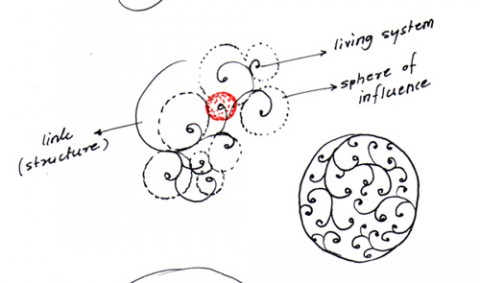
At the end of last year, I posted a piece about our work with an early childhood system change initiative through the Graustein Memorial Fund in Connecticut. At the time we were exploring different formats and technologies for creating a new “system blueprint” for early childhood development in the state. Our post and related tweets asked for possible resources to conceptualize and create a living blueprint for this dynamic system, and I wanted to give an update about what we have heard so far and where we stand in our conversations.
As the Core Team has engaged in its research about all this, we’ve realized that there are three separate but possibly connected aspects to this “blueprint”conversation”: Read More
On the cusp of the Martin Luther King Jr. day of remembrance and celebration, IISC is gearing up to lead a webinar on the day after the Monday holiday focused on a very relevant topic – collective leadership. Much is being made of the Occupy Movement and its potential for showing us a new way to lead (we would call it leader-full, not leader-less). Prior to this important civic groundswell, many have been looking at how to create the conditions for emergent and collaborative leadership to move us in more just and life-affirming directions. Given the complexity of the issues we face and the diversity of perspectives in our various systems, it has been recognized that we cannot rely on individual, expert, or command-and-control leadership to move us forward. We must unleash more robust and adaptive collective intelligence. If this conversation interests you, come join Gibran Rivera and me as we explore stories of and practices for creating the conditions to unleash leader-full momentum that embodies and leads to the social change we seek. More information about this free opportunity can be found here.
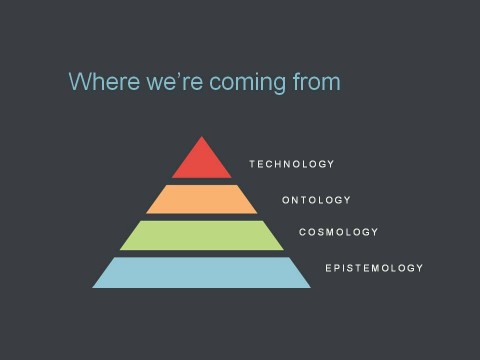
Next Tuesday, my colleague Gibran Rivera and I are excited to lead a webinar hosted by our friends at the Leadership Learning Community called “If You Till It They Will Come: Nurturing Collective Leadership.” The above slide is a bit of a sneak peak, and certainly one of the headier, nonetheless important, elements we will cover. The idea behind this graphic comes from the work of Carol Sanford, who has highlighted the fact that our leadership and change methodologies are always grounded in an underlying belief system about what we hold to be true about the world and humanity. Not being aware of or transparent about this can get us into difficulty when we are mixing and matching techniques/methods that may contradict one another, or when we are not operating from the same system of beliefs as others. So here is how we are tracing the roots of our approach to cultivating collective leadership for social change: Read More
. . . and much more! Melinda Weekes and I are currently partnering with the good people at Grantmakers for Effective Organizations to facilitate another offering of “Engage for Results,” a workshop that builds on our work together 5 years ago through the Change Agent Project. During this initial work convening grantmakers and nonprofits around the country, we heard loud and clear that addressing power dynamics and engaging in authentic relationships would be key to ensuring that grantmaking is more relevant and impactful with respect to the work of nonprofits and outcomes for communities.
I have written a few times in this space (see “Right from the Start” and “The System is Us”) about our work with the Graustein Memorial Fund and stakeholders from around Connecticut to re-conceptualize and change the early childhood development system in the state so that all families and children are thriving. We are currently in the midst of a visioning process, whereby members of the System Design Team are engaging various constituents in conversations about what it would look like if the system were truly providing equitable and excellent support and opportunities to all children, regardless of race, ability, and income. In addition, we are asking what foundational beliefs, or values, would under-gird such a reality brought to life. This phase kicked off with a series of interviews with participants in the Memorial Fund’s annual Stone Soup Conference. This included parents, child care providers, elected officials, advocates of all kinds, and the keynote speaker – Ralph Smith. Check out the series above, along with others posted on the Right from the Start site. There is an emerging picture forming here, that speaks to the power of collective visioning. What do you see?
|Image by Dionne Hartnett|http://www.flickr.com/photos/dionnehartnett/6289336176|
I spent time over the break reading through Howard Bloom’s robust Global Brain: The Evolution of Mass Mind from the Big Bang to the 21st Century. Described as a “lusty tome” by evolutionary biologist Lynn Margulis, the book is an exploration of history through the lens of group rather than simply individual selection. Bloom’s concept of collective information processing is eye-opening, provocative, and possibility-inspiring. It is also very timely given the growing emphasis on networks and collective approaches to change. Here is a taste, found in the opening pages:Read More
|Photo by ad551|http://www.flickr.com/photos/aaddaamn/5196833268|
As 2011 comes to a close, we here at IISC can look back on a year full of multi-stakeholder change work. I think I can speak on behalf of the entire team when I say that it has been our pleasure to contribute our process design, facilitation, and collaborative capacity building skills to a range of differently scaled social change efforts, linking arms with convenors and catalysts in a variety of fields. These have included (to name a few): Read More
“It is my working assumption that the following forty questions must be definitively answered before we may realistically discuss our respective philosophies and grand strategies. . . . ”
—R. Buckminster Fuller
|Photo by Horia Varlan|http://www.flickr.com/photos/horiavarlan/4290549806|
Picking up from yesterday’s post, here is Bucky’s list of 40 strategic questions: Read More
Clearly a man ahead of his time, R. Buckminster Fuller’s thinking seems to become more and more relevant. His invitation is for us all to be comprehensive anticipatory design scientists, to engage in the “design science revolution.”
Make Change Stick Beyond the MeetingTurn ideas into agreements that stick, and keep change going after the meeting ends. Perfect for teams stuck in “great conversation, little action.”