April 3, 2014
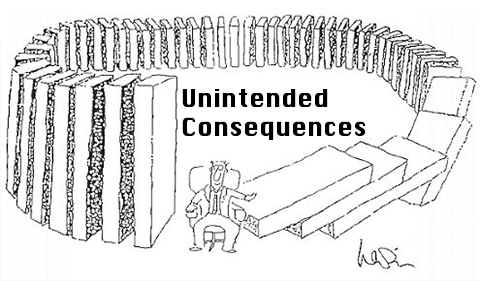
Another story about what can happen when we fail to hold a broader systemic view in our social change work . . . I was working with a food system-focused network the other day and the good news was reported that great strides have been made in reducing food waste, in large part because distributors and retailers are doing a much better job of tracking inventory and fitting it better to consumer demand.
On the other hand, it was also reported that this spells a real challenge for the “emergency food” world and food banks, which have been largely dependent upon excess food to provide for the growing number of people who are food insecure. Read More
April 1, 2014
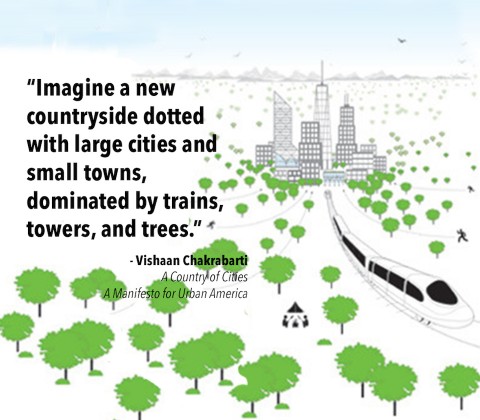
At IISC we often talk about three hugely important pieces of context for social change work these days:
- We are in the middle of a paradigm shift, from the Industrial Age into an age that doesn’t have a name yet
- By 2050, 70% of the world’s population will live in urban areas
- In 2042 the U.S. will become a majority people of color nation
In this context, as a nation and a globe we are choosing to face or ignore urgent questions about climate change, racism, wealth distribution, violence (the types we condone, penalize, and ignore), and the quality of life that we are willing or unwilling to insist upon for every human being on this planet. It’s quite overwhelming…
Read More
April 1, 2014
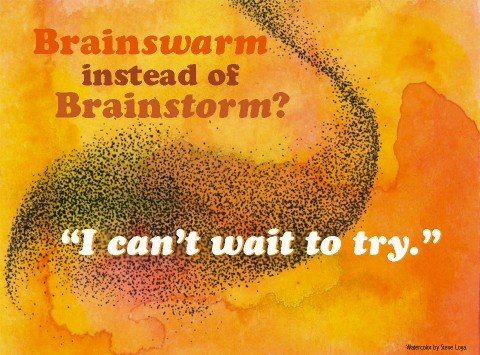
The recent barrage against the effectiveness of brainstorming has been a bit hard for those of us who are grounded in the Interaction Method. But evidence matters, doesn’t it? I know that Curtis has talked about the limits of brainstorming a couple of times in this blog. Read More
March 31, 2014

This post continues a conversation that Curtis Ogden started last week. (Process is Where Change Happens) It’s a conversation we’ve been having for years at IISC. On one hand, we recognize the importance of understand how thinking shapes the systems we produce and reproduce. And it’s important to understand that inequities and oppression are not just a matter of thinking that can be changed simply by changing our minds. I’ve often been impatient with the “change your thinking, change the world” discourse because I’ve seen it used as an excuse for avoiding discussing the systems dynamics and the resulting inequities they produce. Still, I think there are a few ways in which focusing on the change “in here” can provide power for changing conditions “out there.”
Read More
March 27, 2014

Photo by Crunchy Footsteps
Process can sometimes get a bum rap in our work, as in: “I’m not a process person. I’m action-oriented.” This attitude can become a source of considerable frustration, and yet, I get it. Some people are tired of what seems like endless talk that gets them no where. And yet to translate this kind of seemingly circular conversation (what Chris Thompson has referred to as co-blaboration) as “process,” as opposed to action, does a disservice to what is essential to the work of social change. No, I’m not talking (only) about talking. I’m talking about how it is precisely at the level of process that we can make truly profound change. Read More
March 26, 2014

Over the last few weeks I have fielded a number of calls from people who are interested in figuring out how to develop different kinds of networks. I’m always eager to have these conversations, precisely because there is no single right answer, and it really comes down to a process of discovery and experimentation based on the unique nature of the network and system in question. That said, I do like to ask people the question, “What are you doing to feed your network?” Read More
March 25, 2014

This post is a response to yesterday’s post by Cynthia Silva Parker.
I was truly moved by Cynthia’s heartfelt exploration of anger and its role in our quest for justice. I get angry. I get angry in some healthy ways, and in many unhealthy ways.
Read More
March 24, 2014

We talk a lot at IISC about the power of love as a force for social change. But what about anger? I’ve seen a couple of recent examples where anger—cleanly and clearly expressed—created space for breakthroughs that I don’t think would have happened otherwise. Anger helped people in power to “get it” about something that they had not otherwise “gotten” when the volume and heat were lower.
Read More
March 20, 2014

Photo by Big Mind Zen Center
One of the roles that I’ve found to be particularly helpful in coaching collaborative initiatives and groups over the long-term is to help people understand that as a collective, they are unique. That is, like every living being, each group has its own distinct qualities and personality and for groups who have not worked together before, part of the early work is getting a better sense of who we are together and how we want to be together. We cannot simply assume that what worked with one collaborative will work with another. We have to honor history and other contextual factors as well as work to find was is real and essential about this living system. Read More
March 19, 2014

A few different experiences last week reinforced my conviction that storytelling can constitute significant “action” and advancement, including work done in networks for (and as) change. The first was during a session that I co-delivered on behalf of IISC with the Graustein Memorial Fund and The Color of Words, about our work with an early childhood system change effort in Connecticut called Right From the Start. During the conference session we emphasized that one of the biggest leverage points for system change is at the level of narrative and belief systems.
Surfacing the dominant implicit and explicit stories about what is and should be, analyzing the degree to which they align with our values and intentions, and countering/reframing them if and as necessary has been part of the work of Right From the Start (RFTS). Read More
March 18, 2014

I am just returning from my very first visit to India. I had the unbelievable privilege of participating in the first “Four Noble Truths Event” hosted by the Sarnath International Nyingma Institute. It was in Sarnath, at the “stupa” pictured here, that the Buddha offered his first sermon – 2500 years ago!
Read More
March 18, 2014
I’ve spent the last two days with twenty-three people who do the concrete, sometimes humble work of convening meetings, directing resources and evaluating programs. They came from far flung places, from Ohio and Illinois to Hawai’i, to explore how the tools of Facilitative Leadership can remake our work so that it awakens and nourishes our communities’ deepest desires. Working with them was like a peek into the future of what leadership can be.
There are lots of workshops that help leaders to learn about decision making; there are few that require a decision-making process to be informed by our hearts as well as our minds. This group seized the opportunity to engage both their hearts and heads to wrestle with tough practical questions: How can you do brainstorming that includes people who value reflection and introspection more than quickly generated speech?

They made space to speak tender truths that usually cannot be said out loud: How can we help our communities hold each other more accountable for achieving results without damaging the richness of our relationships, or abandoning our traditional cultural processes?
And they practiced creating the conditions for the people they serve–the people they supervise, their clients, their coalition members–to take responsibility for learning and working through these questions together.
It was an honor to witness how they showed up for each other in the workshop, as well as what they did and what they learned. Twenty-three new and seasoned facilitative leaders reminded me that the purpose of leadership is to show up as an agent of dignity and hope.
If another world truly is possible, I think I spent the last two days with the leaders who will guide us there.
Please register today for the Facilitative Leadership for Social Change workshop Mistinguette Smith will co-facilitate April 22-23 in New York City.


