“We will never let the pain have the last word. We’re bigger than the things that happened to us and held us back. Our parents had a bigger vision… We will win this century in the name of liberty and justice for all!”
-Van Jones
Reporting in from Columbus, Ohio, where we spent Thursday helping to kick off the Transforming Race 2012 Conference, hosted by the Kirwan Institute. This year’s theme is “Visions of Change,” and the tone was set by this evening’s keynote from Van Jones. His call to was to embrace a “deeper patriotism” where “diversity is the solution to pretty much every problem we face in the new century.”
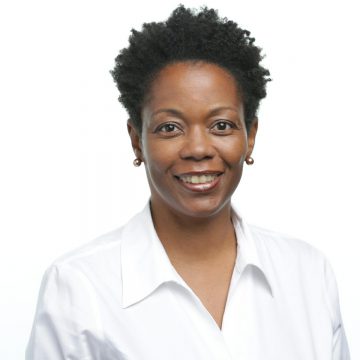
Melinda (pictured above on the left), Cynthia (right), and I (middle) made our first conference contribution by way of yesterday afternoon’s session on “Facilitation Skills for Racial Justice Work,” a fuller experience of which is available in our upcoming 2 day workshop in Boston in early May, Fundamentals of Facilitation for Racial Justice Work. Follow more of the discussion today and tomorrow via Twitter through hashtag #TR2012 or #TransformingRace.
The spectrum of those working towards community food security is culturally and geographically diverse, spanning a broad range of people, places and activities. Organizations and individuals working in the food system and building food secure communities create complex relationships and inter-related activities. Read More
This post is a slightly edited version of something I wrote for the upcoming State of Opportunity convening in Michigan. My colleague Cynthia Parker and I have been working with the Council of Michigan Foundations staff and membership to design this gathering, the focus of which will be philanthropy’s role in increasing social equity in the state. We are looking forward to facilitating the proceedings on March 27th.
The quote above comes from a systems thinking expert with whom we’ve partnered in our collaborative change work here at the IISC. We’ve found it to be a powerful way of introducing the idea that the complex systems (education, health care) that many of us are trying to change to yield better and more equitable opportunities and outcomes are not “out there.” Rather, to rift on the old Pogo saying, when we have truly seen systems, we understand that they are us!Read More
The following post is reblogged from Seth’s Blog. We hope that it will enrich your life and much as it has ours.
The things we fear are probably feared by others, and when we avoid them, we’re doing what others are doing as well.
Which is why there’s a scarcity of whatever work it is we’re avoiding.
And of course, scarcity often creates value.
The shortcut is simple: if you’re afraid of something, of putting yourself out there, of creating a kind of connection or a promise, that’s a clue that you’re on the right track. Go, do that.
Our hearts and spirits have been moved by Melinda Weeke’s love, passion and commitment to our work. The following is a small tribute to a powerful and beautiful sister who has forever shaped our lives for the better. We wish you the best and we will miss you! We LOVE you.
Through thick and thin. Truthful you have been. Hanging with uncertainty
Sashaying with complexity. Witty and musical. Fearless and spiritual
You bring it home. With charm and aplomb. Lead on, my sister, lead on
IISC Senior Associate, Curtis Ogden, reflects on the question asked in a staff learning session, “What do we know from years of doing collaborative capacity building and social change work?” Recorded at Space With a Soul in Boston.
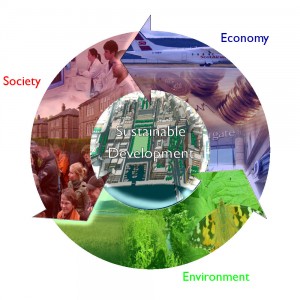
Blogging this morning from the Building Energy Conference, New England’s most established cross-disciplinary renewable energy and green building gathering. If you are here, come visit us at our IISC booth! One of the big topics of this year’s conference and trade show is thinking in terms of systems. In this spirit, the following post draws from an email that I recently sent to the convenor of a state-wide system change initiative that is poised to identify strategic points of leverage within the system and its component systems to nudge it in the direction of serving all people equitably in the state and ensuring community food security. Related to this goal is the desire to support a more robust local economy and to work synergistically with ecosystems. I believe the questions listed pertain to any complex dynamic system change effort, whether one is talking about food, education, or community energy use and production, and I welcome your thoughts . . . Read More
Last night we came together as IISC to bid farewell to the great Melinda Weekes; we are proud that she is moving on to be the Managing Director of the Applied Research Center. But today’s is not a post about Melinda. It is a post about community.
This March 16, 2012 will be my last day with IISC. In April, I begin work as the Managing Director of The Applied Research Center (ARC), headquartered in New York City. ARC is a racial justice think tank that uses popular culture, media, research and activism to promote solutions, and is the publisher of Colorlines.com.
IISC Senior Associate, Cynthia Parker, answers the question asked in a staff learning session, “What do we know from our years of doing collaborative capacity building and social change work?” Recorded at Space With a Soul on February 6, 2012.
Last weekend, while on school vacation with my family, my wife Emily and I went to hear Richard Louv speak at McKee Gardens in Vero Beach, Florida. If you don’t know him, Louv wrote the books The Last Child in the Woods and The Nature Principle and is a big advocate for getting kids and adults outdoors to overcome what we calls “nature deficit disorder.” I have heard him speak in the past, and very much appreciate his work. That said, I was a bit troubled by the public comment session and conversation after his talk. Read More
Last weekend, while on school vacation with my family, my wife Emily and I went to hear Richard Louv speak at McKee Gardens in Vero Beach, Florida. If you don’t know him, Louv wrote the books The Last Child in the Woods and The Nature Principle and is a big advocate for getting kids and adults outdoors to overcome what we calls “nature deficit disorder.” I have heard him speak in the past, and very much appreciate his work. That said, I was a bit troubled by the public comment session and conversation after his talk. Read More


 Blogging this morning from the