Its going to be Alright


|Photo by Roland Tanglao|http://www.flickr.com/photos/roland/76395670/in/photostream|
Some very compelling points are made by Carol Sanford stemming from her work with “responsible businesses” about the importance of how people understand accountability. She cites pscyhological research that suggests that having a sense of personal responsibility for outcomes (or an “internal locus of control”), whether those outcomes are good or bad, equates with higher degrees of happiness, health, and creativity. The converse occurs when people attribute success and failure to outside forces. “Only when people are accountable for their own decisions can they develop the rigor and discipline called for in high-quality decision making,” Sanford writes. Read More
Leave a comment“Structure is purpose expressed through design.”
– Marjorie Kelly, Owning Our Future
Detroit Voices: A Community Calls Out for Change from Phase 4 Media on Vimeo.
The new food movement, which is really several related but distinct movements, is a beacon of hope in this country. You can find evidence of this in many diverse settings, from Flint, Michigan to Northeast Iowa to northern Vermont to Oakland, California. While there are important distinctions in terms of emphasis and core players, one cross-cutting theme appears to be that we must create new structures to better nourish ourselves (calorically, economically, socially) through policy change, different land use patterns, new infrastructure, stronger relationships with ecosystems, new enterprises, and community building. From the growing number of food policy councils, to alternative financing mechanisms, practices like permaculture and agroforestry, and more intentional network building, people are setting the stage for some significant societal shifts. Read More
1 Comment
I walk by this tree every so often and have been struck by the power of its roots to move the grate meant to contain them and to break the concrete meant to cover them. What are your roots? How are they giving you the power to break free from constraints?
Leave a comment
Photo by: Nora Logue Check out her amazing work!
Leave a commentThe following quote appears in a piece written by Olga Bonfiglio on the Common Dreams website, which profiles the remarkable Dr. Grace Lee Boggs. The now 97-year-old long-time Detroit political and labor activist, author, and philosopher is the focus of a documentary film in the works called American Revolutionary.
“We are at a stage in human history that is as monumental as changing from a hunter/gatherer society to an agricultural society and from an agricultural society to and industrial society. Where we’re headed now will be different because we have exhausted planetary space and human space for us to continue to look at things through the Cartesian measurement of material things. We need to face the way we used the world for our gains, pleasures, satisfactions. This is the way we evolve to a higher stage of humanity. And unless we want to live in terror for the rest of our lives, we need to change our view about acquiring things. We have the opportunity to take a great leap forward in these very challenging times. We need to change our institutions and ourselves. We need to seize opportunities. We need to launch our imaginations beyond the thinking of the past. We need to discern who we are and expand on our humanness and sacredness. That’s how we change the world, which happens because WE will be the change.”

In the early days, when “normal” people first started using the web, we saw websites that looked just like our pamphlets. We used the new technology to do the same thing we always did – until we dared to experiment.
Leave a comment“We want a system that provides all children regardless of race or economic background with the same opportunities.”
– CT Right From the Start
The video above and words below appear on the CT Right from the Start (RFTS) website, and represent one of the outcomes of the past two years of work of a collaborative multi-stakeholder effort that IISC has been supporting as the lead process designer and facilitator. RFTS runs parallel to the state’s planning initiative to create an early childhood office that consolidates services for children and families. Right from the Start has become an important voice for equity in Connecticut and we are very proud of its stance and our partnership . . . Read More
Leave a commentWhen we talk about networks we tend to think scale, we think viral. But networks are also about community. Networks can thrive in that mysterious place where the most local intersects with the global.
Leave a comment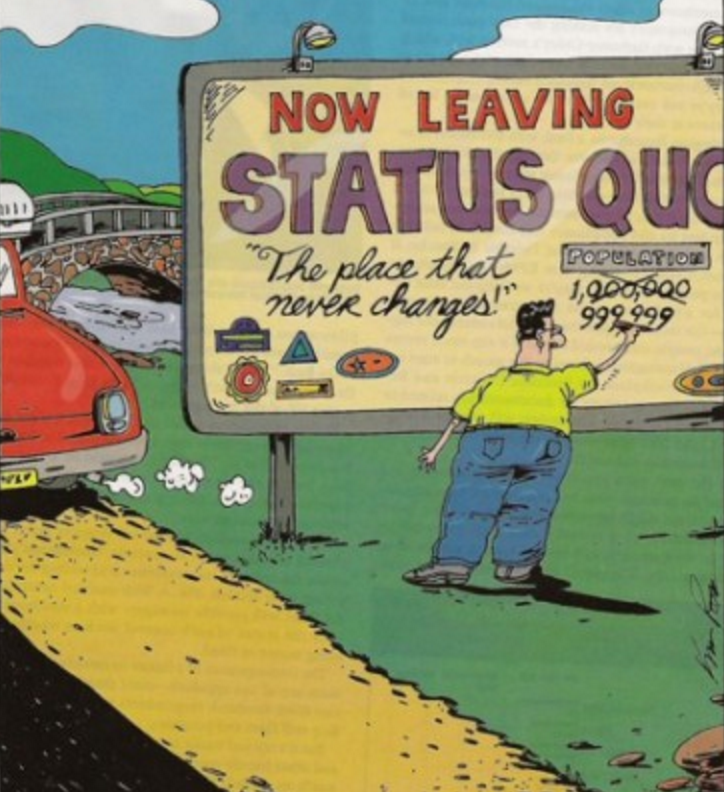
A big shout out to our colleagues at the Kirwan Institute for the Study of Race and Ethnicity. Their recently released report “State of the Science: Implicit Bias Review 2013” reviews what science can tell us about what implicit bias is and how it works, why it matters and how to reduce it. Here’s a quick recap:
Implicit bias results from the way our brains process data and experience. We’re wired for pattern recognition and our brains use lots of shortcuts to make sense of the world around us. In and of itself, this isn’t necessarily a good or bad thing. But, so many of the implicit associations we make are laden with stereotypes—say, between women and family, vs. men and careers. (Check out the Project Implicit to explore your implicit biases.) We absorb these associations from the world around us and they become part of our unconscious “operating system.”
7 Comments
The following is a letter by Akaya Windwood, President of the Rockwood Leadership Institute and member of the IISC Board of Directors.
Years ago before taking up the work of leading Rockwood, I was an organizational consultant. I was paid to be right — to be an expert. However, as I sit here at my current desk, I realize how very little I really knew about the everyday running of and caring for an organization. Now I’m not going to disparage or disrespect the work I did during my many years in organizational development, but I must admit that I would be a much better consultant today, having been in this seat for awhile.
1 Comment
The following post has been reblogged from our friend Rob Fletcher at Quixote Consulting. We hope you enjoy it as much as we did!
Play can easily get short-changed in daily work. Like music and arts education in schools, when budgets, deadlines and tempers are tight, it’s the first thing to go. Play is so important to me and yet I notice the number of posts I write about persistence go up and up…but not so much about play.
Leave a commentMake Change Stick Beyond the Meeting Turn ideas into agreements that stick, and keep change going after the meeting ends. Perfect for teams stuck in “great conversation, little action.”