A couple of days ago my colleague Cynthia Parker blogged about the challenge and importance of staying connected across political divides. The conversation that has ensued seems especially relevant to where we stand right now, the day after the elections, faced with what some fear will be an increasingly polarized country. No matter where we may fall along political lines, there are strong feelings on all sides about what is the “right” direction for our country and how to get there. In this increasingly mediatized world, it is very tempting and easy to stand behind our computers and cast aspersions at one another. And all this does is continue to fray the already worn social fabric. How do we continue to recognize that we are all in this together, like it or not, and that respecting our collective humanity is a baseline for progress? Read More
I don’t usually find listening to public radio overly stressful, but this weekend’s edition of This American Life had me churning. The episode Red State Blue State featured a series of stories of relationships among friends, family members, neighbors and more that were damaged or severed over political affiliations and whom they intended to vote for. In a country where most people live in communities that are largely blue or red, people with minority political views in their community need increasing courage to speak their convictions, or even, sometimes just to live their lives. I found the story of a pair of sisters especially heartbreaking.
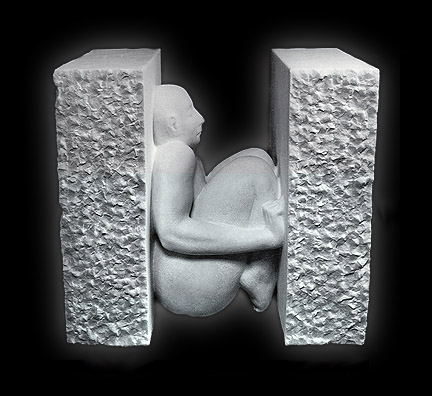
|The Alchemy of Wholeness by Armanda Moncton|http://www.flickr.com/photos/armandamoncton/1705798622|
On Sunday, Gibran Rivera and I facilitated a workshop at Connecting for Change/Bioneers by the Bay about change practices for a networked world. Another way of thinking about what we were exploring was to put it in terms of “practices for wholeness.” Part of our premise was and is that we are suffering from a worldview that leads with and to fragmentation and fixity. This is part of our inheritance from the industrial age that strives to understand through division and an associated mindset that believes we can make a separation between observer and observed with no associated impact. For certain tasks, of course, it makes sense and is possible to divide, diagnose and put back together. But this does not make sense, nor is it possible, in the case of complex living systems. Furthermore, we have gotten ourselves in a bind because our habits of thought have led us to thinking that the divisions and categories we have created are in some sense primordial. And so we are hard pressed to believe, or remember, that what we do to our “environment” or “others” we do to ourselves! Read More
Our paradigm is our lens on everything. It is how we make sense of reality. For example, a deterministic paradigm is a lens that makes you see everything in terms of cause and effect. It gives you a mechanistic lens with which to make sense of the world. Determinism can be a really useful perspective – one way of looking at things – but it becomes a problem if it is your paradigm – THE way in which you look at things.
“If it’s work we try to figure out how to do less, if it’s art we try to figure out how to do more.” Regular readers of our blog know that we are big fans of Seth Godin here at IISC. And if you’ve been to anything I’ve trained or facilitated you have probably heard me rail against the dominance of an obsolete industrial paradigm.
In this video, Godin asks “What is school for?” and he clearly points to all the industrial trappings that are badly limiting how we educate our young – even in “high performing” contexts. We are in the middle of a significant paradigm shift, and this is one of our most important questions.
Over the past several years, there has been a great deal of international focus on the notion of happiness. While there are many definitions of happiness, here is a composite of my favorites: “emotions experienced when in a state of well-being that range from contentment to intense joy.”
Ten years ago when I was going through a critical stage in my life, a friend asked me what I would consider to be my dream job. My answer was pretty simple. I wanted to lead an organization whose primary work was to design processes for complex collaborative efforts aiming at advancing social justice, equity and democracy. I wanted to do this in an organization where issues of power, privilege and race were central, not only to the work we did in the world but in how we engaged with each other to do that work.
|Image from NASA Goddard Space Flight Center|http://www.flickr.com/photos/gsfc/3903384725|
At the closing of last week’s Vermont Farm to Plate Network Gathering, my colleague and friend, Beth Tener of New Directions Collaborative, shared the following beautiful story and metaphor from the evolutionary biologist Elisabet Sahtouris. In it is the invitation that we both feel net work offers – to not simply engage in new superficial ways of working, but to let it take hold of us in shaping a new “genome” for human awareness of and interaction with living systems . . .
A caterpillar can eat up to three hundred times its own weight in a day, devastating many plants in the process, continuing to eat until it’s so bloated that it hangs itself up and goes to sleep, its skin hardening into a chrysalis. Then, within the chrysalis, within the body of the dormant caterpillar, a new and very different kind of creature, the butterfly, starts to form. This confused biologists for a long time. How could a different genome plan exist within the caterpillar to form a different creature? Read More
“No good work is ever done while the heart is hot and anxious and fretted.” Olive Schreiner
I couldn’t agree more! We’re fond of a related quote that “The success of an intervention depends on the interior condition of the intervener.” Bill O’Brien
I know that it’s hard for me to do good work when I’m fretful, exhausted or feeling insecure.
The following post is reblogged from Seth’s Blog. Short and simple , yet full of wisdom. We hope that it will enrich your life and much as it has ours.
Do the extra work not because you have to but because it’s a privilege.
If you are a regular reader of our blog you have been part of our ongoing conversations on evolution. I like to remind my clients that the big bang is not a one time event, that the bang is still happening, and that we are actually in it!
Yes, we are in the process of becoming. Aligning ourselves with this idea can ground our efforts in a process that began 14 billion years ago. Talk about a change in perspective! Our own becoming conscious is integral to this evolutionary process. So what will we do with this consciousness? It’s a powerful way to think of movement, of progress, of development. I loved this video, because it literally helps us to SEE it… with our own eyes, and on any given night.
The following blog post was reblogged from Emergent By Design. We hope that you enjoy it as much as we did!
*Our source was initially and inadvertently omitted. We apologize for the mistake.
I’ve had the privilege of working with a lot of organizations over the years that want to shift their culture to become more diverse, inclusive and equitable. The article we are posting below is about changing culture in general. What specific applications do you see for shifting organizational culture toward greater diversity, inclusiveness and equity?
Make Change Stick Beyond the MeetingTurn ideas into agreements that stick, and keep change going after the meeting ends. Perfect for teams stuck in “great conversation, little action.”