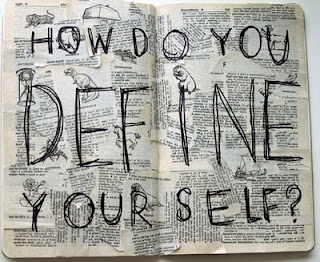
“Ninety per cent of the world’s woe comes from people not knowing themselves, their abilities, their frailties, and even their real virtues. Most of us go almost all the way through life as complete strangers to ourselves – so how can we know anyone else?”
– Sydney J. Harris
Recently I was in a conversation with an acquaintance who is a real estate agent. We started bantering about houses and communities that would fit our values and lifestyle/family goals. At a certain point, she said, “You know, we can dream all we want, but as we like to say in real estate, ‘buyers are liars.'” In response to my baffled look, she added, “Most people think they know what they want, but I find you really have to take people out into the field, ask a lot of questions, show them a bunch of options, and see how they respond.” Turns out people often end up in a somewhat or completely different place from their originally stated aspirations. Read More
It is hard to believe that I may have to convince some people that 6 minutes is worth their time to watch this, but seriously, think of how easy it is to fritter away that time in other ways. This is well worth the watch, as is reading Bill McKibben’s recent piece in Rolling Stone Magazine. Both the video above and the McKibben article put much in perspective and remind us why climate change is a fight we cannot afford to lose. They also confirm why it is so important to come together as a community to share solutions, ideas, and positive energy. For an opportunity to do this in New England this fall, check out Connecting for Change.
I met Katya Fels Smyth about four years ago at the Opportunity Collaboration, I remember sitting next to her on the bus to the conference site and being immediately intrigued by her passion and by the very idea of a Full Frame Initiative. It so happens that Ceasar McDowell, our new IISC President is on the Board of the Full Frame Initiative. We are truly proud to have him be our “Fearless Leader.” The following blogpost was written by Katya for the Case Foundation’s Fearless Campaign. Here is my favorite line: “be agnostic as to ‘issue’ but laser focused on people”
“I believe that we can restore our hope in a world that transcends race by building communities where self-esteem comes not from feeling superior to any group but from one’s relationship to the land, to the people, and to the place.”
Last week I had the pleasure and privilege of partnering with colleagues from IISC and the Center for Whole Communities to offer our course, Whole Measures: Transforming Communities by Measuring What Matters Most, at beautiful Knoll Farm in Vermont. The weather and the participants did not disappoint, and the entire experience spoke to the power of paying attention to and naming what matters most as a point of departure for creating and measuring wholeness in communities and organizations. We broke bread together, engaged in dialogue and storytelling, sat around the campfire, took in the richness of the Mad River Valley landscape, laughed, cried, and even got our groove on a bit.
Enjoy a taste of the experience in the video to which the link above leads (click on the image). And please consider joining us for a future session and other opportunities at the Interaction Institute for Social Change and CWC.
Marty Kearns, our friend at Netcentric Advocacy, tackles an important distinction and invites us to strategize with the difference in mind. I found this this to be an excellent piece for advocates.
Organizing and Mobilizing – 2 Distinct Strategies in Your Advocacy Effort.
I have been struggling lately to get more clarity on the concepts of organizing and mobilizing. These are terms of art in my world but often see the concepts mashed together. These terms do not mean the same thing in an advocacy context and BOTH are very important.
In this post, Jeremy Liu (an esteemed IISC Board member) encourages the community development field “to figure out how to embrace the strengths of our past as a movement, even more so than becoming more established as an industry.” I think this is wise advice for many fields in the nonprofit sector, where so many organizations and institutions emerged from resistance movements and have passed through various stages of institutionalization and even bureaucratization. Jeremy ends with an important invitation for the community development field that could easily be for all of us: “it will continue to be important for our field to question itself, to ask itself what we want to create for our communities, to ask ourselves how to best achieve that vision for the future. We must be prepared to put aside past industrial practices and perhaps embrace emergence and people once again.”
Make Change Stick Beyond the MeetingTurn ideas into agreements that stick, and keep change going after the meeting ends. Perfect for teams stuck in “great conversation, little action.”