What Día de Muertos Taught Me About Storytelling
October 29, 2026
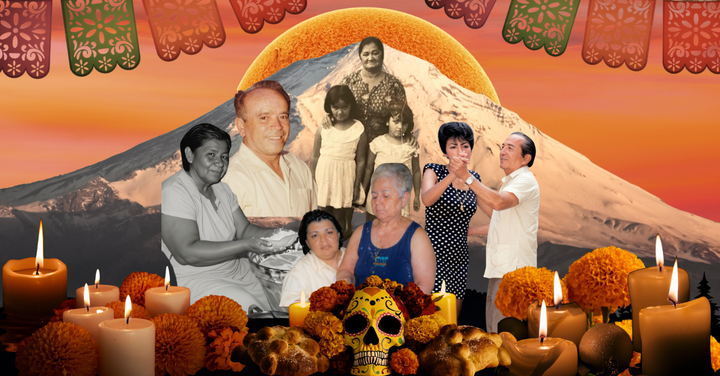
Growing up, I never celebrated Día de Muertos. My father is from Atencingo, a town in southwestern Puebla, Mexico, and celebrated it his whole life before coming to the U.S. in his late 20s. But he didn’t pass it down to my three sisters and me. Like a lot of things in immigrant families, it stayed behind.
It wasn’t until I got older that I wanted to connect more deeply with my roots. As a young adult, I carried a lot of anxiety, including a deep fear of death. That can happen when you come from a long line of trauma on both sides. Somewhere in there, I felt called to do some spiritual, ancestral work.
Finding the names
It started on my Puerto Rican side, where U.S. census records made genealogy a little easier. I looked up my grandfather, who’s someone I still feel all around me, even though he passed when I was 16. I was able to find his family and put names to people I’d never heard of. But as my colleague Simone John writes in Southern Census, records can give you names, but not the stories behind them. Records from Mexico are harder to access, but I found some of our people and my grandmother’s Indigenous last name, which led to a whole path of reconnecting.
So much has been lost to colonization and assimilation. Reconnecting is ongoing – I’m still learning (shoutout to C.C. Anahuac) and asking questions, and I’m careful not to claim what isn’t mine. I couldn’t get everything back. But I could start with one practice with Indigenous roots in Mexico: celebrating the dead.
I wasn’t the first to find my way back this way. In 1972, Chicana/o artists at Self-Help Graphics in East Los Angeles revived Día de Muertos as an act of cultural reclamation. Most of them hadn’t grown up with it either. They learned it as adults, together.
My first ofrenda
I built my first ofrenda in 2020 at my parents’ house, our family gathering place, because I wanted my dad to see us taking part. I included the four elements: tequila for water (why not?), crystals for earth, papel picado for wind, and candles for fire. I added marigolds and pan de muerto, and lit ethically sourced copal in a burner made of volcanic rock from Popocatépetl, the volcano you can see from my father’s hometown. Even though I’d never done this before, it felt like something my soul remembered.
Then the photos came out. Once I brought out some of my grandfather, my mom started pulling out more. She’s always been the keeper of the family photos, and she had a lot from my dad’s side too. The ofrenda filled up fast. We’d also lost people to COVID that year, and they joined it too. It could have been a really sad day, but it turned out to be a joyful one. It started my healing around death. I found comfort in believing these are the people who’ll greet me on the other side.
I’ve built an ofrenda every year since, and it’s become a family tradition. Along the way, I learned a lot about the work I do: storytelling.
What the ofrenda taught me about storytelling
Scholar Tomás Ybarra-Frausto once wrote that “altares often serve as a cumulative historical narrative for the life of a family.” That’s exactly what ours became. Year after year, it holds our family’s story, and building it has taught me a lot about storytelling.
Details make people real. On Día de Muertos, it’s tradition to set out the foods your loved ones enjoyed in life. When I asked my mom what to make for my grandfather, she told me he loved rice and steak with ketchup. That was his thing. It’s the kind of detail you’d think doesn’t matter, but it adds so much texture to how I remember him.
The same goes for comms. We often reach for big descriptions like “a loving father” or “a dedicated leader,” but those could describe anyone. The small, specific stuff is what sticks: the coffee mug someone brings to every meeting, or the phrase a facilitator always opens with. Those details are what make a reader feel like they know someone. You usually can’t find them in a report or a bio, so you have to talk to people and listen for the details that make a person who they are.
Curiosity opens the story. When I held up an old photo and asked, “Who’s that?” a whole new story came out. Curiosity has a way of leading you to stories you weren’t looking for. And the best stories usually start with a good question. A few to try:
- What’s a moment from this that you keep coming back to?
- What surprised you?
- What did it look, sound, or feel like?
- Who else was part of this?
- What changed, for you or for someone else?
- What do you want people to understand after hearing this?
And…a list of go-to questions only gets you so far. I enjoy staying present and following the energy of the person telling the story. I notice when they lean in, talk faster, or light up. That’s usually where the real story is, even if it’s not the one I came for. So it’s important to leave room to wander.
Stories last when we retell them. Every year, many of the same memories come up around the ofrenda, and that’s how they stay alive. In comms, it’s easy to forget that we’re the only ones who see every story an organization tells, but someone reading your newsletter might be hearing a story for the very first time. So don’t be afraid to repeat yourself or find different ways (or platforms!) to tell the same story. A good story is worth retelling.
Storytelling is shared. Whenever my family looks at photos together, the stories start flowing. My mom usually starts, and my dad jumps in with details she missed. I knew my grandfather one way, but my older sisters will share stories that show me a side of him I never got to see. Each of us holds a piece, and the story gets fuller every time someone adds to it.
In comms, the strongest stories work the same way. When I’m writing about a project, I try to talk to more than one person: the people who led it, the people it served, and anyone who saw it from a different angle. Inviting others to add their pieces, through a quick form, voice note, a shared board, or a simple “what do you remember?”, means no one has to hold the whole story alone. My job is to help all those pieces come together.
Joy and grief belong in the same story. The ofrenda holds both at once, and real stories do too. But storytelling, especially social justice storytelling, often leads with the hardest part of people’s lives. We share and tell stories of injustice, and we have to, because people need to understand the harm. When that’s the only story we share and tell, though, people get reduced to their pain, and readers end up feeling hopeless or numb.
We need stories of repair too. My ofrenda is one. Colonization and assimilation took a lot from my family, and building it is one small way of taking something back. Stories of repair, whether that’s reparations, healing, or communities reclaiming land, culture, and resources, show people what justice could actually look like. That’s what helps them believe it’s possible.
It’s about balance. We can and should talk about trauma. We need to talk about joy too, because joy is how we get through it, especially with so many crises happening in the world right now. Joy also helps us imagine the future we want, and imagining is how we start to create it. So when I interview someone, I’ll ask what was hard, and I’ll also ask what brought them joy or kept them going.
The people who have my back
I look forward to building an ofrenda every year. It’s one of many links to my ancestors, the people who look out for me. Many of them carried so much in their lives. Now they’re at peace, and every year around this time, we get to celebrate them with joy. And I know they have my back.
So I’ll leave you with a question. If you built an altar for the people who shaped your life and your work, who would be on it? And what’s the small detail you’d want everyone to remember about them? Start there – that’s where every good story begins.

1 Comment
Thank you, Sandra. This is a beautiful meditation, inviting reflection, presence, and peace.