The Rest Will Follow

Photo by: Nora Logue Check out her amazing work!
Leave a comment
Photo by: Nora Logue Check out her amazing work!
Leave a commentThe following quote appears in a piece written by Olga Bonfiglio on the Common Dreams website, which profiles the remarkable Dr. Grace Lee Boggs. The now 97-year-old long-time Detroit political and labor activist, author, and philosopher is the focus of a documentary film in the works called American Revolutionary.
“We are at a stage in human history that is as monumental as changing from a hunter/gatherer society to an agricultural society and from an agricultural society to and industrial society. Where we’re headed now will be different because we have exhausted planetary space and human space for us to continue to look at things through the Cartesian measurement of material things. We need to face the way we used the world for our gains, pleasures, satisfactions. This is the way we evolve to a higher stage of humanity. And unless we want to live in terror for the rest of our lives, we need to change our view about acquiring things. We have the opportunity to take a great leap forward in these very challenging times. We need to change our institutions and ourselves. We need to seize opportunities. We need to launch our imaginations beyond the thinking of the past. We need to discern who we are and expand on our humanness and sacredness. That’s how we change the world, which happens because WE will be the change.”

|Photo by TREEAID|http://www.flickr.com/photos/53871588@N05/5726759624|
This post is not exactly about an insurance policy, at least not in the traditional sense. Picking up on the metaphor of last week’s piece on “Network Gardening,” today we bring focus to how we can protect the early growth of networks for social change. Protect them from what? The temptation to jump to action too quickly, leapfrogging the “problem conversation,” the tendency to want to institutionalize everything (what a friend calls “incorporation fever”), naysayers, exclusionist practices, and the heavy hitters who are used to getting their way. Read More
Leave a comment
In the early days, when “normal” people first started using the web, we saw websites that looked just like our pamphlets. We used the new technology to do the same thing we always did – until we dared to experiment.
Leave a comment“We want a system that provides all children regardless of race or economic background with the same opportunities.”
– CT Right From the Start
The video above and words below appear on the CT Right from the Start (RFTS) website, and represent one of the outcomes of the past two years of work of a collaborative multi-stakeholder effort that IISC has been supporting as the lead process designer and facilitator. RFTS runs parallel to the state’s planning initiative to create an early childhood office that consolidates services for children and families. Right from the Start has become an important voice for equity in Connecticut and we are very proud of its stance and our partnership . . . Read More
Leave a comment
|Photo by idleformat|http://www.flickr.com/photos/idleformat/2062534673|
An interesting innovation I’ve seen recently in the realm of network building for social change is the creation of what is being called, in one particular system with which I am working, the “Network Support Team.” In the context of what has emerged to this point as an “alignment network” focused on state-wide food system development and addressing community food insecurity, this volunteer team has stepped forward to help “tend to the whole.” It functions much as a good gardener would in her attempts to nurture abundance and flourishing. As this network considers movement into a more action/production-oriented mode, here is how the NST is helping the garden to grow: Read More
4 CommentsWhen we talk about networks we tend to think scale, we think viral. But networks are also about community. Networks can thrive in that mysterious place where the most local intersects with the global.
Leave a comment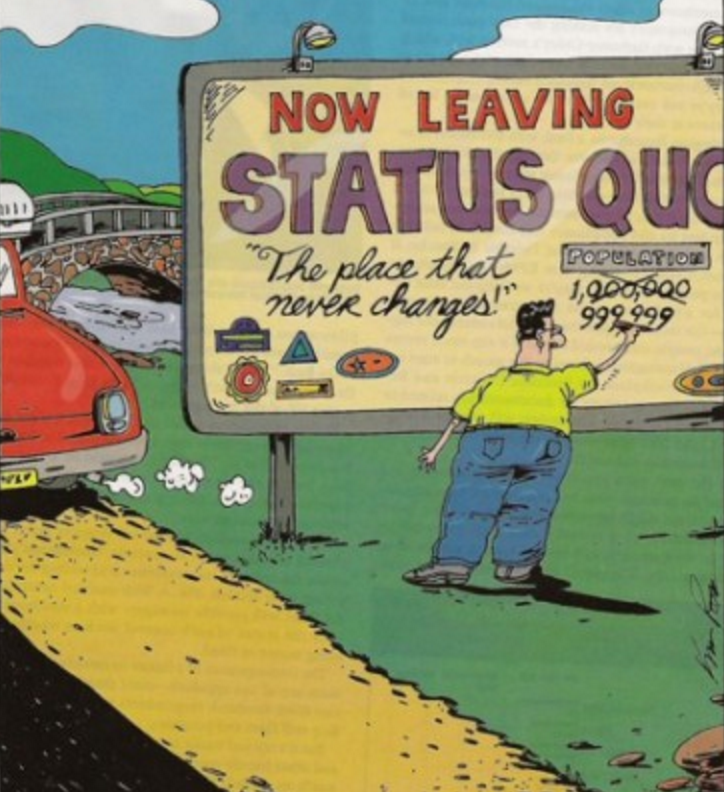
A big shout out to our colleagues at the Kirwan Institute for the Study of Race and Ethnicity. Their recently released report “State of the Science: Implicit Bias Review 2013” reviews what science can tell us about what implicit bias is and how it works, why it matters and how to reduce it. Here’s a quick recap:
Implicit bias results from the way our brains process data and experience. We’re wired for pattern recognition and our brains use lots of shortcuts to make sense of the world around us. In and of itself, this isn’t necessarily a good or bad thing. But, so many of the implicit associations we make are laden with stereotypes—say, between women and family, vs. men and careers. (Check out the Project Implicit to explore your implicit biases.) We absorb these associations from the world around us and they become part of our unconscious “operating system.”
7 Comments
The following is a letter by Akaya Windwood, President of the Rockwood Leadership Institute and member of the IISC Board of Directors.
Years ago before taking up the work of leading Rockwood, I was an organizational consultant. I was paid to be right — to be an expert. However, as I sit here at my current desk, I realize how very little I really knew about the everyday running of and caring for an organization. Now I’m not going to disparage or disrespect the work I did during my many years in organizational development, but I must admit that I would be a much better consultant today, having been in this seat for awhile.
1 Comment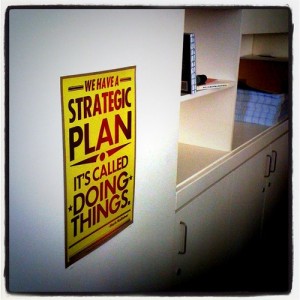
|Photo by Alper Cugun|http://www.flickr.com/photos/alper/5222966685|
Last week I posted an entry on this blog about the myriad ways that people and organizations are engaged in “net work” for social change, by profiling three different initiatives focused on strengthening local food systems and food security. Not only is there a difference in the process, but there is also variation in terms of so-called ends or outcomes. The topic of “planning” has come up quite a bit in these networks and many questions asked about what “a plan” looks like in the context of multi-stakeholder/organizational initiatives tackling complex issues. Once again, the answer is that it depends. In both direct experiences at IISC and in additional research about other initiatives, there is a wide variety around what constitutes a plan for social change. Read More
Leave a comment
The following post has been reblogged from our friend Rob Fletcher at Quixote Consulting. We hope you enjoy it as much as we did!
Play can easily get short-changed in daily work. Like music and arts education in schools, when budgets, deadlines and tempers are tight, it’s the first thing to go. Play is so important to me and yet I notice the number of posts I write about persistence go up and up…but not so much about play.
Leave a comment