|Photo by Dawn Huczek|http://www.flickr.com/photos/31064702@N05/3847338602|
Working with numerous multi-stakeholder collaborative change efforts, we at IISC are often invited to help people co-create the structures and processes that will move their complex work and collective development forward. There is never an easy or readily apparent answer and each case is unique to its particular context and nature. A quote that I’ve found helpful to quell some of the anxiety that comes up around this work, especially among those who want to rush to adopt a structure that others have used and “get on to the work” (more on this false dichotomy here), comes from Fritjof Capra from the Center for Ecoliteracy. Capra writes about the importance of recognizing and working the dynamics of life. Read More
The following comments was posted by Gibran as a response to Curtis Ogden‘s Collective Impact and Emergence blog post. In it we are challenged to think beyond our institutions and think about how to truly impact the communities we work with.
This is excellent Curtis. It brings me back to one of our most important inquiries – how do you nurture the conditions for emergence? With this inquiry, we are not just saying that emergence happens; we are saying that our best approach is to nurture it. It is a significant shift from a more top-down technical approach.
Twelve year old Adora Svitak called for mutual respect and reciprocal learning between adults and kids. Her TED bio calls her a “child prodigy” but I think that exceptionalizes her talents and perspective and implies that she is very unlike her peers. I think she models a poise and wisdom that is all around us if we just look for it.
The following post has been reblogged from our amazing friends at Seth’s Blog. We hope you like it as much as we did!
Improvement comes with many costs.
It costs time and money to make something better. It’s risky, as well, because trying to make something better might make it worse. Perhaps making it better for the masses makes it worse for the people who already like it. And risk brings fear, because that means someone is going to be held responsible, and so the lizard brain wants out.
I have appreciated the growing literature around what has been called “collective impact.” These writings from staff at FSG have certainly helped people around the country engaged or aspiring to engage in collaborative multi-organizational change work to develop shared language around some of the important underpinnings of walking this path. I have also voiced some concerns about what is NOT mentioned in these writings, including some of the critical process elements and experiences that are core to this work.
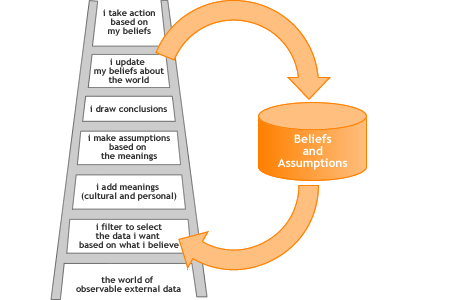
“Change is hard because people don’t only think on the surface level. Deep down people have mental maps of reality — embedded sets of assumptions, narratives and terms that organize thinking… People almost never change their underlying narratives or unconscious frameworks…”
This is David Brooks, focusing on the woes of a Republican Party that is struggling to reinvent itself. But the fact applies to all sorts of change.
My colleagues and I find ourselves in many rooms with change agents of different generations. Occasionally we will see conflict arise around differing styles and approaches. Older generations may lean heavily on the notion that “this is the way we’ve always done it” or that new means and methods (social media, for example) are just a passing trend. Younger generations may look at their elders as out of touch with the times, lacking in a new analysis, etc. Thus, even when a common goal is held, an attitudinal gap can result in an unwillingness to work with and learn from one another. Read More
My colleague Cynthia and I are in the midst of delivering IISC’s newest course, Fundamentals of Facilitation for Racial Justice Work, here in Springfield, Massachusetts. Together with a group of dynamic and committed change agents, we are engaged in hands-on exploration of a variety of process and content tools so that we are able to better serve as facilitators towards the ends of racial equity and justice. Part of our discussions today will focus on how we can maintain our center amidst triggering situations and use our identities to advance the work. Read More
Something BIG happened on Monday, January 21, 2013. In his second inaugural address President Obama made an unapologetic link between the struggles for liberation and our nation’s evolutionary thrust.
We, the people, declare today that the most evident of truths—that all of us are created equal—is the star that guides us still; just as it guided our forebears through Seneca Falls and Selma and Stonewall; just as it guided all those men and women, sung and unsung, who left footprints along this great Mall, to hear a preacher say that we cannot walk alone; to hear a King proclaim that our individual freedom is inextricably bound to the freedom of every soul on earth.