The following post has been reblogged from our friends at yes! Magazine. We hope you enjoy it as much as we did!
Nature surrounds us with expressions of the organizing principles that make possible life’s exceptional resilience, capacity for adaptation, creative innovation, and vibrant abundance.” Read on as David Korten outlines how paying attention to natural systems can help us develop human systems that will sustain us for the long haul.
“It’s time for us to get together and talk about how we get more healthy food to people, how we bring our community back using local food, how we improve our community health using local food, and how we create new jobs. . . . We need to change our food system and the answers are in the room.”
– Stephen Arellano
I’ve been closely and excitedly watching and participating in the local food and urban agriculture movement as it grows both here in New England and in my native Michigan. Detroit has certainly been catching national attention, in part due to exposure via films such as “Urban Roots” and the good and ongoing work of the likes of the Detroit Black Community Food Security Network and the Fair Food Network. And my lesser known and native Flint is doing its own to grow what my friend Stephen Arellano has called “a human scaled economy” rooted in a reclamation of old industrial and abandoned residential lands for the purposes of equitably feeding the community, not just through good food, but through a grounded education and good profitable work. Read More
Comments Off on Urban Roots and New EconomiesJanuary 24, 2013
|Photo by Darrel Birkett|http://www.flickr.com/photos/darrelbirkett/6935043394/sizes/m/in/photostream|
I’ve been playing with different reflection questions lately to try and help various networks and multi-stakeholder collaborative change efforts put a clearer and more aligned frame around the kinds of systems (food, education, health, etc.) that would yield more equitable, sustainable, and enriching results. This is not to pretend that they can take control of the systems and command them to be different, but rather to create an image toward which they can nudge these systems via various leverage points. In one recent convening, I borrowed a page from critical systems heuristics, which asks us to identify and play with the existing systemic boundaries, including motivation, power, expertise and legitimacy. Read More
I keep making references to Steven Johnson’s book, Future Perfect. That’s because I find it to be one of the best articulations of what has become possible in this networked world. I am seduced by the idea of peer progressivism.
I have long held the hypothesis that those of us who have committed our lives to social transformation should be able to find a significant competitive advantage in a world of networks. Our ethos should be one of sharing, one of working together, one of catalyzing our collective power. Our values resonate with what is possible today. But the time to step into this opportunity is right now – right as it is emerging.
The following post was written by IISC friend Beth Tener, principal of New Directions Collaborative, with whom I’ve had the privilege of working over the past few years on a few different sustainability-related network building efforts. Beth and I share a keen interest in supporting the development of new economic structures and flows that bring resources back to communities and keep value grounded in real and sustainable ways. You can follow more of Beth’s insights on her blog.
A friend handed me a copy of Marjorie Kelly’s new book Owning Our Future: The Emerging Ownership Revolution; Journeys to a Generative Economy and said he thought it was so good that he had bought a case of them to share with colleagues and friends. By the time I was 50 pages into the book, I had a similar impulse to buy a case. Kelly was the editor of Business Ethics magazine for 20 years and now works at Tellus Institute and has spent years considering how to reform corporations and create enterprises that are socially responsible.
I was recently turned on to the work of Louise Diamond by the Plexus Institute. Diamond has been bringing insights from the dynamics of complex systems to peace building work for many years. Her efforts connect to a growing number of practitioners and thinkers who see the need to approach social change with an ecological and evolutionary mindset. In one of her papers, she extracts some of the “simple rules” that yield core practices for working in this way. Here I have adapted and adjusted some of them in application to network building for food systems change. Read More
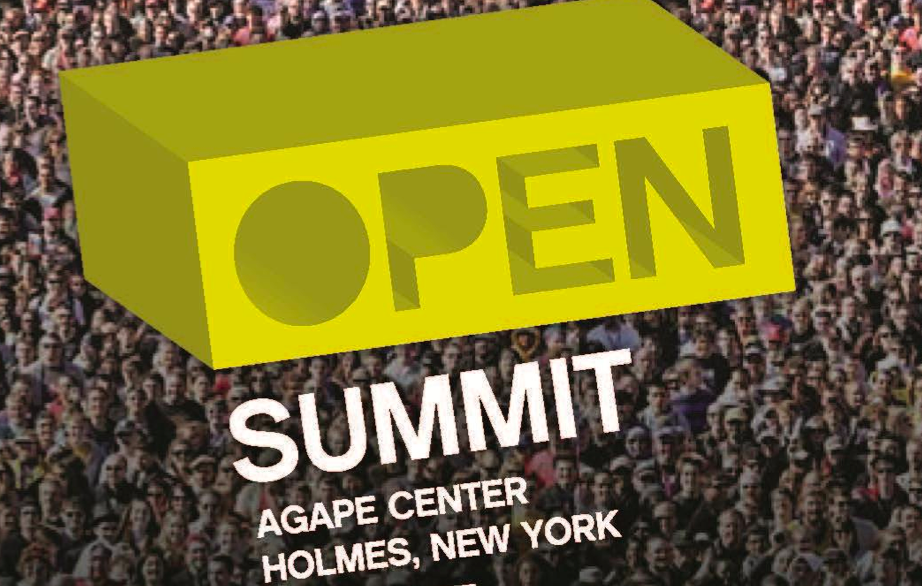
I’ve been on a whirlwind. And it began with my facilitation of OPEN Summit. The first ever leadership gathering of the world’s leading Online Progressive Engagement Networks. Think MoveOn.org as replicated in the United Kingdom, Canada, Australia, New Zealand, India, Germany and Papua New Guinea. The great (and unbelievably sweet) Ben Brandzel had been dreaming this up for years!
As they neared their 15th anniversary, the Case Foundation published “To be Fearless” as both a reflection on its work and a challenge to philanthropy and the social sector. The following are excerpts from this report, written by Cynthia Gibson and Brad Rourke for the Case Foundation. (“To Be Fearless,” The Case Foundation, 2012.)
|Photo by Michael Cardus|http://www.flickr.com/photos/create-learning/4607228635|
At this point in my tenure at IISC, I get the opportunity to return to certain systems and programs that I have been serving for a number of years. This includes a few organizations and leadership development initiatives to which I’ve been contributing for a half-dozen years now, through two presidential elections, the Great Recession, the Arab Spring, the explosion of social media, and some stormy knocks over the head about the reality of climate change. Through all of this I’ve been interested to see how the conversation has changed, where it has in fact changed, within these institutions and programs and among the participants. Read More
Another year, more time to hone our practice as facilitators. As has been previously mentioned in the pages of this blog, the meaning of the term “facilitation” derives from its root “facile,” or easy, so facilitation is intended to make something easy or easier. This is not to say that the practice of facilitation is or ever should be easy, and in these times of fracture and fear it can be especially challenging. And it is not about doing work for others, so that they in some sense get off the hook or put the burden on the formally designated facilitator.
Everything has changed forever. It is a time of upheaval and upheaval is not comfortable. But it is from here that we build a new world. Fly Closer to the Sun.