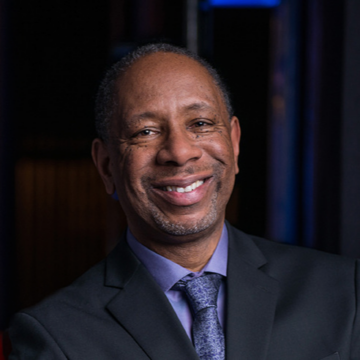
Hamilton College has produced a TedX to remember, with speakers united under the theme “Curiosity and Creativity Uninhibited.” It was an honor for IISC President Ceasar McDowell to be invited, and supported by Hamilton student Chidera Onyeiziri.
Ceasar’s talk is entitled, “Big Democracy: A Fundamental Shift.” See him open with the vastness of wonder that exists in the universe, literally displaying a photographic representation of the Big Bang. He then presents the comparison to the Human Universe with its constellation of different races, ethnicities, languages, sexual orientations, and belief systems. So while the complexity of the universe inspires, the complexity of the Human Universe feels daunting.”
His answer to help us see and understand the complexity of the human universe is Big Democracy. Ceasar describes the artifacts democracy produces and interactions needed for an equitable society. He invites we frame our collective agenda using inquiry, explores why we need to design for the margins, and shares his latest idea for inter-personal change: micro-inclusions.
The talk calls on the audience to acknowledge the choice-point we are at as a society, and to imagine a new series of actions and interactions for social change.
IISC is honored to have been a finalist in the bid for Imagine Boston 2030, the first city-wide plan in 50 years. The RFP was inspired by public engagement efforts already underway, including Mayor Walsh and the Boston Transportation Department’s Go Boston 2030 initiative, for which IISC is leading the way to new standards of participation.
IISC submitted a proposal to bring these methods to Imagine Boston 2030 with Sasaki Associates and Inkhouse, emphasizing the importance of both design and democracy for a unified, bold future vision. We call this Big Democracy, or building new infrastructure for people to participate in city-wide decisions and increasing the capacity of leaders to harness public feedback. This missing infrastructure for democratic decision-making will change how cities develop in the 21st century, inspiring investment by people in the place where they live.
Highlights of our proposal include an emphasis on equity and tapping already existing networks for participation. For city-wide engagement to take hold, all feedback must be considered expert feedback, whether from lived or professional experience. Efforts must also directly address complicated racial dynamics in productive, direct, and honest ways. We know that public engagement must be fun to overcome planning fatigue and bring out unusual participants.
Mike Ross celebrated Go Boston 2030’s creative thinking and public input in the Boston Globe, noting: “Gone are the days when a city engineer slapped a traffic counter on a road and made infrastructure decisions that would affect several generations of residents.”
Imagine Boston 2030 signals a new era of public engagement in the city. We applaud the Boston Redevelopment Authority (BRA) and Mayor Walsh for leading this two-year process. This will have major consequence for everyone who lives, works or plays in the city and we encourage all partners to join us in supporting this effort.
Interaction Institute for Social Change (IISC) calls the new infrastructure and processes for civic involvement Big Democracy. This fall, IISC President Ceasar McDowell will deliver two Ted X talks on pressing Big Democracy issues and design solutions for cities. IISC is also co-convening national thought leaders on design and democracy. Media inquiries for Dr. McDowell and thought leaders at IISC, please contact Danielle Coates-Connor: 617-535-7159
Mayor Walsh opens Go Boston 2030 Visioning Lab Friday at noon.
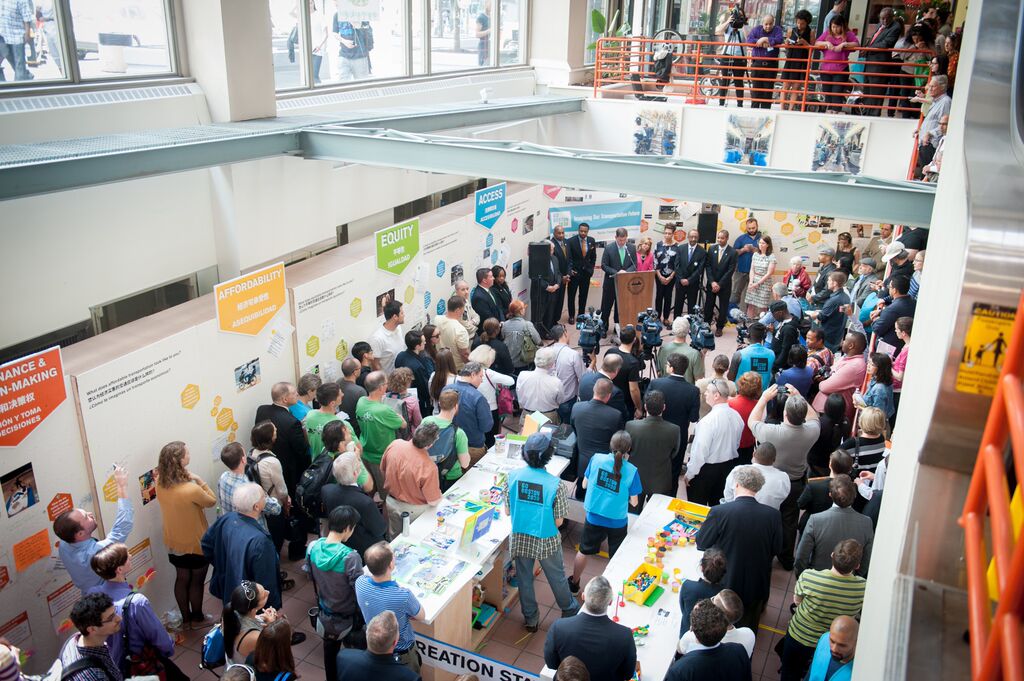
Boston is making (future) history May 8-9 at the China Trade Center. Led by Mayor Walsh and the Boston Transportation Department, the Go Boston 2030 Visioning Lab will inspire people in Boston to think big, another chapter in an unprecedented public planning process for the city.
The event will open with remarks by Mayor Marty Walsh. “Boston is a city of innovation, diversity and collaboration – a city where creativity and imagination are some of our most powerful assets,” said Mayor Walsh in a recent press release.
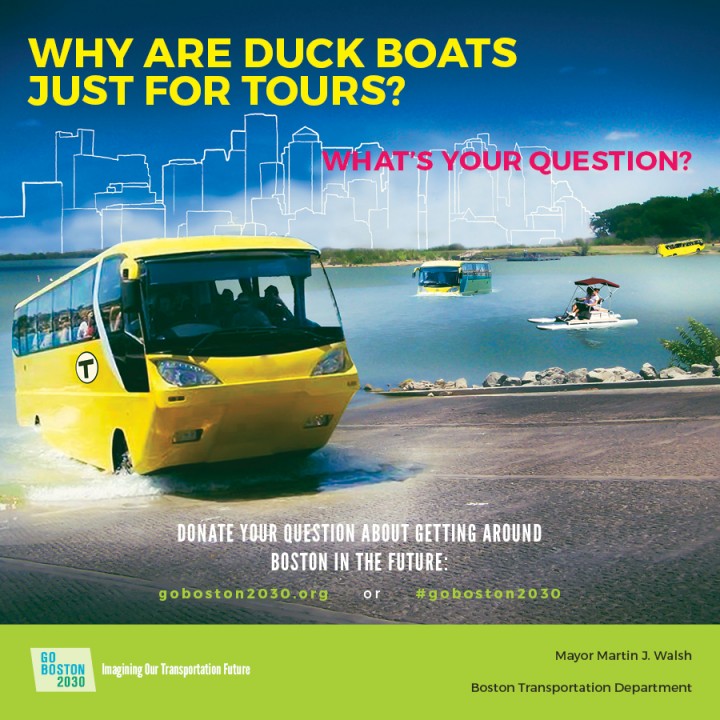
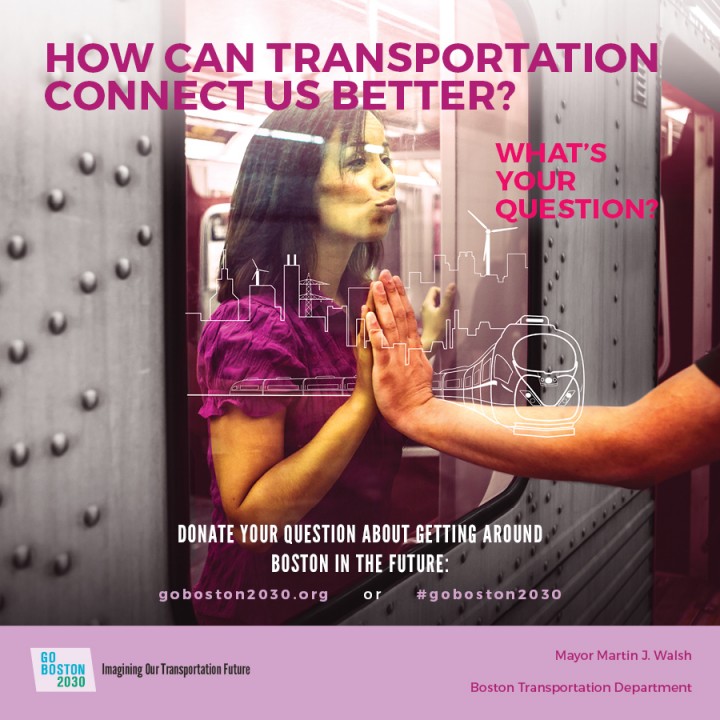
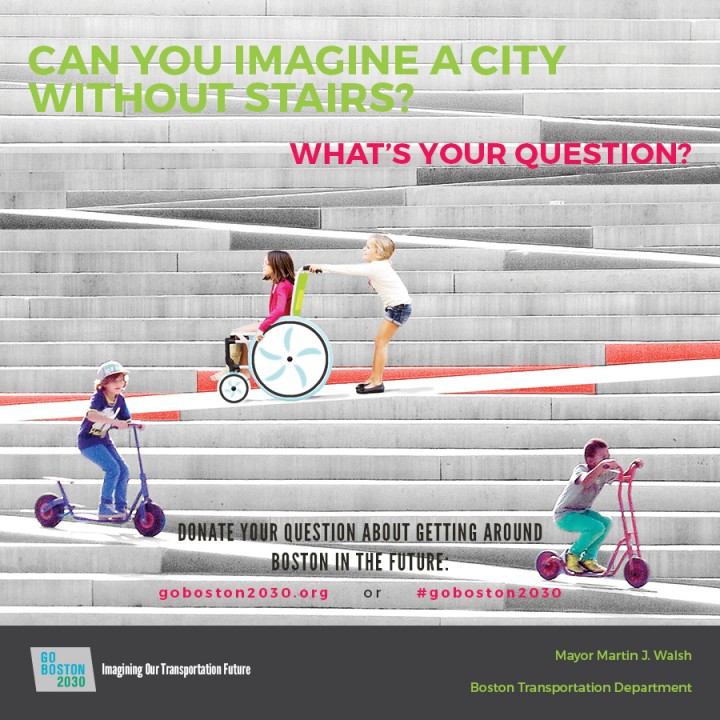
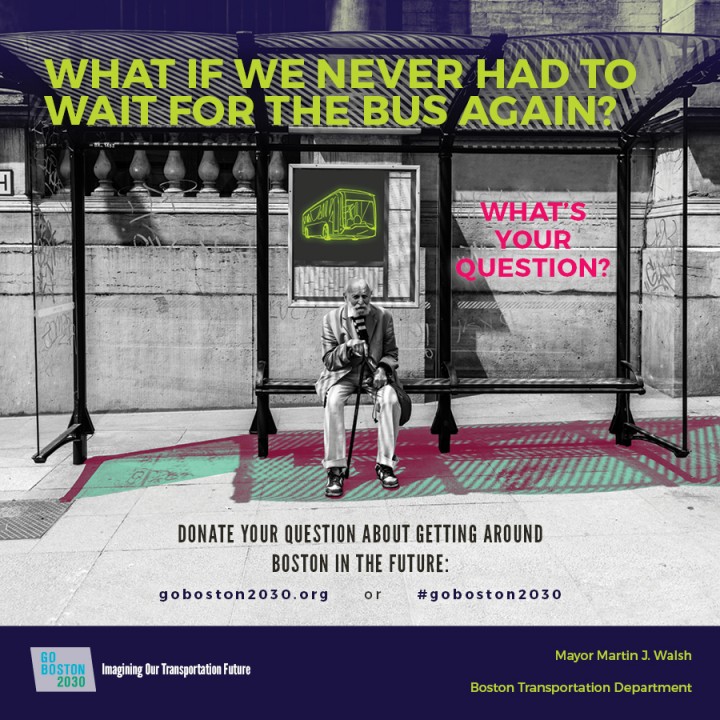
Go Boston 2030 spent the fall and winter collecting over 5000 questions from residents, workers and visitors across the city about getting around Boston in the future. Now these questions will be turned into a public vision at the two-day event. Read More
For Interview with Dr. McDowell Contact: Danielle Coates-Connor | 413-246-0524 | dconnor (at) interactioninstitute.org
MA Governor Charlie Baker and Interaction Institute for Social Change President (IISC), Dr. Ceasar McDowell make remarks at Urban Edge Annual Meeting. Emcee Karen Holmes Ward.
Boston has a “new gold standard in public engagement”
IISC leads public engagement for Boston’s transportation future
“Go Boston 2030 is a City of Boston initiative to envision a bold transportation future for Boston for the next 5, 10 and 15 years. The plan will develop a far-reaching vision that proposes transformative policies and projects to improve transportation for the city’s residents, businesses, and visitors. The two-year process will be driven by data and steered through an unprecedented and inclusive public engagement process.”
IISC designed this process so that the public framed the vision and was involved in ideation. See the story of public participation. This project is still underway.
In the News
Boston’s transportation planning can be fun, Boston Globe
Boston planners tap commuters to shape ideas for 2030, New Boston Post
Go Boston 2030 truck solicits commuter questions, Boston Metro
“The City of Boston launched Go Boston 2030 to better understand the public’s aspirations for transportation throughout the city and to build a bold, innovative transportation future based on an unprecedented level of public engagement,” said Mayor Walsh. “Our transportation Action Plan will lay out an ambitious roadmap to address inequities in underserved neighborhoods, connect our workforce to job opportunities, and prepare our systems for climate change.”
“The Go Boston 2030 initiative is using the latest technology and real grass roots activity to achieve an unprecedented level of community engagement. We’re hearing directly from a broad group of people about what their needs and hopes are for Boston’s transportation future,” said Mayor Walsh. “Together, through this initiative, the public and city officials will build a bold and innovative plan that will improve mobility for residents, commuters, and visitors.”
IISC Designs and Delivers Public Engagement Process
IISC President Ceasar McDowell described the process during a keynote at Grantmakers for Effective Organizations (GEO), reflecting on city planning as an opportunity to build democracy.
Senior Associate Andrea Nagel reflects on IISC Blog about the process.
Question Campaign and Question Review Session
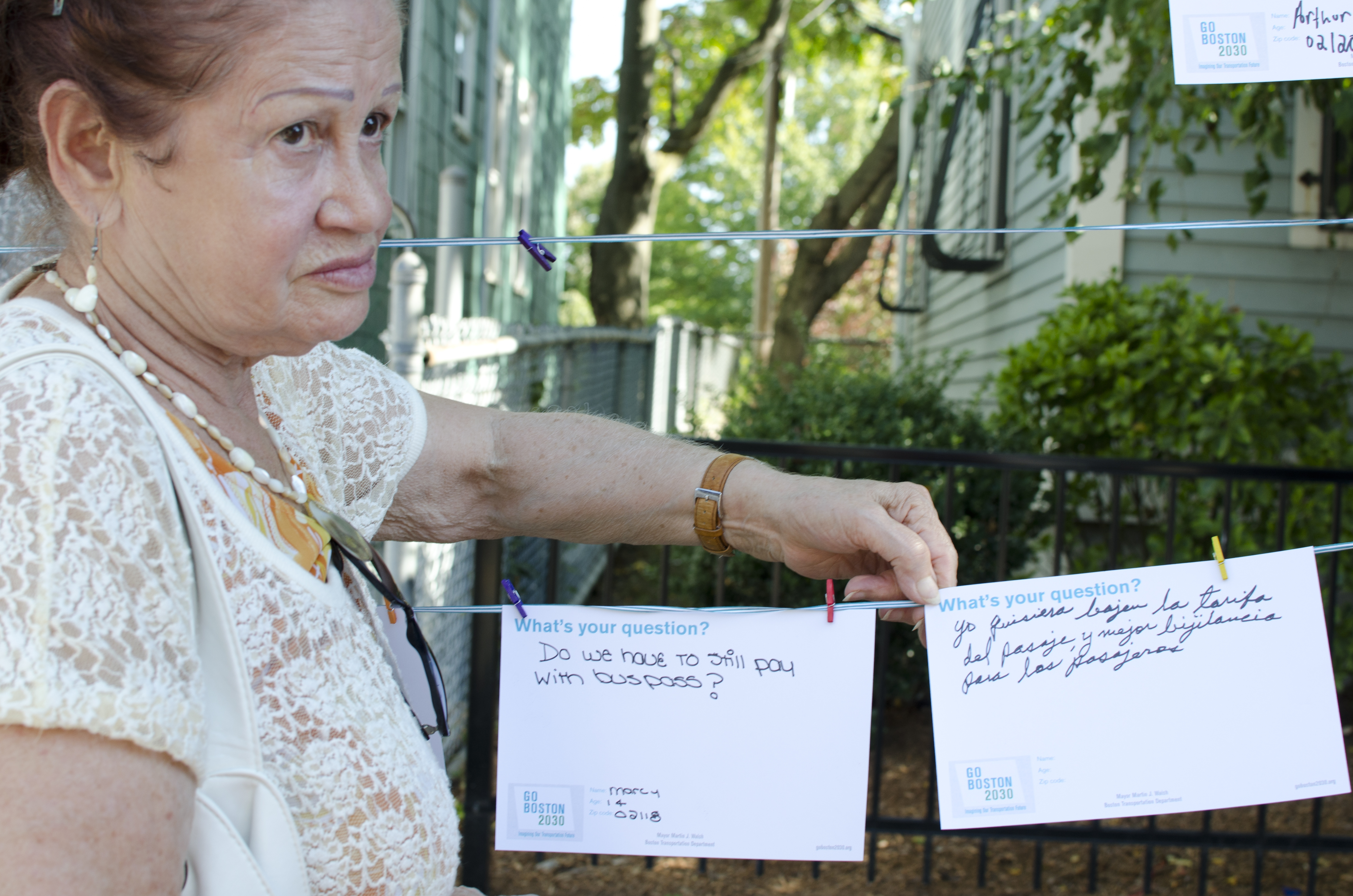
IISC and the city collected over 5,000 questions and touched every neighborhood in Boston. We did this by letting people submit a question in a way that makes sense to them and meeting people where they are.
For example:
People could submit questions via text, email, handwritten cards, Tweet, Instagram, Facebook, and other ways.
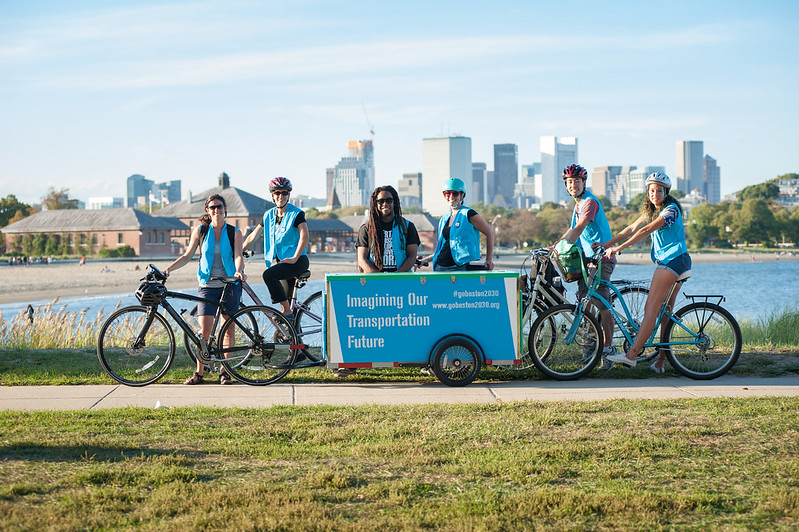
We designed an interactive glass truck that went to 15 neighborhoods.
We used digital media to publicize on the city’s social media pages, built a following, and attracted thousands of questions.
We had over 80 partners from city agencies to grassroots organizations committed to bringing their networks into the campaign.
We participated in existing events all over the city.
As the questions came in, they were organized by emerging themes and zip code, and made available for viewing on the website. But how do you move from 5,000 questions to something people can anchor around and build a vision? The Question Review Session was a half-day convening of city officials and community leaders who reviewed all of the questions and worked together to understand and articulate what the public was saying. Participants identified sets of questions that best represented what was most recurrent, provocative, and visionary amongst everything people had said.
Visioning Lab
Next came the Visioning Lab, a place for people to share their vision of our transportation future. It was designed to test the resonance of the themes, questions, and vision ideas that emerged from the Question Campaign and Question Review Session. People were invited to answer some of the key questions and to articulate how they imagine seeing each vision idea come to life.
The Go Boston 2030 Visioning Lab took place on May 8 and 9, 2016 at the China Trade Center. Building on the Question Campaign, we asked the public to help us to develop a big vision for the future of mobility. The event was free and open to the public. What people wrote on the walls, designed at the Creation Station, and “liked” with stickers and tokens was used to guide the development of goals and targets for the Vision Report.
Results from this process are published in the draft report, which is available for download at Go Boston 2030.org.
Share Your Trip
“Share Your Trip with BTD” is a part of the Go Boston 2030 initiative that pairs people who work for the Boston Transportation Department with people who live and work in Boston who have volunteered to tell their stories about getting around the City. Combined with project and policy ideas collected this fall at “Ideas on the Street” pop-ups as well as data analysis about future demand, these stories are designed to form the narrative backbone of the Action Plan phase.
Ideas on the Street
The Ideas on the Street pop-up visited 31 neighborhood locations between September 19 and October 21, 2015. The expandable bike trailer collected project and policy ideas on paper maps and Members of the street team talked with people at events, square, and T stations across the city. An online platform also allowed people to share their project and policy ideas with words and maps using the smart phones or computers. Over 2000 ideas were collected.
Idea Roundtables
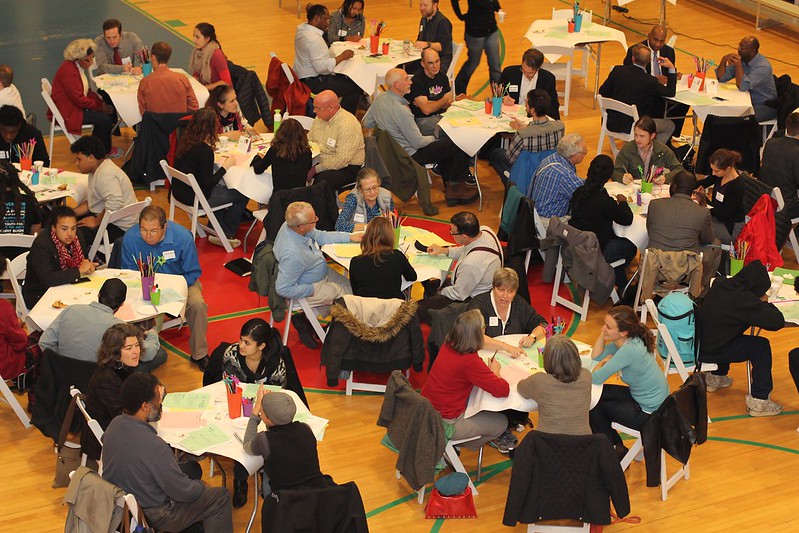
On November 10, November 14, and November 19, Go Boston 2030 hosted three interactive conversations about the future of transportation. Participants sat with people from other neighborhoods and discussed possible ways to address the challenges facing our transportation systems.
Ads will run on public transit and in neighborhoods, in addition to on-the-ground question collection by staff and network partners.
Make Change Stick Beyond the MeetingTurn ideas into agreements that stick, and keep change going after the meeting ends. Perfect for teams stuck in “great conversation, little action.”