It was at this time a year ago that I made the trip to Keene, New Hampshire to teach my final weekend Change Models class of the semester at Antioch New England. Just a few days prior, the entire region had been rocked by an ice storm for the ages. When the storm hit I was in Maine. Driving home the next day I heard reports about the worst damage being concentrated in western Massachusetts and southern New Hampshire. All that had slipped my mind when I got up early on Sunday morning to drive to Keene. It came rushing back when I got off of Route 2 heading north and the world turned dark and quiet. Everything in sight was cocooned in ice. Trees sagged. Homes along the roadside for miles were without lights. Businesses were shuttered. The awesome force of nature really began to sink in.
It has been quite a week or so on the climate action/activism/advocacy front. From the 350.org global day of action to the Bioneers conferences happening around the country, to some interesting personal conversations I’ve had with staff members of the Union of Concerned Scientists (UCS) and Conservation International (CI), to ongoing preparations for the upcoming UN Conference on Climate Change in Copenhagan, it seems clear that momentum is gathering towards taking serious and significant steps to help mitigate and adapt to changes in our global climate that have already begun.
Curtis passed this along to me today. A video from 350.org which explains how tomorrow, October 24, 2009, is a Day of Action focused on climate change. 350.org is focused on reducing global CO2 levels to a healthier 350 parts per million (ppm) compared to the current 387 ppm we are currently hovering around.
The video and site go over exactly what tomorrow means and how you can participate. To find out what is going on around you, take a look at their map. Enjoy!
What if in order to spend more time on the things that matter, we really do need to spend less time working on those things and on everything else, too?
What if its true that our energies, time, intellect, creativity and gifts — if concentrated, focused, harnessed, smartly— really will yield more, better, longer-lasting, more potent results and legacies than they will if we are everywhere-and-no where in particular, all things to all people, jack of all trades, and eh….spread too thin?
And, what if it is true that in a more focused, streamlined, measured, discriminating, approach to life and work will thereby make the experience of our working and living itself more rewarding? Read More
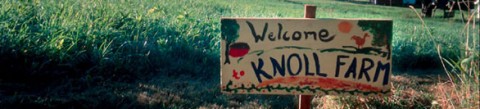
Yesterday I had the opportunity to visit with staff of a few unique organizations in central Vermont, including a conversation with Peter Forbes at the Center for Whole Communities in Fayston. What Peter, his wife Helen Whybrow, and their colleagues have created at Knoll Farm, a working organic farm, is truly inspiring, not just for the beauty of the land it occupies and the amazing views that are afforded of the surrounding mountains of Mad River Valley, but also because of the thoughtful attention that has been given to every detail of the Center and the programs that it offers.
The Center for Whole Communities is focused on reconnecting people to land, to one another, and to community as a way of healing the divisions that exist between those who are working for social justice and environmental conservation. To this end they have created a setting and experiences that carefully tend to this mission of reconnection, from immersing people in the landscape, to engaging them in dialogue and storytelling, to grounding them in creative expression and contemplative practice. Read More
Yesterday I started writing about health and social change and I alluded to the promises of the food movement and its implications for social transformation. Let me be completely clear – I am not currently affiliated with any formally organized aspect of the food movement. However, as I think about the type of social change that will truly make a difference, the change that keeps people like my father physically healthy while also augmenting our collective experience of freedom, it seems to me that the food movement has a lot to offer.
Industrialized food and the commercialization of edible goods that have no benefit for our bodies is one of the key reasons why Americans are falling ill, poor communities and people of color bear the burden of this problem. Building movement around food allows us to do a number of things: Read More
Where does social change begin? I’ve been asking myself this question for a long time but it hit me especially hard this weekend. I was sitting with my father, who is in his early fifties, we were waiting for my uncle and chatting with a friend who is also about their age, all of them have diabetes. At that point I had to wonder why it has almost become a rite of passage for Puerto Rican men of a certain age to sit around and discuss the onset of diabetes.
The Health Care debate has been sad and frustrating. Even with the best president in a generation there seems to be so little we can do. And it feels so far away from the day to day lives of those who are getting sick by virtue of simply living and eating in our society. So where does social change begin? Is it by slowly bringing progressive voices into state power? Is it by organizing people to feed themselves better? Is it all about personal responsibility? Read More
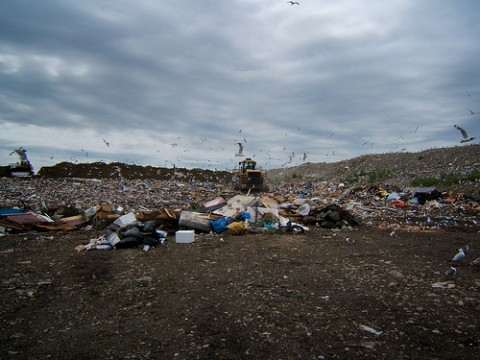
When we throw it away, it doesn’t go away. This is an important lesson of both systems thinking and ecology. Fritjof Capra, physicist and founding director of the Center for Ecoliteracy, writes that we need to relearn the fundamental facts of life, including the fact that matter continually cycles through the web of life and that one person’s (or species’) waste is another’s food. If our awareness and actions shifted in accordance with these facts, how would we live and work differently?
In her analysis of leverage points to intervene in a system, the late Donella Meadows highlighted mindsets as one of the most fundamental levels on which to focus if one is hoping to make deep and long-lasting change. The case for this is well made in a recent article in Mass Audubon’sSanctuary Magazine.
Katherine Scott writes in “The Wind in the Wash” about the lost art of the clothesline in America, largely obscured by the now ubiquitous clothes dryer. In this day and age, notes Scott, many children haven’t the remotest idea of what a clothespin is. She is not simply waxing nostalgic, but making an important point about the way we think.
One of the benefits I’ve experienced in our social change work as process experts and professional facilitators, is the exposure we get to have in various fields of social change work. Since last October, my colleague Andrea and I have had the pleasure of consulting with an amazing collaborative of stakeholders, the Springfield Health Equity Initiative, who have determined to build a plan to reduce the incidence of diabetes in the black and brown neighborhoods in the city of Springfield, MA. Even more boldly, these dedicated and thoughtful leaders have also chosen to take up an analysis for their work that incorporates how systemic, government sanctioned, racial discrimination has played a direct role in creating the egregious disparities in health outcomes we see today among black and brown folk in the U.S., and regardless of class.
“Ecological design competence means maximizing resource and energy efficiency, taking advantage of the free services of nature, recycling wastes, making ecologically smarter things, and educating ecologically smarter people. It means incorporating intelligence about how nature works . . . into the way we think, design, build, and live.” -David Orr
The Nature Conservancy’s “Design for a Living World” Exhibition, which recently opened (May 14th) at the Cooper-Hewitt National Design Museum, features ten designers exploring the relationship between the natural world and the products we use. Each designer was asked to develop new uses for sustainably grown and harvested materials and the results are quite beautiful in a number of different ways.
I find the idea of designing for a living (or livable) world to be a powerful invitation for those of us engaged in creating experiences to bring out the best in others (innovation, collaboration). I hear the call to be mindful and respectful of the cultural and ecological contexts in which I find myself, to work with (not against) the surrounding social/natural environment, and to think in restorative (as opposed to extractive) ways. As David Orr, environmental philosopher and author of The Nature of Design, suggests, sustainable design is all about creating harmony between intentions and “the genius of particular places” (we might add particular people). The standard for Orr is not so much efficiency or productivity, but health. So here’s to ours, fellow designers.
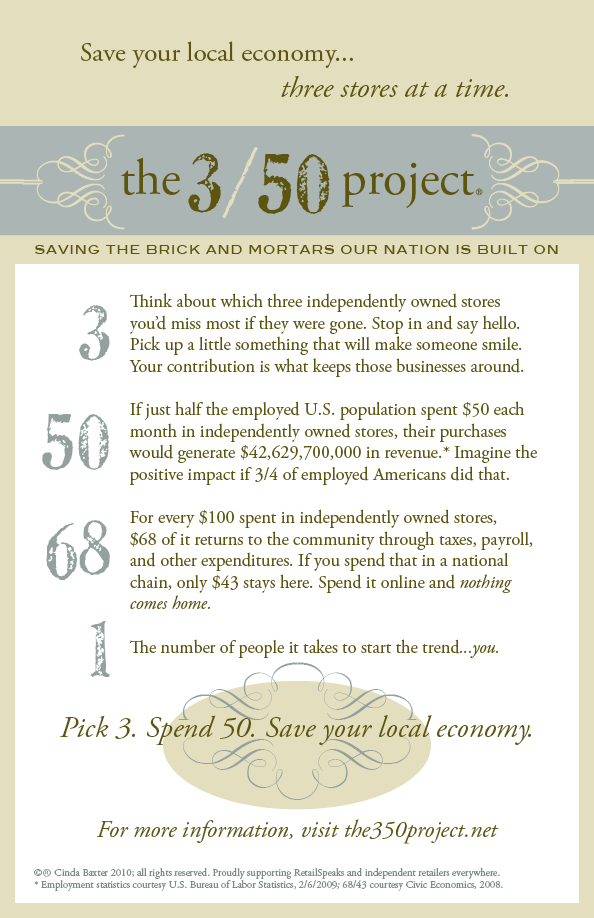
This is an issue that I believe is at the core of building community where we live and work. I was delighted to learn that there is actually a national movement (of sorts) to promote the importance of this idea and thought I’d pass it on to you all.
You’ve probably heard me make the point when it comes to buying books for IISC from Harvard Bookstore instead of Amazon.com. For me, in addition to the bookstore, it also comes up around my local hardware store vs. Home Depot, and my local camera store vs. Best Buy. And on and one the possibilities go!
Thanks for considering your own possibilities in this regard. And thanks for listening!
Make Change Stick Beyond the MeetingTurn ideas into agreements that stick, and keep change going after the meeting ends. Perfect for teams stuck in “great conversation, little action.”