Throughout the past couple of years readers of this blog have seen some discussion about the tensions that exist between those working on individual behavior/spiritual change and those striving for structural transformation. The point has been made that both are necessary. The fact remains that we often find ourselves in rooms with people who are essentially on the same side of the issue, but engaged in “tactical sectarianism” (thank you, Adam Pattantyus), arguing about whose approach is best. Read More
|Photo by Keith Williamson|http://www.flickr.com/photos/elwillo/5440401913|
The more I do our collaborative consulting work here at IISC, the more interested I become in the role of the convenor in complex multi-stakeholder change efforts. This role, typically held in our work by a funder or someone else with convening power (local/state government, school district, a well-connected community-based agency) has much to say about the success and nature of a social change effort, and yet from my perspective remains under-appreciated and/or poorly misunderstood. Over the next few months I’ll spend some time in this space reflecting on what we and others are learning about this critical role and soliciting your thoughts, reactions, and experiences.
But first, what does it mean to convene? In our practice, convening is one of a few central leadership functions in collaborative and networked approaches to change. Read More
|Photo by diveofficer|http://www.flickr.com/photos/diveofficer/2224496557|
Metaphors can be very useful in helping us grasp and work with otherwise complex issues and difficult circumstances. I’ve been working with one particular image lately as I’ve been doing change work on both personal and professional fronts. As we all know, it can be very difficult to move from where we are, even when we know change would likely bring something better. Of course, there are many different sources of resistance, and something I’ve been thinking about lately is how the reality of our current situation, while being an impetus for change, can also become all-consuming in a way that obscures other possible paths forward. I liken this to the image of standing under a bright streetlight at night. Where we are is fully illuminated, and beyond that, the dark is that much more obscured in contrast to the brightness in which we are engulfed. This can make any movement beyond that glow, as glaring and unpleasant as it may be, somewhat daunting. We can’t see the alternatives! But if we were to venture slowly out beyond the edges of the lamp’s light, what would we find? Over time our eyes adjust. Gradually, we are able to see more clearly that there are in fact viable alternative paths forward. Perhaps thinking about and allowing for this adjustment will embolden our stepping into the shadows.
“The Fender Telecaster is an instrument of beautiful simplicity.” Jim Mauradian, luthier.
For you non-guitar geeks this may take a moment to explain. The electric guitar as we know it today, is a product of the 1950’s. Back in the stone ages of electric guitar making, it was an accepted practice to trick out the instrument with as many buttons, knobs and toggle switches as could be fit on a block of wood. And dang it if those guitars didn’t look sweet. Problem was, most of those guitars sounded like crap and because of the complex nature of the design, were in constant need of adjustment when not in a state of total ill-repair.
In response to this over complicating trend, a Luthier named Leo Fender set about to design and produce an electric guitar that was (1) simple to use, (2) durable, and (3) sounded great. Leo Fender’s genius was in stripping away all of the unnecessary crap, reducing the design to the barest essentials.
The product of his design was an electric guitar called the Fender Telecaster, which to this day is considered by many guitarists (myself included) to be the platinum standard of guitars. Go figure.
I wonder how it might look if we consistently applied Leo Fender’s approach to our own work and lives. Thoughts? Anyone want to put in a good word for complexity?
|Photo from andronicusmax|http://www.flickr.com/photos/24258698@N04/4023806676|
This past week I’ve been in Florida for our family’s annual pilgrimage and a desperately needed reprieve from what has certainly been a challenging New England winter. And as in years past, I’ve had the fortune to be able to attend a speaker’s series that my father-in-law has been instrumental in putting together down here. Last Friday I got to hear from Zbigniew Brzezinski, former National Security Advisor to President Carter and counsel to numerous other American heads of state, both Democrat and Republican, on matters of foreign policy. Brzezinski had only 45 minutes to present what ended up being a dizzying tour of his perspective on the current state of geopolitics and suggestions for US strategy going forward. As grand (and certainly opinionated) as this undertaking was, I was most struck by how he began his talk, and the ensuing response. Read More
“Everybody needs an EVIL PLAN. Everybody needs that crazy, out-there idea that allows them to ACTUALLY start doing something they love, doing something that matters. Everybody needs an EVIL PLAN that gets them the hell out of the Rat Race, away from lousy bosses, away from boring, dead-end jobs that they hate. Life is short.”
My second book, EVIL PLANS launched today. Here are some notes:
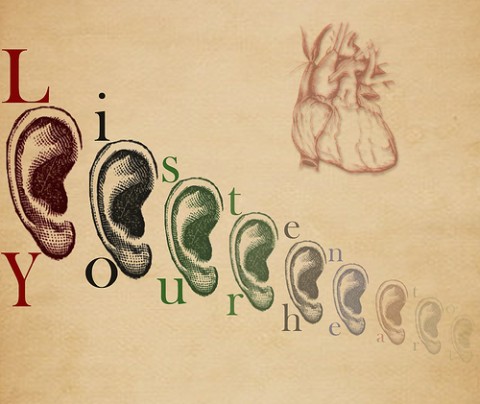
“Give me the listening ear
The eye that is willing to see.”
-Howard Thurman
|Image from ky_olen|http://www.flickr.com/photos/ky_olsen/3133347197|
This past weekend I had the opportunity to be part of a Quaker-style “clearness committee” with a few twists thrown in. I have done a few similar sessions in the past, though it has been a while, and once again it proved to be a remarkable experience. The impetus for the session was a friend who, acknowledging that she is at a crossroads in her life and career, reached out for help with discernment. My wife, Emily, and I suggested convening a small group of people who know her well to lovingly listen to the core question with which she is wrestling. Over the course of the two and a half hours we were together, there was an amazing peeling away of layers that occurred as we asked questions and watched for what either brought our friend to life or weighed her down. By the end of the evening, she was excitedly looking at very real and enlivening opportunities in what she had previously perceived as being frivolous or “once I win the lottery” kinds of scenarios. Read More
When I walk out of my door in the morning I am forced to look at a note that I’ve written to myself – “Do the Thing.” Sometimes I will also place this note on my meditation cushion, so that I have to pick it up and move it right before I turn within. I’ve been thinking a lot about the persistent gap between “talking/thinking about the thing” and actually doing it. It is a gap that runs the gamut, I find it in my own individual life and in organizational life, I find it in our political discourse and within the social larger movement.
Perhaps the gap is inescapable. It is possible that we live through aspirations. It is possible that we think and talk about the thing in order to slowly catch up with it through the grind of real life.
And we do know that reflection is a good thing, that we learn through conversations, that it is important to articulate our vision.
I’m not trying to deny or undermine these things.
I just think that it is good to mind the gap. When we mind the gap we are less abstract. When we mind the gap it becomes harder to talk about goodness and justice while treating each other badly.
As a “process consultant,” a designer of interaction, I also think that minding the gap is what inspires me to strive for a generative experience – and actual taste of the thing we are working towards.
When aiming for transformation we must create transformative spaces. Do not have “another meeting” where you talk about social change. Design transformative spaces that give you a taste of it. Mind the gap. Live in the world you are trying to build. How you get there is as important as getting there. Do the thing.
Make Change Stick Beyond the MeetingTurn ideas into agreements that stick, and keep change going after the meeting ends. Perfect for teams stuck in “great conversation, little action.”


 Photo by: