There is some exciting work happening through the Institute of Noetic Sciences called the Worldview Literacy Project. This initiative seeks to help students understand from a relatively young age what a worldview is, where worldviews come from, and the potential for switching and/or holding multiple views. Given that fundamental change is rooted in our mindsets and preconceived notions about what is and can be, this project would seem to hold great promise. Judge for yourself by listening to these remarkable young people and future (or perhaps current) change agents.
We at IISC are big fans of the work of John McKnight and Peter Block, some of us even have some bones to pick with them – but that’s the best sign of admiration! In this blog post, originally appearing in the Huffington Post they bring a very different and appreciated perspective.
|Photo by Sebastian-Dario|http://www.flickr.com/photos/sebastian-silva/2207382770|
Paola Antonelli has appeared in various posts on this blog over the past couple of years as one of our favorite purveyors of design thinking and its application to social change. Now Antonelli is really stepping out. In an article for SEED Magazine, the senior curator of Design and Architecture at the Museum of Modern Art holds out a whole new and exciting realm of application for design – policymaking, governance, and social agendas. Read More
I’m keen on developmental theory. And I’m particularly interested in the implications of the Wilber-Combs Lattice. I don’t want to distract you with the esoteric, but I do think the picture is worth including.
The most important contribution of the Wilber-Combs Lattice is the distinction between states and stages. Stages (vertical axis) are developmental – they are sequential, you can’t skip through them and they progressively transcend and include each other. States (horizontal axis) on the other hand, are available to all stages.
|Image from cambodia4kidsorg|http://www.flickr.com/photos/cambodia4kidsorg/2296887265|
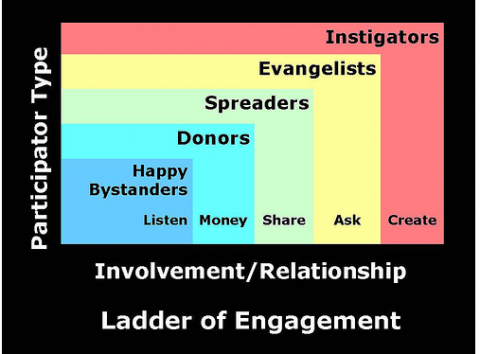
I’ve been working with a couple of organizations and initiatives lately as they discuss enhancing their strategies for stakeholder engagement. Throughout all of this work is the emerging awareness that we are in the midst of a paradigm shift in our field with respect to what engagement means and looks like. This, of course, has been captured by many writers and thinkers who have been looking closely at what social media is enabling (see, for example, Clay Shirky’s work, the Working Wikkily blog, or the writings of Beth Kanter and Allison Fine). And at the same time there is a realization that this is not just about technology, but a return to some of what we’ve forgotten as well as a step towards something new. Read More
We at IISC have the privilege of witnessing heartful, sometimes heart wrenching dialogue about critical issues in our world from multiple perspectives. We work with passionate laypeople and professionals focused on education, environment and sustainability, public health, peace and justice, youth development, racial justice, city planning and community development, to name a few disciplines.
I’m encouraged by a few themes that are coming up more and more in our work. And, I’m even more encouraged that increasingly, they are emerging as imperatives, not just “nice ideas.” As we facilitate processes and bear witness to the struggle to bring forth justice, here are some of the voices we’ve heard calling out: Read More
|Photo by Original Nomad|http://www.flickr.com/photos/simonmonk/5371124284|
HOSPITALITY is not to change people, but to offer them a space where change can take place. It is not to bring men and women to our side, but to offer freedom not disturbed by dividing lines.
It is not to lead our neighbor into a corner where there are no alternatives left, but to open a wide spectrum of options for choice and commitment. It is not an educated intimidation of good books, good stories, and good works, but the liberation of fearful hearts so that the words can find roots and bear ample fruit.
It is not a method of making our God and our way into the criteria of happiness, but the opening of an opportunity for others to find their God and their way. The paradox of hospitality is that it wants to create emptiness – not a fearful emptiness, but a friendly emptiness where strangers can enter and discover themselves as created free; free to sing their own songs, speak their own languages, dance their own dances; free also to leave and follow their own vocations
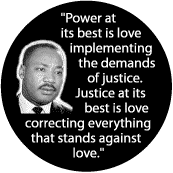
Picking up from my post the other day (“Pauses for the Cause”) about the process learnings of our recent IISC retreat, I wanted to focus a bit on the content take-aways. As I previously mentioned, the reason for our coming together as a staff was to revisit and dive into the roots of our collaborative practice: networks, equity/power/inclusion, and “the love that does justice.” It wasn’t long before we were wondering whether these are not more appropriately called the lenses through which we look as we go about our collaborative capacity building and change work. And it did not take long after that for us to question whether the labels we have selected for these lenses are the appropriate ones. I want to spend the rest of this post looking at where our conversation took us with respect to love, in particular.
What’s love got to do with it? That was not exactly our guiding question, but we got there eventually through some of our struggles to reach shared understanding and agreement about what we mean when we say “the love that does justice.” Our facilitator engaged us in writing on stickies short phrases and sentences that explained what it means to integrate this into our practice. The activity yielded a plethora of multi-colored squares that we then organized into themes. Here is what emerged, categorically speaking: Read More
Last week, IISC staff took a step back to consider what we had been referring to as the roots out of which our collaborative capacity building work grows (we have since wondered whether these may be more appropriately cast as “lenses,” but more on that at another time), and to come to some agreement about what is core to our practice in these imperfectly titled areas:
networks
equity/power/inclusion
“the love that does justice”
We were guided in our conversations by the talented Mistinguette Smith, with whom I have had the pleasure of partnering in delivering our joint work with the Center for Whole Communities – Whole Measures: Transforming Communities by Measuring What Matters Most. Anyone who is able to handle a group of facilitators has certainly earned her stripes, and if that person can teach those “process experts” new tricks, well now you’ve really got our attention. Ms. Smith, we are listening! Read More
Toward the end of last year I tweeted about stumbling back upon Don Miguel Angel Ruiz’s Four Agreements, thanks to a reminder from a participant in the Hanley Center Health Leadership Development initiative. They were invoked as being key to keeping people grounded when their collaborative skillsets were being pushed to the limit by challenging circumstances. In thinking about these agreements more deeply over the winter break, they struck me as powerful and appropriate intentions to set for the new year, especially in our social change and sustainability work. Here they are with my own editorializing: Read More
Another calendar year is coming to an end, and as of today, the seasonal darkness begins to recede. As I look forward to 2011 and the return of the light, I am reminded of the following words of George Bernard Shaw. Through them I find meaning in the busy-ness of life and blessing for the fullness of each day that calls on my whole self to be of service. May we burn brightly and steadily in the coming year and bring clarity and warmth to a world in need.
“This is the true joy in life, the being used for a purpose recognized by yourself as a mighty one; the being a force of nature instead of a feverish selfish clod of ailments and grievances complaining that the world will not devote itself to making you happy.I am of the opinion that my life belongs to the whole community and as long as I live it is my privilege to do for it whatever I can. I want to be thoroughly used up when I die, for the harder I work, the more I live. I rejoice in life for its own sake.Life is no ‘brief candle’ to me. It is sort of a splendid torch which I have a hold of for the moment, and I want to make it burn as brightly as possible before handing it over to future generations”.
Make Change Stick Beyond the MeetingTurn ideas into agreements that stick, and keep change going after the meeting ends. Perfect for teams stuck in “great conversation, little action.”






 Last week, IISC staff took a step back to consider what we had been referring to as the roots out of which our collaborative capacity building work grows (we have since wondered whether these may be more appropriately cast as “lenses,” but more on that at another time), and to come to some agreement about what is core to our practice in these imperfectly titled areas:

