|Photo by Sam Ilic|http://www.flickr.com/photos/stage88/3650502444|
I shared the following Wislawa Szymborska poem with faculty in an academic department at a university with whom I was working this week. We read it as we were about to launch our final day of discussions about collaborative leadership and team building.
|World of Oddy|http://www.flickr.com/photos/worldofoddy/146446352/sizes/s/|
I wanted to share this link to a short discussion by Pema Chödrön about the importance of staying with the hard stuff – not the story we create about a situation, but the underlying feeling itself – to create change. This follows along with previous posts I’ve made about the importance of “staying” – with conflict, in situations of privilege. The message being the same – the importance of learning to stay! And so I wonder how this applies to organizations and movements. I hear it this way – rather than trying to fix a situation too quickly, stay with it, learn about it, learn to live with the tension while we look for ways to create change. What do you think?
Are you amazing? Are you one of those people who are working to define the next phase of movement? Are you connected to a crew of local organizers, activists, innovators, dreamers? If you are an amazing movement builder then I want to be able to follow you on Twitter and I want to be your Facebook friend.
I find myself travelling from place to place and meeting some truly amazing people, I keep getting hip to really interesting projects and innovative approaches to the work of social change. I’m connecting to my tribe; I’m getting to know the people who are actively redefining the way we do social change. Here is the problem though – I can’t keep up with all of them! And here is where I notice an important distinction. When these people are using social media tools I can at least have a sense of what they are up to, I can get a glimpse of how their work evolves – but if they are not, then I’m left with hearsay. Read More
|Photo by joi|http://www.flickr.com/photos/joi/2941559903|
Our colleagues at Interaction Associates have done some wonderful work on the importance of trust in the workplace and what leaders can do to cultivate this, especially under uncertain circumstances the likes of which seem to be omnipresent these days. More recently, former IBMer Irving Wladawsky-Berger has taken this conversation to a new level in a post that looks at trust as “the most important operational resource in our society.” In our increasingly complex, interconnected, and distributed world, he says, one’s reputation as an individual or institution is foundational to what we might call success. This observation contributes to his sense that we are in the midst of a values-based generational transition as potentially profound as the sixties.
Without rehashing the entire post here (I encourage you to read it in its entirety by going to this link), I want to point out some of the more interesting parts and ask what folk engaged in the social sectors and social change work think Read More
With Father’s Day around the corner, my thoughts are focused on what it means to be a good father and a good man in this world. For those who have not yet heard, The Good Men Project has created a rich forum for these questions and has just launched a magazine delving into issues such as men’s health, relationships, sexuality, ethics, and boys/adolescence. From what I’ve seen so far, I appreciate the initiative’s willingness to go broad in eliciting a diversity of stories and perspectives. Furthermore, The Good Men Foundation has dedicated itself to helping organizations and efforts that provide educational, social, financial, and legal support to men and boys at risk.
|Photo by aldoaldoz|http://www.flickr.com/photos/aldoaldoz/2340226779|
Since February I’ve been experiencing back pain in a constant and distracting (though not quite incapacitating) way, a result of having poor posture at the computer, not taking enough breaks while sitting, lifting too many small children, and being another year older. A couple of months ago I went to a chiropractor and he did his best to wrench me back into alignment. This worked for a few days, and then things were back as they were. I enlisted the help of a “deep tissue” masseuse who went after my back muscles with steady steam rolling force. Again, for a few days I was on top of the world, and then it was back to square one. Then, about two weeks ago, I started seeing a physical therapist, who has given me some gentle stretches and postural shifts and done light massage on my left shoulder. Et voila, real progress! Small and subtle shifts have yielded major and lasting results.
Sometime ago I caught this heart warming short film on @NurtureGirl‘s blog – Nurture.biz – and since it has come up in conversation a couple of times lately, I thought it would be a good time to share it forward. It is so important to contemplate our own individual power to make things beautiful.
One of our consultants just wrote the following e-mail to our team here at IISC. I thought it would be a good idea to put the question out to our readers – any thoughts?
Hello Colleagues,
I am wondering if you might have ideas about two things:
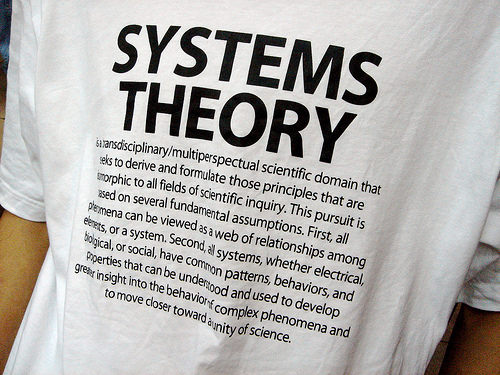
1. How to introduce systems thinking to a group – simply…
2. What questions you might ask when trying to identify leverage points in a planning process?
Context: The group has gathered a lot of anecdotal information, the intention is to gather additional information on best practices and research, however, we are not there yet. So how to begin to identify levers when we don’t have the benefit of having all data?
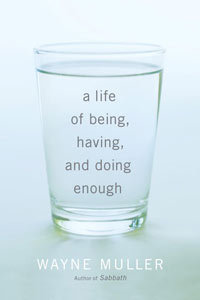
There’s something about the word and notion of “sufficiency” that I love. Years ago, while living in France, I learned to enjoy the way the words “ça suffit” roll off the tongue. The term and idea resurfaced for me recently when I learned about the Third Annual Global Sufficiency Summit that was held here in Cambridge, MA in April. It has come up again while reading the newest book by Wayne Muller, whose writings were a helpful guide to me during my time in graduate school. Muller’s A Life of Being, Having, and Doing Enough focuses squarely on the question of how we go about determining what is sufficient in different areas of our lives. He suggests that our failure to consider or know how to address this question has contributed to putting us in individual and collective dire straits.
|Photo by Scarleth White|http://www.flickr.com/photos/iloveblue/3302032125|
Thanks to Ginny McGinn of the Center for Whole Communities for introducing me to this poem by the Chilean biologist/philosopher Humberto Maturana. We used it to launch this week’s The Masterful Trainer workshop, and it generated some wonderful reflections on the role of teaching, training, facilitation, and leadership in this day and age. Enjoy . . .
The Student’s Prayer
Don’t impose on me what you know,
I want to explore the unknown
and be the source of my own discoveries.
Let the known be my liberation, not my slavery.
The world of your truth can be my limitation;
your wisdom my negation.
Don’t instruct me; let’s walk together.
Let my riches begin where yours end.
Show me so that I can stand
on your shoulders.
Reveal yourself so that I can be
something different.
You believe that every human being
can love and create.
I understand, then, your fear
when I ask you to live according to your wisdom.
You will not know who I am
by listening to yourself.
Don’t instruct me; let me be.
Make Change Stick Beyond the MeetingTurn ideas into agreements that stick, and keep change going after the meeting ends. Perfect for teams stuck in “great conversation, little action.”