I’ve been thinking a lot about why people love to hate government, and why I just can’t bring myself to hate it, too. I hold tightly to the notion of government “of the people, by the people and for the people” and want to hold it accountable to serving its role to “establish justice, insure domestic tranquility, provide for the common defense, promote the general welfare, and secure the blessings of liberty to ourselves and our posterity.”
To the people who say (as I heard recently on the news) “I want government out of my life and out of my pocket!”, I say, see how far you get without roads, bridges, schools, water, sewer, fire and police forces, courts, public transit, public parks, libraries, and the like. To those who say (as I also heard recently) “I was raised that if you see something that needs to be done you just do it. No whining. No waiting for government. You just do it.” I have a few questions. Does that include paving a pothole? Educating a neighbor with special needs? Making books available to children and adults doing research? Building an extension to a road or transit system? Ensuring that the air and waterways are not polluted? Providing shelter, health care and other safety net supports for people in need? Making sure that everyone does their part to avert a climate disaster? You get my point. As a tax payer, I’m getting a pretty good deal for what I pay. It would take more than 80 years of paying our property taxes to exceed just the cost of educating three sons in private schools!
|Photo by Portable Church|http://www.flickr.com/photos/portablechurch/3789838110/|
It sounds simple, but I increasingly find the idea that “happiness matters” an important principle to remember. Understanding that happiness matters gives us a great lens with which to evaluate our efforts. As I go about the work of social transformation – am I happy? Are the people I work with happy? I hope it’s obvious that I’m not equating happiness with the cheap thrills that are abundantly available to us in this age of hyper-capitalism. I’m talking about the happiness that is defined by a sustainable sense of contentment.
I am talking about being happy even as we engage the often challenging work of social transformation in a world that desperately needs it. I often say to activists that miserable faces of martyred frustration often are, in and of themselves, the best argument against being in movement with those that want a better world. I contrast this experience to the abundance of song and dance that defined the struggle to put an end to South African Apartheid.
|Photo by nathanborror|http://www.flickr.com/photos/sketch22/3054286601/
With the dust now fairly settled from President Obama’s first State of the Union Address, I feel like it’s safe to offer a few comments here without being labeled an aspiring pundit. IISC friend and fellow network-phile Bill Traynor of Lawrence CommunityWorks captured some of my own feelings initially – impressed by the speech, on board . . . for now. Coming into that evening I was concerned about what I had been picking up as a big push of the “Obama brand”, leading me to ask along with Naomi Klein whether the man in the Oval Office is more about symbolic gesture than substantive change. Suffice to say that I don’t have the behind-the-scenes knowledge to confidently declare how much is actually getting done. But to the extent that anything in front of the curtain matters, and we know at least some of it does, I came away with some real adaptive leadership lessons from the SOTU Address.
If you don’t have four minutes, make them! Here is one of the simplest explanations of the Cynefin framework and it is one of the most useful ways to understand the shift that we must make in the social sector. I start most of my client work by arguing that the problem we are facing in the sector is that our system has been developed to address complex problems as if they were complicated. For example, our urban public schools are trying to teach many kids who might be facing hunger, trauma, violence, lack of documentation and a myriad other social ills, but we are spending our time arguing about curricula and standardized tests.
Last week one of my heroes died. The first time I remember being with Howard Zinn was at an anti-war meeting at Boston University in 1970. Even then his strong presence guided so many of us by providing a deep historical perspective on activism and resistance and their rightful place in a healthy democracy.
He figured large in my life in the years since then. Through his writing and speaking he articulated a thoughtful rationale for an alternative point of view to traditional mainstream media analysis.
|Photo by victoriapeckham|http://www.flickr.com/photos/victoriapeckham/164175205/|
In this post I take a look at the overlap and differences between three leadership approaches to which we here at IISC regularly turn in light of our bent towards social change and beliefs about the world in which we live.
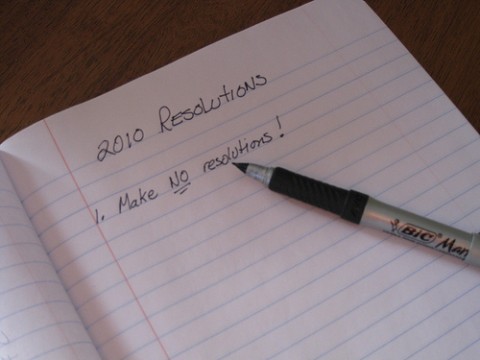
It’s the beginning of a new year, and all the treadmills are occupied at the gym. It’s hard to find any space in the locker room because so many people are set on establishing a new healthy routine for 2010. I’m not a new year’s resolution person, but I am thinking about fresh starts, renewed commitments to be good to myself, and shifts in the projects I’m going to put my energy towards. At IISC, we’ve committed to a new strategic direction for the next three years. Perhaps you’ve been mapping out your personal workplan for 2010 or doing some beginning of the year reflection with your peers, about how you want to work together this year to achieve progress on whatever social justice project you’re working on.
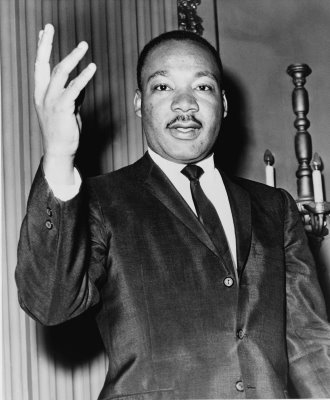
Having attended a community MLK Day celebration and listened to several radio programs today, I’m more convinced than ever that we’re missing the point about the meaning of Dr. King.
One student, to his credit, spoke of Dr. King’s opposition to discrimination and linked that to what he saw as injustice in our present day health care system. No one should be discriminated against – and everyone has a right to access health care. Right on! This young man got the point. But, sadly, he’s the only young person I heard today who spoke of justice or attempted to connect Dr. King’s legacy to current day justice issues. I heard several other middle and high school students say things like, “No one wanted to resist Jim Crow until Dr. King gave them inspiration,” or “He opened the doors for hope and then people walked through.”
Martin Luther King has been on my mind over the last few days. I’ve been contemplating his prophetic voice, and how every age needs its prophets. I’ve been contemplating the relationship between his belief that “the vision of where we’re going is the reality we have to claim,” Joseph Campbell’s work on the power of myth, and @EmergentCulture’s recent tweet proposing that “we need a new myth for our time, a story that will serve us as we encounter a time period unlike any before.” It is all coming together in ways I’m not fully ready to define. Read More
Haiti. I’m sure I’m not the only one who watches with profound sadness at the loss of life and devastation by way of natural disaster and makes direct comparisons to the Hurricane Katrina tragedy and its blow to the precious people of New Orleans.
|Photo by katerha|http://www.flickr.com/photos/katerha/4233144961/|
Legion are not just the excuses but the explanations behind the excuses for not living up to our annual New Year’s resolutions. I know these excuses and theorizing about the real reasons for my failings quite well. And yet this year I remain hopeful that I will have more success in honoring my commitments, thanks in part to the work of Robert Kegan and Lisa Lahey. In their book Immunity to Change, the authors lay out a handy set of questions that I believe shed valuable insight on how individuals and groups might hold themselves more accountable to genuine and realistic change aspirations.
In analyzing the pattern of a failed change effort, Kegan and Lahey suggest that we answer the following:
Make Change Stick Beyond the MeetingTurn ideas into agreements that stick, and keep change going after the meeting ends. Perfect for teams stuck in “great conversation, little action.”