“Narratives can create a very different world, one where pressure evolves from a source of stress to a source of excitement, calling us to achieve even more of our potential, both as individuals and collectively.”
– John Hagel
Today’s post gives a big tip of the hat and bow of gratitude to John Hagel for his work on narrative, which I believe has much to offer networks for social change. First a little story . . . Read More
Kate Tempest and this video were brought to my attention by Tom Kelly of the Sustainability Institute at UNH when he presented Tempest’s work as an “offering,” a ritual opening and closing we use in our meetings of the Food Solutions New England Network Team meetings. It was certainly apt as we were talking about what it means to “put ourselves out there” on various fronts, to enter new territory with one another as we collectively push forward the conversation about New England creating a more just and sustainable regional food system.
I appreciate Tempest putting herself out there in general as a young artist, and this particular poetic rendering of the Icarus tale that suggests the young ambitious man’s “fall” provides lessons for the collective advancement of those whose feet have not “kicked the clouds.” Celebrating boldness and reaching new heights . . .
Conferences and other large in-person convenings provide a great opportunity to launch and further develop networks for social change. As has been mentioned previously on this blog, and borrowing from the work of Plastrik and Taylor, at IISC we see networks for change as developing in various inter-related “modes,” including connectivity, alignment, and action. Paying attention to multiple dimensions of success can inform a variety of approaches to support a more robust, trust-bound, commonly-oriented, self-organizing and (as needed) formally coordinated collective.
‘The effect of positive emotions on helping others is stronger and longer-lasting than self-interest.”
– Wayne Baker and Nathaniel Bulkley
At times thinking about social change can get rather complex, and rightfully so. And it can be helpful to ground ourselves in some of the simpler (though not necessarily easy) and timeless principles and practices of gratitude, kindness, and generosity. This video, from a rather surprising source, speaks truth about the power of giving, recently validated by a study conducted by Wayne Baker and Nathaniel Bulkley, who are also creators of The Reciprocity Ring. Both the study and this video remind me of an ongoing line of inquiry I have with respect to networks for social change – How can we cultivate skill, will, and structure so that the natural impulse to give (and receive) can thrive?
How are you making space for kindness? What does this look like? Feel like? Sound like? What is the impact?
What if the goods of today became the resources of tomorrow?
Regular readers of this blog know that I am particularly interested in living systems and networks and how they can inform how we approach our change work so that it is more in synch with how life works. This video is very much in alignment with my interests and ongoing inquiry, and while focused primarily on the economy and production, IMHO it has implications for all areas of focus for social change. Some of the provocative questions it raises include the following: Read More
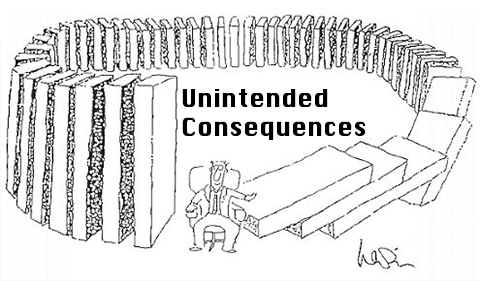
Another story about what can happen when we fail to hold a broader systemic view in our social change work . . . I was working with a food system-focused network the other day and the good news was reported that great strides have been made in reducing food waste, in large part because distributors and retailers are doing a much better job of tracking inventory and fitting it better to consumer demand.
On the other hand, it was also reported that this spells a real challenge for the “emergency food” world and food banks, which have been largely dependent upon excess food to provide for the growing number of people who are food insecure. Read More
Process can sometimes get a bum rap in our work, as in: “I’m not a process person. I’m action-oriented.” This attitude can become a source of considerable frustration, and yet, I get it. Some people are tired of what seems like endless talk that gets them no where. And yet to translate this kind of seemingly circular conversation (what Chris Thompson has referred to as co-blaboration) as “process,” as opposed to action, does a disservice to what is essential to the work of social change. No, I’m not talking (only) about talking. I’m talking about how it is precisely at the level of process that we can make truly profound change. Read More
Over the last few weeks I have fielded a number of calls from people who are interested in figuring out how to develop different kinds of networks. I’m always eager to have these conversations, precisely because there is no single right answer, and it really comes down to a process of discovery and experimentation based on the unique nature of the network and system in question. That said, I do like to ask people the question, “What are you doing to feed your network?”Read More
One of the roles that I’ve found to be particularly helpful in coaching collaborative initiatives and groups over the long-term is to help people understand that as a collective, they are unique. That is, like every living being, each group has its own distinct qualities and personality and for groups who have not worked together before, part of the early work is getting a better sense of who we are together and how we want to be together. We cannot simply assume that what worked with one collaborative will work with another. We have to honor history and other contextual factors as well as work to find was is real and essential about this living system. Read More
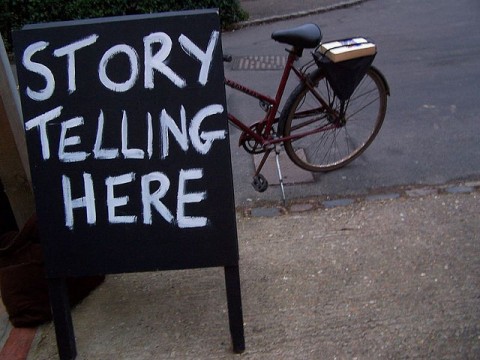
A few different experiences last week reinforced my conviction that storytelling can constitute significant “action” and advancement, including work done in networks for (and as) change. The first was during a session that I co-delivered on behalf of IISC with the Graustein Memorial Fund and The Color of Words, about our work with an early childhood system change effort in Connecticut called Right From the Start. During the conference session we emphasized that one of the biggest leverage points for system change is at the level of narrative and belief systems.
Surfacing the dominant implicit and explicit stories about what is and should be, analyzing the degree to which they align with our values and intentions, and countering/reframing them if and as necessary has been part of the work of Right From the Start (RFTS). Read More
At last week’s gathering of the Tillotson Fund Community Practitioners Network, Carole Martin and I facilitated a session on network/multi-stakeholder engagement techniques. This built upon some work we’ve been doing with the cohort around “positivity” practice, and the question of how, beyond individual practice, we can spread the increased capacity that positive emotions bring to groups, organizations, and networks. To this end we explored some of the methods from Art of Hosting, and also engaged in some of the practices of Liberating Structures. Our leading question was, What about the way in which we engage with one another can facilitate the best of what we have to offer to a shared endeavor?Read More
Once upon a time there was a funder. This funder had been working for almost a decade to strengthen local community efforts to improve early childhood development opportunities and outcomes around the state. The communities appreciated and were grateful for this support, and the number of community collaboratives grew.
At the same time, in the face of persistent and racialized inequities, recognition was growing that something more was needed to hold these local efforts together, to harness and connect them, and to align state-level efforts with community needs and aspirations. So a call went out from the various communities to the funder to help do something about this. The funder responded, cautiously, and engaged in “listening” sessions with communities and advocates. And it reached out to some potential resources, including IISC, to explore what might be done. Read More
Make Change Stick Beyond the MeetingTurn ideas into agreements that stick, and keep change going after the meeting ends. Perfect for teams stuck in “great conversation, little action.”