Following the recent New England Food Summit, my IISC colleague Cynthia Silva Parker and I turned to one another and essentially said, “Now the real work begins.” We had wrapped up co-facilitating a two day gathering of over 150 delegates from around the region with one 0f the goals being to bring everyone in attendance to a common understanding of how racism exists in our food system. In a debrief by the core team for the effort about a week later, the comment was made to nodding heads that a strong hope going forward is that white people become much more ardent and active throughout the region raising the question of how race and racism are operating in the systems of which we are a part.
Two months later, this hope is both challenged and echoed by recent events and in an article that appeared in the St. Louis Post-Dispatch following the killing of Michael Brown in Ferguson, Missouri. Washington University Professor of Law John D. Inazu makes an appeal to not make what is unfolding in Ferguson “a black thing.” More pointedly, he asks white friends and colleagues to spend more time getting to know the real and tragic dynamics of racism in this country. While the article is directed primarily at residents of greater St. Louis, it’s message speaks to all. It is well worth the read, and here I’d like to rift on Inazu’s entreaty . . .
In conversations about racial inequity, I am increasingly approached by agitated white colleagues asking what they can do. Here is a response (and know that I am also talking to myself here): Read More
A number of readings I’ve come across lately reference the important consideration of organizational structure and how it encourages or discourages collaboration. In a post from last week, I highlighted the book Reinventing Organizations by Frederic Laloux, which focuses on “evolutionary (Teal) organizations” that embrace an ethic of self-organization to facilitate more purpose-driven, holistic and responsible engagement on the part of organizational members. In order to encourage self-organization and intrinsic motivation, these entities adopt less formally hierarchical and fixed-role structures in favor of fluidity and networked leadership. According to Laloux, this brings more timeliness and relevance to the inner workings and responsiveness of these organizations. Read More
“Re-examine all that you have been told . . . dismiss that which insults your soul.”
– Walt Whitman
Developmental theory is the source of some good healthy discussion within the Interaction Institute for Social Change. On the one hand, some point out that the notion of “stages of development” has been used to classify and oppress people, especially when theories come from privileged and powerful purveyors, are overly deterministic and linear, and do not account for cultural location and variation. On the other hand, some point to the “empowering” notion of evolution and development that can help liberate people from fixed and mechanistic views of the world and humanity. I had this all very much in mind as I read Reinventing Organizations by Frederic Laloux. Laloux brings developmental and so-called “integral theory,” including the work of Ken Wilber, into the palpable realm of organizational practice and through his research, posits an evolutionary trajectory from aggressive (Red) to bureaucratic (Amber) to achievement-oriented (Orange) to culture/empowerment-oriented (Green) to self-actualizing/authentic (Teal) organizations.
The following article appeared in an email newsletter from the Vermont Farm to Plate Network (VTF2P) one of IISC’s clients in network and collaborative capacity building. The author is Beth Cullen, co-chair of the Farm to Plate Consumer Education & Marketing Working Group and owner of Root Consulting, who attended the New England Food Summit that Cynthia Parker and I helped to design and facilitate. It is great to see the power of that two day convening and conversation continuing to ripple out into the region. VTF2P plans on integrating the conversation about equity into their upcoming October convening . . .
New England Food Summit targets social justice to drive change in the food system
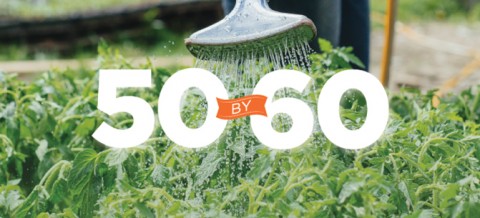
The 4th Annual New England Food Summit, organized by Food Solutions New England, convened over 110 delegates in June to discuss racial equity and food justice in the region. Summit organizers unveiled the New England Food Vision, a regional aspiration to locally produce at least of 50 percent of the fresh, fair, just, and accessible food consumed by New Englanders by 2060.
There is growing awareness that current organizational structures can breed irresponsibility. That is, arrangements are created where people are less able to be responsive in helpful ways. This happens, for example, when accountability is bottlenecked in hierarchies and decision-making is distanced from where the action is most timely and relevant. Read More
The following article appeared last month in the Northeast Sustainable Agriculture Working Group (NESAWG) newsletter. NESAWG is a 12-state network of over 500 participating organizations. Together, they unite farm and food system practitioners and allies to build a sustainable, just and economically vibrant region. From one network to another, the article profiles Food Solutions New England (FSNE), a network building effort now going into its third year of intentional development. It captures where FSNE was just prior to the New England Food Summit, which advanced connectivity and commitment to both regional action/identity and work for racial equity. NOTE: I have added links, bolded text, and pictures to the body of the article.
“The ideas of self-organization are very important to understand the autonomy, the authenticity and basic humanity of people.”
-Fritjof Capra
One principle of “thinking like a network” that I like to highlight is the notion of moving from permission and perfection (looking for the one right answer) to self-organization and emergence. Self-organization is a defining characteristic of living systems and connected to their adaptive capacity and development. I like this short video as an introduction to self-organization and how it highlights the importance of diversity, connectivity and “local interactions.” NOTE: It starts to get into “network effects” and social organizations around 2:30. The significance of understanding self-organization is essentially that we develop a better understanding of how life, including social systems, actually works and are able to work better with systemic potential, rather than trying to command and control what is much too complex.
“I think self-organization and the newer understanding of life and complexity, when it is applied to the social realm and human organizations, can help people to find their authenticity as human beings.”
Thanks to Deborah McLaren for putting this slide show together that references the good work of June Holley, Chris Brogan, and Beth Kanter. I find that there are many people out there who naturally get the concept of “network weaving” and many others still who are still learning to understand its value, and to see it as a function of leadership in a networked world.
At IISC, we like to talk about “Facilitative Leadership” as a practice of “creating and inspiring conditions” that deliver on the promise of collaboration (innovation, rapid diffusion, equity, resilience, adaptation, etc.). In this vein, I particularly like what Chris Brogan suggests as the following leadership practice related to network weaving:
Spend 20 minutes every day thinking about your network
Spend 10 minutes every day cultivating your network
Deliver 2 or 3 times as much value as you ask from your network
“In spite of current ads and slogans, the world doesn’t change one person at a time. It changes as networks of relationships form among people who discover they share a common cause and vision of what’s possible.”
For the past two years, I’ve had the fortune of partnering with Carole Martin to create and deliver a network leadership development program for regional and economic development in “the north country” (northern NH, southern Quebec, eastern VT). This opportunity was made possible by funding from the Neil and Louise Tillotson Foundation and took the form of something we called the Community Practitioners Network (CPN). Subsequently, some of the members of the first cohort have taken to calling it the “Community Placemakers Network” (more on that another time).
One of the first steps Carole and I took in creating the program was to begin with a set of principles, which, in good network fashion, evolved over time. These principles guided our design and facilitation of the program as it emerged, and we offered them to and co-evolved them with the cohort as they considered how to bring them to their own leadership in their organizations, communities, and beyond. Here is a condensed version of the lastest iteration of the principles:
Look for what is beyond the immediate sight lines and intersections – Part of the power of networks is emergence; expect and delight in the unexpected that comes from the meeting of different minds and perspectives.
Design for serendipity – Don’t try to control and account for all outcomes. First of all, it’s impossible. Secondly, as Andrew Goldsworthy once said, “Too much control can kill a work.”
Periphery, not (just) center – Network action is not simply about what is happening “in the room” but what transpires “after the meeting,” not what goes on at a “steering group” level, but what happens in two-sies and three-sies that form/partner/innovate “out there.”
Contribution before credential – Contributions are what count, and can come from anyone.
Feed the network through questions so that it has a life of its own – Using inquiry can help to unlock network potential in the pursuit of unique and context-specific answers.
Always eager to hear others and how you have put them to use . . .
Over the past 8 years at IISC I have seen and experienced some interesting progressions. When I first joined the organization, in our Facilitative Leadership trainings, we talked about the “interior condition” of effective collaborative leaders. At the core we mentioned that these leaders and change agents embraced an ethic of “service, authenticity and respect.” Then we made the bold move of changing “respect,” which came across to many as a bit weak, to LOVE. For the first couple of years after making this switch, when I asked “What’s love got to do with it?” with respect to effective leadership and work for social change, there were often uncomfortable silences. Some participants would ultimately want to reframe love as “respect” or “passion.”
Then in 2009 I started noticing a change. More heads nodded in rooms when I mentioned the “L-word.” Less nervous laughter and shifting in seats. In one particularly striking instance, during a training with health care professionals in Maine, a senior and very respected physician responded,
“What’s love got to do with it? Everything! Beyond my technical skills, I am effective in so far as I am able to really see my patients, students, and colleagues, to make them feel seen for who they are.”
Since then, I have been drawn to and often use the work of biologist and philosopher Humberto Maturana when talking about love. Maturana has written that love is “seeing the other as a legitimate other,” and that it can make a living system more intelligent. While this might lack a certain upfront spiritual and/or emotional punch, I’ve found that if you sit with what it means to embrace the legitimacy of others– their being, experiences, and perspectives – it is quite a profound and challenging undertaking. And indications are that it can yield amazing benefits.
Psychologist Barbara Fredrickson has devoted much of her research to the resilience-inspiring and liberating impacts of love. An emotions scientist, Fredrickson has clinically tracked the capacity of love – “moments of warmth, connection and openness to others” – to open people up:
“Your outlook quite literally expands as you come under the influence of any of several positive emotions. With this momentarily broadened, more encompassing mindset, you become more flexible, attuned to others, creative, and wise. Over time, you also become more resourceful.”
Fredrickson and her colleagues at UNC’s PEPLab have even noted the ability of love and other positive emotions to eliminate the phenomenon of “own race bias.” In other words, love can liberate people from some implicit biases and self-imposed boundaries. In an increasingly interconnected and inequitable world, this bears great promise and need, which is why at IISC we uphold three lenses for our collaborative capacity building work: networks, power/equity/inclusion, and love as a force for social transformation.
“Only by operating from the space where we are joined together in some deeper sense are we likely to find common ground in facing up to the collective problems that confront us, with some of our differences intact.”
We are seeing the truth of these words in much of our network building work, including my own consulting with Food Solutions New England (FSNE), a regional network and strategy development effort supporting more just and sustainable food systems. While there is certainly much to be done technically to retool structures and infrastructure to achieve the 2060 Vision of the region producing at least 50% of what is consumed here, considerable work also lies at profound personal and interpersonal levels. In meetings of the broadly representative FSNE Network Team, and in larger convenings, the emphasis is always on “building connectivity” through sharing stories and inspirational offerings of various kinds, learning and spending informal time together.
The results have been very encouraging, including new and in some cases unusual relationships and partnerships forming across various boundaries – geographic, cultural, sectoral – and instances of risk-taking and people having one another’s back. We leaned heavily on this trust very recently at the New England Food Summit during which we explored in plenary gatherings of more than 150 representatives from six states, the reality of racial inequities in our food systems. The ripples of this successfully held conversation are already being felt in states and communities across the region including commitments to continue the conversation locally.
What all of this is adding up to in my eyes is the recognition that our collective ability to really see and be with one another across lines of difference is absolutely critical to our long-term resilience and thriving. I closed the New England Food Summit with a couple of my favorite quotes that capture the essence of what love has to do with the work of social change. The first echo is found in the words of Mary Parker Follett going back nearly 100 years:
“Democracy is an infinitely including spirit. We have an instinct for democracy because we have an instinct for wholeness; we get wholeness only through reciprocal relations, through infinitely expanding reciprocal relations.”
“There is a need for an alternative vision, a beloved community where being connected to the other is seen as the foundation of a healthy self, not its destruction, and where the racial other is seen not as the infinite other, but rather as the other that is always and already a part of us.”
The other day I was working with an emerging inter-institutional collaboration of universities looking to move the needle on “transitioning to sustainability.” Like so many other conversations that I am a part of these days, there were bold visions tempered by structural realities, including robust conversation about internal constraints to the kind of progress people are striving to realize. These constraints are not simply internal to our organizations in the form of protocols and politics, but also to our thinking. As David Bohm once wrote,
“Thought is creating divisions out of itself and then saying that they are there naturally.”
And so there is a call to constantly “mind the lines” that are not simply “out there,” but that are conscious and unconscious projections of our thoughts, and that do not serve our intensions. Perhaps no one says it better than the late Donella Meadows in a piece from which I read the other day and have pulled extracts below. For the entire essay, visit the Donella Meadows Institute.
From “Lines in the Mind, Not in the World” by Donella Meadows (December 24, 1987)
The earth was formed whole and continuous in the universe, without lines.
The human mind arose in the universe needing lines, boundaries, distinctions. Here and not there. This and not that. Mine and not yours.
That is sea and this is land, the mind thinks, and here is the line between them. See? It’s very clear on the map.
But, as the linguists say, the map is not the territory. The line on the map is not to be found at the edge of the sea. . . .
Between me and not-me there is surely a line, a clear distinction, or so it seems. But, now that I look, where is that line?
This fresh apple, still cold and crisp from the morning dew, is not-me only until I eat it. When I eat, I eat the soil that nourished the apple. When I drink, the waters of the earth become me. With every breath I take in I draw in not-me and make it me. With every breath out I exhale me into not-me. . . .
Between you and me, now there is a line. No other line feels more certain than that one. Sometimes it seems not a line but a canyon, a yawning empty space, across which I cannot reach.
Yet you keep reappearing in my awareness. Even when you are far away, something of you surfaces constantly in my wandering thoughts. When you are nearby, I feel your presence, I sense your mood. Even when I try not to. Especially when I try not to. . . .
I have to work hard not to pay attention to you. When I succeed, when I have closed my mind to you with walls of indifference, then the presence of those walls, which constrain my own aliveness, are reminders of you.
And when I do pay attention, very close attention, when I open myself fully to your humanity, your complexity, your reality, then I find, always, under every other feeling and judgment and emotion, that I love you.
Even between you and me, even there, the lines are only of our own making.
Picking up on the spirit of yesterday’s post about asking “beautiful questions” and inspired by a staff challenge to articulate lines of inquiry stemming from IISC’s core lenses, I offer this post. It distills some of the underlying questions that adopting a “network lens” inspires for social change work. Please add, adjust, edit, and rift!
How does your organization/network/change initiative strive to add value to (rather than duplicate) existing efforts? What do you do best, and how might you then connect to the rest?
What are you doing to support and strengthen connections and alignment within and beyond your organization/network/change initiative?
Make Change Stick Beyond the MeetingTurn ideas into agreements that stick, and keep change going after the meeting ends. Perfect for teams stuck in “great conversation, little action.”




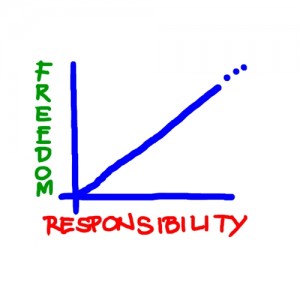 There is growing awareness that current organizational structures can breed irresponsibility. That is, arrangements are created where people are less able to be responsive in helpful ways. This happens, for example, when accountability is bottlenecked in hierarchies and decision-making is distanced from where the action is most timely and relevant.