Author Archives for Curtis Ogden

March 4, 2015

(Self)-Organize for Complexity

“You’ve got to keep asserting the complexity and the originality of life, and the multiplicity of it, and the facets of it.”

– Toni Morrison

sdf-640x300

I’ve been re-reading Niels Pfleaging’s short book Organize for Complexity and appreciating how it succinctly captures the current challenges for many groups and organizations trying to navigate complexity while clinging to old tools and beliefs. This can also be the nature of social change work amidst the significant shifts we are seeing. Here’s the trick – as things shift more, and more rapidly, people’s natural inclination may be to try to exert greater control or dig in to what is familiar but does not work. The more one does so, the worse things can get. As Pfleaging writes, we see a “high price for the illusion of control.” Within organizations this takes the form of various gaps – social, functional, and temporal – that make them  increasingly irrelevant and ineffective. Responding to complexity requires (to borrow a phrase from Eugene Kim) new muscles and mindsets.

If I could summarize my own reading of Pflaegings’s book, I would put it this way – the world we are living into requires more integrated ways of seeing and doing, and this is hard to do (if not impossible) if people maintain highly differentiated ways of organizing themselves. There is really a baseline call for self-awareness and mindfulness so that one is able to respond not by default or fear, but with perspective and intention, which connects to the idea of “strengthening the network within” at the individual level. And it is important to reach out and connect this self-awareness to others . . .

“Problem-solving in a life-less system is about instruction. Problem-solving in a living system is about communication.”

-Niels Pflaeging

Read More

5 Comments
February 26, 2015

Connectivity Creates Value

One of my mantras around network building and social change is that creating greater (and new forms of) connectivity is not simply a “so that” or a “nice to have” but is really an “as” and critical to the work of systems and structural change. This is echoed is some way, shape or form in many of the posts that appear in this space, and I think it bears repeating. Consider the following:

“Whether we learn how to love ourselves and others will depend on the presence of a loving environment. Self-love cannot flourish in isolation.”

bell hooks

  • Isolation can kill. Science shows how loneliness and social isolation can ravage the body and brain. As noted in an article in The New Rebublic – “A partial list of the physical diseases thought to be caused or exacerbated by loneliness would include Alzheimer’s, obesity, diabetes, high blood pressure, heart disease, neurodegenerative diseases, and even cancer.” And who are the lonely? In many cases the poor, the bullied and oppressed, the “different.” When we consider how isolation can impact genes, we see how the cycles of poverty and oppression can play out at a fundamental psychobiological level. What this calls for, in part, is work that reconnects those who are currently in isolation and on the margins from/of myriad social goods including emotional support, tangible services and other critical resources.
  • Disconnection breeds irresponsible behavior and prejudice. Science is helping us to understand the role of implicit bias in all of our lives and in society. Furthermore, the work of people like Paul Piff shows how those with considerable privilege who isolate from the rest of society (and keep to their own) tend to lose touch with empathy and any sense of egalitarianism. As my colleague Cynthia Parker notes, “Engaging with people unlike ourselves in situations that involve meaningful activity [and] counter-stereotypic experiences” helps to eliminate biases. In other words keeping and strengthening direct connection is a key part of the work for equity and democracy.

Read More

3 Comments
February 20, 2015

Intuition, Iteration, and Group Visualization for Change

Important considerations for collaborative social change work: What are considered “legitimate” ways of knowing and doing? Why? What does this allow? What doesn’t it allow?

stickies

Photo by Juhansonin

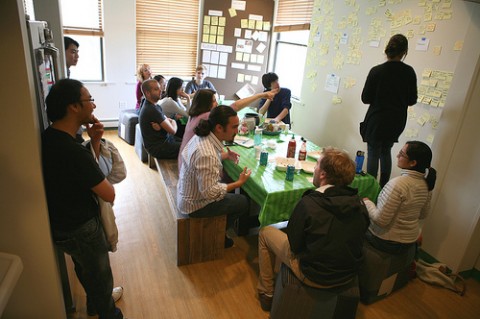
I’m always interested to see diverse cognitive styles and preferences show up in the collaborative processes we help to design and facilitate at IISC. A classic difference is between those who bend more towards the analytical side of things and those who prefer to lead with intuition. This, of course, paints too stark of a dichotomy of what most people present overall, and context can often be a determinant in what people lead with. Nonetheless there are undeniable tensions that arise within groups about what constitutes “rigor” and “right method” for deriving what might be considered strategic insights. I would say that in many more “mainstream” (one might say “professional”) settings, it is often analysis and deference to some kind of “expert “that has a better chance of winning the day. And so I’ve been interested to come across a few resources that talk about and validate the place of intuition and iterative group visualization in coming up with good answers.

In a piece that appeared in the Harvard Business Review, Justin Fox writes about how instinct can beat analytical thinking. In particular, he lifts up the work of Gerd Gigerenzer from the Max Planck Institute for Human Development in Berlin, Germany. Gigerenzer’s research suggests that rational, statistical, analytical approaches work well in situations where one is able to calculate risk. The trouble, however, is that in many situations, decisions are made in considerable uncertainty, where risk and consequence are unknown because everything is quite dynamic. Read More

Leave a comment
February 12, 2015

Boundaries as Useful Fictions?

“You have to remember, every boundary is a useful bit of fiction.”

– Buckminster Fuller

Boundaries

One of the more memorable stories about my late father, who passed away 3 years ago this month, happened not long after the Great Recession began in 2008. At the time, he was on the board of a national organization devoted to the study and promotion of human consciousness and the connection between science and spirituality. During a phone meeting of board members, people got to talking about the economic crisis, at which point one member made the following remark: “It’s at times like these that it’s especially important to remember that we are all one.”

“Bullshit!” was my dad’s response (not prone to such outbursts on that board or in general).

After a momentary and no doubt stunned silence, he elaborated – “Clearly we are not one. Some people, a very few people, are making out like bandits from this crisis. Meanwhile of the so-called 99%, some have been much harder hit than others, their wealth decimated. How can we say we are one at a time like this?”

To be fair to my father and full in the storytelling, my dad acknowledged that he believed that it is important to recognize interdependence and shared humanity, and that how and when to do this is an important consideration. Which brings me to the quote from Buckminster Fuller above, a personal favorite and one that I seem to keep sharing recently. Fuller, the eminent systems theorist and design scientist, understood the interconnected nature of reality, as well as the human need and tendency to draw boundaries. Theoretically these boundaries are drawn to be of use to something and/or someone – to name important distinctions, focus attention, aid with analysis, etc. In fact boundaries, or at least difference, might be said to be crucial to life, as dynamic exchange is required to keep living systems alive. Yes, boundaries can be very useful . . . except when they’re not. Read More

2 Comments
January 29, 2015

Facilitative Leadership for Net Impact

“Our world is, to a very real extent, based on dialogue. Every action taken that involves more than one person arises from conversation that generates, coordinates and reflects those actions. Those actions have impact. If our human world is based on conversations, then the work of creating and supporting those conversations is central to shaping a world that works. Designing and conducting meetings and other groups sessions well is vital to determining our common future.”

– Group Works

Just recently in work with a national network, we turned the corner to start creating a structure to channel the alignment it has achieved around core goals for system change and ultimately to realize “collective impact” in a particular domain. As we were kicking off some of the early discussions, someone asked what I thought were the keys to creating a successful network structure. That’s a huge question that merits a complex answer, and I’ll admit that in reflecting on the dozen or so large scale change efforts I’ve been a part of the past 7 or 8 years, the first thing that came to mind was – “really good facilitation.”

Simplistic as this response may sound I was thinking of lessons learned from numerous efforts that no beautiful or well thought out network/collaborative structure stands up to a lack of strong facilitative capacity (skillset, mindset, and heartset). To be more nuanced, it is not just facilitation that ultimately came to mind, but what we at IISC call facilitative leadership.

For over 20 years, IISC has been teaching, preaching and practicing Facilitative Leadership (FL), and in many ways it seems that this approach has never been riper in light of the burgeoning call to collaborate and cooperate across boundaries of all kinds. At its base, FL is about creating and inspiring the conditions for self-organization so that people can successfully achieve a common (and often evolving) goal. The logical question that follows is, “How does one ‘create and inspire’ these conditions?” The answer is found in a variety of practices derived from successful group work and that have indeed shown promise across different networks and large scale change efforts to create solid foundations and momentum for social change. Among them are these: Read More

5 Comments
January 22, 2015

Democracy, Equity and the Pursuit of Data

“If you bring the appropriate people together in constructive ways with good information, they will create authentic visions and strategies for addressing the shared concerns of the organization and community.”

David Chrislip

Image from r2hox

In our work at IISC, we occasionally reference David Chrislip’s “collaborative premise” (see above) as a way of orienting people to some of the key components of effective collective and net work. Given our emphasis on effective stakeholder engagement and process design, we generally focus on the first two elements more so than the last around good information, which does not mean we think it doesn’t matter. In fact, recently I’ve been observing some interesting dynamics around the data conversation in various network building and collective impact projects that we support.

Invariably, it seems that there are those who are quite concerned about ensuring that a given collective effort has the “right data” and that people are being “rigorous” in their approach to problem/opportunity analysis and solution generation. While understanding the need to have and use good data, we also think that it’s important to ask the question – Data for what? People often say they want data to ensure that they are not making uninformed and overly subjective judgments. Understandable. Furthermore it is sensible to want to seek out a baseline to be able to measure progress as a change effort moves forward. This said, I see a number of pitfalls in what can sometimes become the drumbeat for data.

Read More

4 Comments
January 16, 2015

Not Just “Right Foods,” Right Access

Marilyn
 For the past three years, IISC has been privileged to partner with Food Solutions New England, under the convening of the Sustainability Institute at UNH, to develop a regional network to support a more just and sustainable food system. As part of this effort, we have pulled together a remarkable and dedicated Network Team, the members of which have taken it upon themselves to be champions, connectors, and strategists for this effort. Having released an ambitious Food Vision, FSNE is now reaching out to diverse partners across New England to make it a reality. The post below originally appeared on the FSNE blog, and is written by Network Team member and CEO of the Witness Project of Connecticut, Marilyn Moore. Marilyn is a strong advocate for racial and health equity and lives in Bridgeport, CT.  She was recently elected to the Connecticut State Senate where she is Chair of the Human Services Committee and Vice Chair of the Environment Committee. Her message and ongoing work speak to the importance of putting equity at the center of our efforts to create sustainable systems for food, health, and economy. 

More than 15 years ago I began educating women about breast cancer mortality and early detection.  Most of my outreach centered around African American women who suffer the highest mortality even though the incidence is higher in white women than black women.

As a lay person, I find that what I don’t know allows me to look at issues from a common sense approach and ask those dumb questions.  If every woman gets screened early why are their outcomes so bad?  Sometimes the reason is the state of their health and when it is poor, they have poorer outcomes.

After educating over 15,000 women and witnessing first-hand how much they suffer through cancer and sometimes die, I learned that many of their outcomes were poor due to their overall general health.  African Americans suffer from high rates of diabetes, heart disease, and cancer.  Some of these women are battling more than one disease at a time.  When a friend, who had her first chemo treatment, died at age 42 from a heart attack, I learned she was also diabetic and her diet lacked fresh fruits and vegetables.

We are surrounded by food deserts, the bodegas where most inner city people without transportation shop, don’t offer many healthy choices.  Fresh fish, vegetables, and fruits are not available, cost prohibitive, and in the corner stores, unattractive.  Urban communities need more local, affordable, and culturally appropriate foods.

As we look towards producing 50% of our food in the New England states by 2060 we must be mindful that if we are going to be inclusive, we must consider those who suffer the greatest health disparities. It’s not only about the right foods being available, but that we all have access.
Witness Project

Leave a comment
January 13, 2015

Abundance Thinking for Change

7 ways

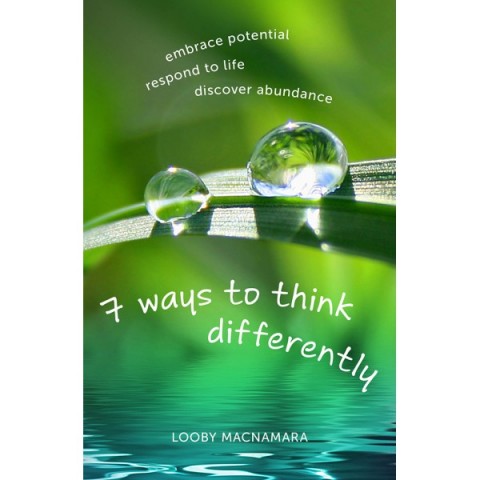
About 20 years ago I was introduced to the field of ecological design called permaculture, not in any great depth mind you, but from what I learned at the time, I was struck by how refreshing, sensible, and vital the practitioners’ perspective and approach were. Since then, and especially in recent years, interest in permaculture seems to have significantly grown (including my own) and its principles stretched beyond sustainable agriculture to human communities. Looby MacNamara is one of the teachers and practitioners who is helping with the more widespread application of permaculture principles. I just finished reading her short book, 7 Ways to Think Differently, which I recommend. In it she unites different ways of thinking (such as systems thinking and solutions thinking) with the underlying philosophical and methodological elements of “regenerative design.” 

For me, one particularly fertile area is “abundance thinking.” I have to offer a bit of a pre-qualification that the word “abundance” can be used in certain contexts that I find off-putting, especially when there is little demonstrated understanding of existing structural inequities in society. That said, I think that “leading with abundance” as a mental exercise can provide valuable insights and approaches to social change. Here are a few thoughts, and I invite additions, reactions and push back: Read More

4 Comments
December 22, 2014

Making the Invisible Visible

“As long as it remains invisible, it is guaranteed to remain insoluble.”

Margaret Heffernan, from Willful Blindness

As I look back on 2014 through the lens of the work we have done at IISC supporting networks and movements for social justice and system change, one of the most significant themes that I’ve distilled is the value of “making the invisible visible.” This month I’ve facilitated a number of reflection sessions with diverse groups to gauge the development and impact they have felt and observed from our work over the course of the year. I tend to ask people how they see change happening at different levels: self, group, larger systems (organization, neighborhood, community, state, region, etc.). I also like to ask them to reflect via the use of stories, which I find often help to capture and convey developmental processes.

What has come from this sharing is that even though some of the big goals around equity and sustainability remain elusive, there has been movement and a significant part of this development comes down to seeing what had previously been unseen. While the methods for getting to this recognition have varied – from system mapping and analysis to network mapping to structural and power analysis to learning journeys to dialogue and tackling difficult conversations – by creating ample space to see, share and suppose, there has been significant deepening of relationships (to self, other, the work), change processes, and potential impact.

So what is being made visible?

Read More Leave a comment
December 18, 2014

Essentialism, Equity and Democracy

“The way of the Essentialist means living by design, not by default.”

– Greg McKeown

3904638720_689d2b7f9b_z

I’m currently reading Greg McKeown’s book Essentialism: The Disciplined Pursuit of Less, which I’ll admit I had been tempted to look at earlier in the year and then decided not to for a couple of reasons. First of all, to me the sub-title smacked of a certain level of privilege, given that there are so many people who need more not less – more resources in the face of poverty, more fundamental regard for their humanity and rights in the face of injustice. In addition and seemingly validating of my initial wariness, the book’s opening stories focus on Silicon Valley executives and other corporate players. And yet at the same time I was pulled in by this notion of “essentialism,” embodied in one of the opening quotes attributed to writer, linguist and inventor Lin Yutang:

The wisdom of life consists in the elimination of non-essentials.

Read More

Leave a comment
December 10, 2014

“What’s most systemic is personal”

“What’s most systemic is personal . . . and interpersonal.”

– rift on a Peter Senge quote

At IISC, one of the three core lenses that we bring to our collaborative capacity building for social change work is love as a force for social transformation. How this lens impacts what we do as practitioners depends on context, though often it comes down to ensuring that there is time for people in the collaborative change efforts we support to connect on a personal and interpersonal level. One way to do this is to invite people to share stories and do this beyond the parameters for their professionally defined roles. I did this recently with a group and as is often the case, there were a few areas of resistance in the collective body. “Why are we doing this?” asked someone with a hint of consternation. That became my opening. Here is what I offer as a response to discomfort around what some people call “touchy feely” exercises.

Why are we doing this?

  1. In general terms, to expand collective potential.
  2. To help each of us to be more fully seen and appreciated for who we are, beyond abstractions and implicit assumptions. When people do not feel seen or appreciated they can disengage, or “act out” to get the attention they want.
  3. To deepen connection, build trust and increase social velocity.
  4. To test and stretch the boundaries of “appropriate” and “legitimate” ways of knowing and being with one another. Otherwise people can default to ways that privilege those most comfortable with certain ways of being (often strictly professional and cerebral).
  5. To grow “positivity” – that is, to expand the overall collectively felt sense of positive emotions (which includes pride related to the demonstrated ability to have and hold difficult conversations). Positivity has been scientifically linked with greater physical and psychological capacity to see and take in more (of systems and one another).

I offer these, like a yoga teacher, with compassion for any expressed discomfort or tightness felt in different parts of the collective body. And the invitation is to breathe through this and to see what might be loosened up for the benefit of the whole. For another take on this, I highly recommend my friend Joe Hsueh’s piece “Why the Human Touch is Key to Unlocking Systems Change.”

Curious to hear your own experiences connecting what is most personal and interpersonal with systemic change.

1 Comment
December 3, 2014

Creating Equitable Abundance

“We need to reach out to one another from a perspective that makes group membership less determinative of opportunity and more related to enhancement of self and community. We need to increase our sense of abundance and improve our sense of well-being, as individuals and in relation to one another. “

– john a. powell, Racing to Justice

I’ve had a number of conversations lately about mindsets and how they relate to effective collective and net work, especially work for justice. Most recently I had the opportunity to talk to Jim Ritchie-Dunham of the Institute for Strategic Clarity about his research into “thriving” organizations and communities in a number of diverse settings – sectors and countries. What he has noted as a shared and distinct (though surely not entirely sufficient) difference-maker for these groups is an orientation towards abundance.

Jim has recently published a book entitled Ecosynomics, which is also the name of a field he has helped to found, which looks at “the principles of collaboration” and more specifically, “the principles of abundance.” Research from Jim and his colleagues shows that even amidst what may appear to be a scarcity of resources and hope, some groups thrive in large part through the conscious construction of “agreements” that can create more opportunity.

I have questions and look forward to further conversation with Jim about the starting point of these groups and the degree to which dynamics of power and privilege come into play with respect to their respective successes and who ultimately benefits. At the same time, I have been aware in my work how much of a difference it can make for groups to be conscious of their ability to choose how to be with one another, and how this can help get beyond otherwise self- and collective-limiting behavior.

Read More 1 Comment