Last Friday, Curtis posted a clip by Brene Brown. She argues that “empathy fuels connection, sympathy drives disconnection.” I want to take her thinking one step further. Empathy fuels connection. Lack of empathy fuels injustice.
Over the past five years or so of supporting self-declared “networks” for change, I have evolved in my understanding of what is new when we call something a network, versus a coalition or collaborative or alliance. On the surface, much can look the same, and one might also say that coalitions, collaboratives and alliances are simply different forms of networks. Yes, and . . . I believe that what can make a big difference is when participants in a network (or an organization, for that matter) embrace new ways of seeing, thinking, and doing. So let me propose that network approaches at their best call on us to lead with some of the following: Read More
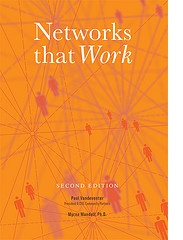
I’ve spent time the past week reading through Networks that Work, a handy and concise resource for developing organizational networks, written by Paul Vandeventer, President and CEO of Community Partners, and Myrna Mandell, Ph.D. The book lays out some very helpful pointers for more formally constructed networks. I have highlighted 10 pointsbelow that resonate with our experiences at IISC around supporting organizational networks for social change. My comments and extensions are in italics: Read More
“A Temporary Autonomous Zone is a liberated area of land, time or imagination where one can be for something, not just against, and where new ways of being human together can be explored and experimented with. Locating itself in the cracks and fault lines in the global grid of control and alienation, a T.A.Z. is an eruption of free culture where life is experienced at maximum intensity. It should feel like an exceptional party where for a brief moment our desires are made manifest and we all become the creators of the art of everyday life.”
Even before I read in the Boston Globe that trust is at an all-time low in the U.S., I was planning to write about trust. Our colleagues at Interaction Associates have been tracking the connection between leadership, trust and business performance for years. Their 2013 Trust Report reinforces earlier findings that higher levels of collaboration, trust within a company are correlated with higher performance.
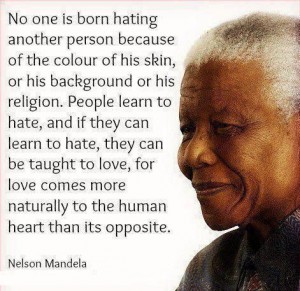
We join the world in mourning the passing of Nelson Mandela; a giant of a man; the very embodiment of the intimate link between power, networks and love. His grace and humility was unrivaled, his insistence on reconciliation was an inspiration to millions. Read More
|Photo by Manuela de Pretis|http://www.flickr.com/photos/24141546@N06/8559396140/in/photolist-e3n9gw-cTpPPN-d1dvTd-d1dvC9-d1dvto-d1dvjW-d1dvbm-cZuvob-cZunHN-9zX8Sz-ax3pnQ-e4wUZj-eaf1p3-bEqAP4-9zJw2f-brvfdL-bEqguP-brvtTs-bEqo76-8Eev3a-bdwXog-9kfqCB-9HgmuC-7L5k6b-ax9ASs-9Nt9k5-c62iqA-bEqygR-f5eTyJ-f4ZDuv-bEqzcZ-bEqoDB-brvFWY-brvpph-83RYMt-bEqrup-fCnaiV-bEqfpi-bEqkhM-bEqpCK-bEqnBe-bEqkVM-bEqdpz-e46RkD-e46RGP-e4cw9J-e4cwju-e46Sxk-e46Rqx-e4cubU-bEqzCR|
When I take time to slow down, as I was able to do over the holiday break last week, my interest is refueled in practices that support our ability to maintain perspective and a sense of effective agency in the world. My line of inquiry is not simply around what can keep us energized, pull us back from the edge, or deal with burn-out, but focused on how we can align our internal state with external aspirations in an integrated way and grow ourselves so we can help evolve larger systems. My thinking and reading often takes me back to the work of Barbara Fredrickson, the emotions scientist based at the University of North Carolina, as well as to a host of others in the fields of positive and social psychology. Having revisited some of these writings over the break, here are 10 recommended practices for personal and social resilience and development: Read More
“Ultimately if we are to avoid failure in the most critical work of this century, the deepest reaches of our beings must be brought to bear in honestly reevaluating and shifting the most basic structures of our society.”
The following is a textual recapturing of a Pecha Kucha-like presentation that I gave at an ARNOVA Pre-Conference Session in Hartford, CT two weeks ago. This was part of a 3-hour interactive conversation, co-designed and facilitated with Dr. Angela Frusciante of the William Caspar Graustein Memorial Fund, focusing on the power of networks for learning and social change, primarily with academic researchers and philanthropists.
At the Interaction Institute for Social Change, we are in agreement with Professor john a. powell when he points to the need to consider and make fundamental structural changes in our country and communities for the causes of greater social justice and sustainability. Read More
The following post has been reblogged from Seth’s Blog. He is a genius and we hope you enjoy it as much as we did!
One person selfishly drops a piece of litter on the ground, the other selfishly picks it up.
Everything we do is done because it’s better than not doing it. “Better” is the complicated term. Better might mean, “gives me physical pleasure right now,” for some people, while better might mean, “the story I tell myself about the contribution I just made gives me joy and satisfaction.”
|Photo by Kyle Rush|http://www.flickr.com/photos/29096781@N02/3595829253/in/photolist-6tKyL6-6TjYr4-782X3v-782XV2-7q8PFS-7u5XGi-dx4sDx-fiYNSv-h9SFrn-h9Rr2o-h9RoPt-h9RpoK-h9Rsbh-8qR2uC-7NDpGo-ejtUcJ-dLRMB9-dS8otP-dSdXNY-dS8nop-dS8o6K-dLRNpb-aJ8zJv-ejLpgh-dKmixn-9Puxw4-8qMV6i-dLLep2-dktHij-dkEShK-9QAw9M-hUhofe-8zZSjL-7LGYPJ-bWQ7K6-8nREdc-8nUPrE-dsPBnf-dsPC1h-byFSTx-byFdTn-byFaJK-bkLgEL-bkLjDb-byF8Ug-byF6P8-bkLnAA-byFeqM-hE7ndt-dWmQMj-aE4heE|
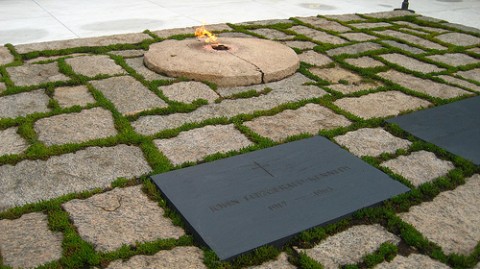
Much has been written and said in the past month about President John F. Kennedy on the 50th anniversary of his assassination. I think the one important gift President Kennedy gave the country was a certain hopefulness about what people could do at their best and what government could do at its best. Listen (starting at 36:30) to an excerpt from President Kennedy’s inaugural address, read by Massachusetts Governor Deval Patrick. He enjoins the listeners to “Ask not what your country can do for you. Ask what you can do for your country.” In these days of Washington gridlock and partisan gamesmanship, it’s a message we can stand to hear afresh!
Like Indigenous People’s Day (aka Columbus Day), Thanksgiving is fraught with historically inaccurate mythology. Check out these children’s books that tell a different story, from the point of view of Native Americans. And, if you’re in New England, consider joining United American Indians of New England for the 44th National Day of Mourning. Read More
 Over the past five years or so of supporting self-declared “networks” for change, I have evolved in my understanding of what is new when we call something a network, versus a coalition or collaborative or alliance. On the surface, much can look the same, and one might also say that coalitions, collaboratives and alliances are simply different forms of networks. Yes, and . . . I believe that what can make a big difference is when participants in a network (or an organization, for that matter) embrace new ways of seeing, thinking, and doing. So let me propose that network approaches at their best call on us to lead with some of the following: