|Photo by Ace Abendale Rothschild-Faber |http://www.flickr.com/photos/50809036@N02/5282577422/in/photolist-93NAe5-bATUbs-gV4zgZ-8pZXib-aajHgz-aaxd1T-bES8E1-aeZsVL-adC7oV-9ZbeNe-d6jhdm-aE8uVX-8ocwaF-a6Y5uR-7G2gQK-7Awvkg-93ruBR-bELXgv-8WABY3-8WxxEt-8E1NsT-8YsvVZ-93XFRM-bgKVuk-9JB9Ue-bdAYXM-d6jeZN-d6jePW-9hccxc-d6jh4s-8mraY5-dAkbkS-84LPQd-84HGNZ-84LPP7-9bALtz|
In the regional food system network development that IISC has been supporting, we have been making a habit of building certain rituals into our meetings. One is to invite offerings of various kinds to open and close meetings, an opportunity for people to share what matters most to them and bring more of what moves them to the conversation. The following poem has been making the rounds, and has become a favorite for some of the universals it seems to invoke. Wishing you all a deeply nourishing Thanksgiving. Read More
Ok. That’s a bit of an over statement. But I was truly intrigued by a German town’s experiment in abolishing traffic lights and codes. Sounds like anarchy? Amazingly enough accidents are almost nonexistent.
The following is a letter by Akaya Windwood, President of the Rockwood Leadership Institute and member of the IISC Board of Directors. We hope you enjoy it as much as we did and don’t forget to join the conversation!
Recently, four friends of mine lost parents and siblings. Rockwood has had a few unanticipated challenges this year. The ripples of the 2008 recession are still affecting the nonprofit sector, and many organizations are struggling. The instability of our national government in recent months has made things very difficult for many folks.
“The major problems of the world are the result of the difference between the way nature works and the way people think.”
— Gregory Bateson
|Photo by amazon2008|http://www.flickr.com/photos/21654792@N03/3745280688/in/photolist-6GXxsY-6HCRqv-6L93Kt-6LFLKG-6MN2EA-6MZAwG-6NmnMj-6R9T78-6UuYYo-6VM6LM-6Wp5Qp-6ZcWpt-6ZHMrr-77FoRY-791JEy-79bwHB-7ax4Yo-7by5uN-7eRtnf-7jDnw3-7ohMBM-7qTm6G-9udNCU-bm9Sb8-asJWuq-fKs8H2-7Ayggf-9FUTKz-a5RCkJ-9rzSZ7-dZBjPo-8Hp3rc-bp5GBv-dwmDwx-djnQfa-dWAW1D-8KBQLy-8UdB66-8GFZ2z-7XBigb-8F2Gu4-7ZAMyi-87fnWU-8hZvM3-86ygbJ-81AMAg-9cYH2z-8eHptW-ei6RfC-hbUHL7-bDixAg|
A couple of weeks ago I had the pleasure of meeting Joel Glanzberg. I had been hearing about Joel and his work from numerous trusted colleagues, including Bill Reed of Regenesis Group and Ginny McGinn of Center for Whole Communities. Joel describes himself as a builder, farmer, teacher, writer, storyteller, naturalist, and permaculturalist. And I would add to that, living systems thinker. Joel has cultivated a practice of seeing and working with patterns of life’s processes, and helps others to do this, for the sake of creating healthier and more whole communities of different kinds.
I was especially interested to hear more from Joel about some of the living systems principles that guide his work, and to think about how these apply to what we at IISC do around network development for social changeand focusing on networks as human environments. What appears in quotes and italics below is pulled directly from Joel’s website; the comments in regular text are my own:
One of the most important courses I took in college was Justice with Michael Sandel. (These days, anyone can “take” the whole course on video.) In a TED talk, Sandel spells out a way to think about justice and a way to improve democratic discourse. Here are a few highlights from the talk:
“Much of what we think of as ‘rules’ are really just traditions and habits and assumptions that don’t get challenged until some new kid comes along who really doesn’t see the value of dying at the office or getting punched in the head, just because everyone else has.”
-Jason Clarke
Thanks to Laura Moorehead of the Institute for Civic Leadership for sharing this resource with us. Jason Clarke is the founder of Minds At Work, and has been consulting to government and industry for nearly 30 years. In this talk, Mr. Clarke raises a number of interesting points about overcoming resistance to or ambivalence about change. I especially like his approach of helping people move from what is perceived as negative about change to what is interesting to what is positive. Meet people where they are and help them find that space between what is “good” and “bad”- the space of “unusual” or “different.” This is the space of artistry and innovation.
“When I let go of what I am, I become what I might be.”
– Lao Tzu
Recently overheard:
“Yes, sure it’s great that that community is taking a network approach. But we don’t have anything like the resources they have here.”
“No, I didn’t follow up on my commitments to the team. I acknowledge that. I’m just an “in the moment” kind of person. When I’m with the team, I’m with them. When I’m not, I’m not.”
“No, we haven’t met yet. Someone should take responsibility for getting us organized.”Read More
What we now know as Veterans Day began as Armistice Day or Remembrance Day, commemorating the end of “The War to End All Wars.” Sadly, World War I paved the way and was quickly followed by World War II. And countless lives have been lost in wars since. Sara Robinson’s description of the relationship between Remembrance Day and pacifism in Canada struck me as a powerful reminder on this Veteran’s Day. Here’s an excerpt from a longer post.
Our friends at Third Sector New England (TSNE) have released an informative report about learning networks. From 2004 to 2012, TSNE and clusters of nonprofit organizations joined in a grant program designed to further social change through building relationships and sharing insights that enabled them to better work together to achieve common goals. The resource, entitled “Funding Learning Networks for Community Impact,” includes interesting explorations of the stages in the development of learning networks and the roles and functions that are key success drivers for nonprofit networks. There are also wonderful and resonant quotes throughout from participants of the Capacity Building Fund (CBF) about the power of and key contributors to effective networks, and I wanted to share a dozen that really jumped out, while strongly suggesting you consult the entire report: Read More
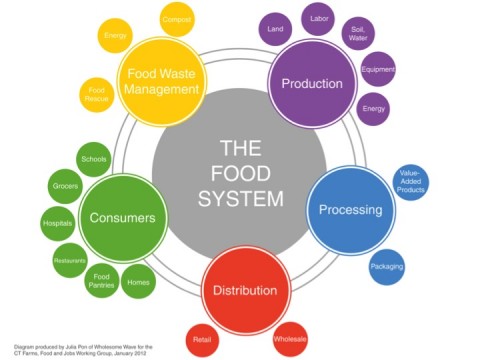
Last Friday, I worked with the Network Support Team (NST) of the Connecticut Food System Alliance (CFSA) to facilitate a gathering of over 100 food system and food security activists. This was the fourth convening in the past year and a half, and featured what have become typical elements of fostering connectivity between people (welcoming and introducing ourselves to new people, learning together, making offers and requests) and alignment around the CFSA vision. And to honor what has been growing in the network as both a call for and a question about the possibility of collective action, NST members Melissa Spear, Marilyn Moore, and Jiff Martin created the following exercise to stimulate people’s thinking about how the network could “change the game” in Connecticut and boldly advance the state towards a reality where “everyone has access to safe, nutritious, culturally appropriate, and affordable food.”Read More
Since my recent visit to LUPE in San Juan, Texas, I’ve been thinking a lot about what makes LUPE’s community union model so different from most of our efforts (IISC’s and the social sector at large). César Chávez spelled described the core premise succinctly. “From the depth of need and despair, people can work together, can organize themselves to solve their own problems and fill their own needs with dignity and strength.”