Blog
Leveraging Networks as Marketplaces

|Photo by USDAGov|http://www.flickr.com/photos/41284017@N08/7740419400/in/photolist-cMZF1U-9bjsio-9ZTS3b-9UWk5k-fomtZ4-9UYk2h-agjHzA-agjHTo-ajSoZJ-agBMia-ajSogU-ajPA7r-9X7pyg-9UVcQZ-9UVnmz-9UVof4-9X1Gip-9ZTSSh-9X1S7v-9X4syC-9ZQZbV-9X1Mbc-9UVktD-9UVqix-9UVrU6-9UYipj-9X1Kh2-9X1PgP-9X1SSH-9X1QhF-9ZQZSx-a4uQan-9X4DWN-9X1Eut-9X4va3-9X1CqT-9X1HtB-9X4x9W-a4xKTw-9X1BKF-9X1R5e-a4uUin-a4uPkp-ccXodW|
I am increasingly interested in how networks can help to reclaim and reshape marketplaces, bringing them back down to earth and keeping them more stimulating of local economies, helping give value to what is not formally valued, as well as shifting and restructuring flows for greater equity and abundance. So I was delighted to get a number of tips on this front from Lawrence CommunityWorks during a visit there last week. Staff and residents shared a number of ways in which they help to identify and exchange assets as a part of daily operations. For example, here is an exercise called “Marketplaces” which comes from Bill Traynor. Read More
3 CommentsLove

“Love” is now a category on the IISC Blog. How appropriate! Love is one of the three lenses that give shape to our work. And love is at the very heart of this project of social transformation. Love is path and goal. Love is how we get there and it is where we want to go.
Leave a commentHow will you use power?

We often focus on the understanding of power as a process and as a social construct rather than a fixed asset. As Beth Roy says, “power is not something you have; it’s something you do.”
Leave a commentHospitality as Facilitation
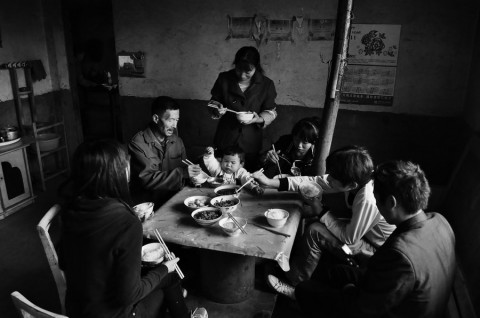
The origins of hospitality as a sacred and esteemed practice are rooted in providing shelter and safety to the stranger. It is the ancient art and practice of offering your very best to another, with no expectation of reward. Whether you learned this practice in your grandmother’s parlor or at an Art of Hosting workshop, you know that hospitality is the essence of facilitative leadership.
1 CommentNetworks as Human Environments
Yesterday, Carole Martin and I took the Tillotson Fund Community Practitioners Network on a site visit/retreat to Lawrence CommunityWorks, to see first hand what a network approach to community and economic development looks like. There is much to be said about what LCW has done, learned, and is looking to do going forward, and some of this has already been captured in case studies and articles. Here I want to focus on one important lesson that staff and residents have learned over the past 15 years or so when it comes to taking a network approach. This lesson falls under the caution – “Avoid a Fetish for Structural Forms.” Read More
2 CommentsComplete (Social) Capital

Last week I represented IISC as a presenter/facilitator in a “deep dive” session at the Council on Foundations Conference for Community Foundations. The title of the session was “Complete Capital”and was inspired by an SSIR article by the same title written by Antony Bugg-Levine of the Nonprofit Finance Fund (NFF). Briefly, complete capital is a framework to help funders and other investors develop a fuller picture of the assets required to address complex social challenges: financial, intellectual, human, and social.
After presentations by Alison Gold of Living Cities (intellectual capital), Lisa Spinali (human capital) and Jessica LaBarbera of NFF (financial capital), and in the light of a couple of helpful case studies presented by Alison and Jessica, I offered a view of social capital that is more complex than what appears in the SSIR article. Read More
Leave a commentWhen to speak up

The following post has been reblogged from Seth’s Blog. He is a genius and we hope you enjoy it as much as we did!
“This plane is headed to Dallas. If Dallas isn’t your destination, this would be a great time to deplane.”
1 CommentWashington Gridlock
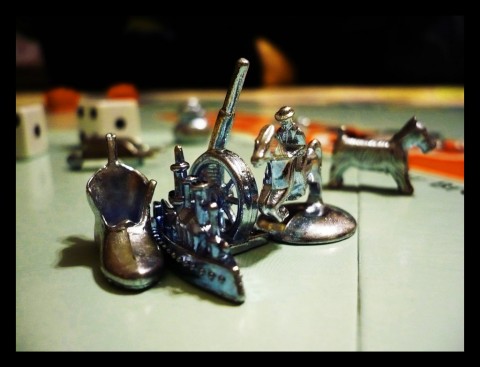
I have been thinking about today’s post for days. But, with the possible shutdown of the federal government, I wanted to raise a few questions and concerns. We have a (theoretically) representative form of government, which begs the question whose interests are actually being represented by the gridlock in Washington? Read More
2 CommentsFlipping Orthodoxy

|Photo by Denise Krebs|http://www.flickr.com/photos/56041749@N02/6505676869/in/photolist-aUTi5z-b8fQp6-8vP3az-8vS5Gw-8vP6yc-df3uDo-9ajyDy-9ajyGj-9uwZsS-8xEyPM-a9Sswa-838T1L-838T29-838T2o-7EEiRH-9K1FZL-dPJmcY-9z759H-9qnBXs-aoqz7f-aonL2P-aonJXi-aonNiT-aoqwaS-aonMhc-aonLrp-aonMWr-aonKPK-eRPkFi-7HdeeN-8LifKY-7SSJvk-8giPCy-7HzRRr-7HzRXp-7HDMMm-7HDMRs-7HzRZH-7HzRVB-8TVkao-8brUvi-7AvmtM-7Az7Xm-7AvmvZ-8SNtK4-aoqvKQ-aonMJz-aoqy3L-aonLRP-aoqxBW-aoqvXy|
During his presentation at this week’s Council of Foundations Conference for Community Foundations, the Monitor Institute’s Gabriel Kasper talked about the need for innovation in community philanthropy. This included a call to examine orthodoxy in our organizations and communities, that is, the behaviors and procedures that we often take for granted with respect to the way we go about our business. This notion of orthodoxy was developed by the innovation firm Doblin and is further outlined in an article in Rotman Magazine. Gabriel then encouraged attendees to, essentially, “steal like an artist.” So in that spirit, I wanted to share the plenary exercise he had participants go through that I am particularly interested in bringing to some of the networks with which I work: Read More
2 CommentsMore Cracks in the Network Code

Our friend Jane Wei-Skillern recently co-wrote (along with Nora Silver and Eric Heitz) another valuable contribution to the growing “network building” body of literature, entitled “Cracking the Network Code: Four Principles for Grantmakers.” This piece is part of Grantmakers for Effective Organizations’ learning initiative, Scaling What Works. While the guide mainly addresses funders, it also has something for those outside of the philanthropic world. Its core offering is a set of principles to guide what the authors call “the network mindset”: Read More
Collaboration, Cooperation and Do-ocracy

I always describe IISC as a “Collaboration Shop.” The founder of Interaction Associates, David Strauss, authored the seminal book “How to Make Collaboration Work.” I’m all for people working together to achieve a common goal. I make a living helping them do that.
1 Comment