Blog
October 31, 2013

As I mentioned in yesterday’s post, this week the Vermont Farm to Plate (F2P) Network held its third annual convening. This marked the move to the third year of the F2P Network’s existence, and another significant milestone.
At the first convening in 2011, there was a mix of enthusiasm, optimism, curiosity, impatience, and some reticence. Many were intrigued by the notion of this new form of multi-organizational collaboration seeking to double local food production in 10 years time, boost the state economy, and address issues of food access and security. Read More
October 30, 2013

Reporting live from the third annual Vermont Farm to Plate (F2P) Network convening, I am relishing this opportunity to work with and watch a successful network move into its third year of existence. There is much more to share about the F2P journey, which I hope to do in a follow-up post to this one, but for now, I wanted to highlight a couple of themes that continue to resonate throughout the convening and contribute to the growth and success of this network.
Read More
October 29, 2013
We work in close partnership with the Barr Foundation. I appreciated this video of my friend Rahn Dorsey, the foundation’s evaluation director, articulating three keys to breakthrough on complex public conversations. I specially like that Rahn’s understanding that even when the will for change is strong, it takes good process to make a way.
Read More
October 28, 2013
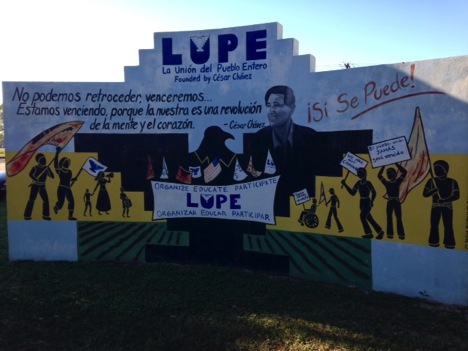
“We can’t retreat, we will win… We are winning because our revolution is one of the mind and the heart.” César E. Chávez
During a visit to LUPE, the community union founded by César E. Chávez and the United Farm Workers, Annie E. Casey Foundation’s Partner Organizations of Color explored the connections between child welfare, juvenile justice, community organizing and immigration. One participant spoke a word of caution to capacity builders and organizers who seek to engage and mobilize community residents. “We can’t be another broken promise to the people.”
Read More
October 24, 2013
“Wealth and income distribution no longer resemble a familiar ‘bell curve’ in which the bulk of the wealth accrue to a large middle class. Instead, the networked economy seems to be producing a ‘power-curve’ distribution, sometimes known as a ‘winner-take-all’ economy.”
– David Bollier, from “The Power Curve Society”

As is no doubt evident from past posts on this blog, we at IISC are enthusiastic about networks and their potential to create more equitable, healthy, thriving and sustainable communities. We do not, however, subscribe to the belief that network approaches in and of themselves guarantee the kinds of just and humanizing opportunities and outcomes we seek. We do encounter people who hold up networks as a sort of panacea, hoping that in an age of more distributed technology and open source approaches to problems and solutions, we will achieve some kind of democratic ideal that has to this point eluded us. That there is promise is evident in many stories that we have heard, witnessed, and shared on this site. That there is reason to be vigilant is also illustrated in the many signs of an ever-growing and highly racialized gap between rich and poor in this country and a continued reluctance on the part of many to look at these glaring inequities or the systems that perpetuate them. Read More
October 23, 2013
I saw “Gravity” last night. It was a fun thriller, relatively formulaic; and yet, also of great importance. It is significant that “Gravity” has been the top seller at the box office three weekends in a row.
Read More
October 22, 2013

|Photo by Britt Reints|http://www.flickr.com/photos/23724661@N00/8672736002/in/photolist-edo3g5-bLLq6D-9TNBMk-9K8JD7-877WgZ-87b9gq-87b9J9-87b8db-87b9Zd-877WJK-87bai7-8yUg5m-aBjCdA-cZRB4S-dZibct-bdNMCr-7UxW4y-9TNCwM-9KfTc9-7CXm6D-djaFhx-7NCbqY-fm2CKt-fUCwSF-a7ofHQ-7Za1Bg-dsQ3GS-bqCBEg-8T3Hzn-cRpQcA-djaFet-e3RwjX-9KY7rx-atQEAm-7yZwfM-7yXPYm-84QSeo-cnHVSd-axtohs-8PDUBW-7Nyd36-cu1VmW-9acyQz-dDK9E9-dDK9Hd-9pUsHG-a64ak1-7RfDxU-fCPjk6-9VpVpq-85UK7p|
With appreciations to Carole Martin for passing this along, I wanted to offer this poem as a reminder of the important role of listening in helping to create trust and grounded-ness in the work of social change . . .
Finding What You Didn’t Lose
When someone deeply listens to you
it is like holding out a dented cup
you’ve had since childhood
and watching it fill up with
cold, fresh water. Read More
October 22, 2013
|Photo by Britt Reints|http://www.flickr.com/photos/23724661@N00/8672736002/in/photolist-edo3g5-bLLq6D-9TNBMk-9K8JD7-877WgZ-87b9gq-87b9J9-87b8db-87b9Zd-877WJK-87bai7-8yUg5m-aBjCdA-cZRB4S-dZibct-bdNMCr-7UxW4y-9TNCwM-9KfTc9-7CXm6D-djaFhx-7NCbqY-fm2CKt-fUCwSF-a7ofHQ-7Za1Bg-dsQ3GS-bqCBEg-8T3Hzn-cRpQcA-djaFet-e3RwjX-9KY7rx-atQEAm-7yZwfM-7yXPYm-84QSeo-cnHVSd-axtohs-8PDUBW-7Nyd36-cu1VmW-9acyQz-dDK9E9-dDK9Hd-9pUsHG-a64ak1-7RfDxU-fCPjk6-9VpVpq-85UK7p|
With appreciations to Carole Martin for passing this along, I wanted to offer this poem as a reminder of the important role of listening in helping to create trust and grounded-ness in the work of social change . . .
Finding What You Didn’t Lose
When someone deeply listens to you
it is like holding out a dented cup
you’ve had since childhood
and watching it fill up with
cold, fresh water. Read More
October 21, 2013
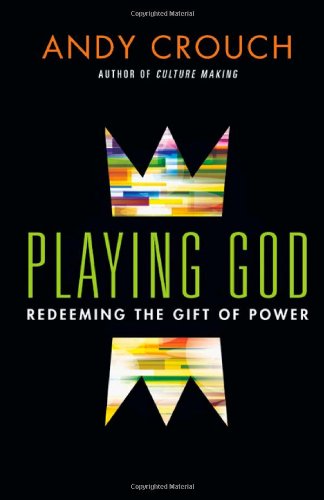
I just started reading Playing God: Redeeming the gift of power by Andy Crouch, thanks to a book reading group at my church, Grace Chapel. I’m already drawn in by the premise that power is a gift and by his central question: How do we use our power to make people and things around us flourish?
Read More
October 17, 2013

I had a virtual exchange the other day with Jane Wei-Skillern of Stanford University, as we discussed different ideas for going beyond case studies to help engage people in thinking in networked ways. This is what came to mind at the time, and I am eager to hear from others what you have done:
- In the past I have asked people to think about network forms or topologies (hub and spoke, mesh, distributed); assign different forms to pairs/trios and have them think about what examples of that form exist in their lives. What are the strengths of that form? What are its limitations? How might they shift it to be more “effective” in terms of desired impact?
Read More
October 16, 2013
“Creating a culture of trust in a network can have a big payoff. Why is this so? First, when trust is well-developed in a network, people are willing to get involved in high-risk projects where their reputation and resources are at stake. These kinds of projects usually have a lot of impact. Next, high levels of trust usually make decision making easier and less time consuming. Finally, a culture of trust enables people to accept and work with people who are quite different from them, which increases the number of people working on network activities.”
– June Holley, Network Weaver Handbook

|Photo by Mike Baird|http://www.flickr.com/photos/72825507@N00/6827018401/in/photolist-bphfHP-ayA7wy-bKZzec-e4iaNi-aaixFs-bKZArr-e58faj-e52zee-e58ah1-e5838j-e586eo-e58cR5-e584Hq-8Wcf9Q-csNfzU-dftPtq-dZTbw9-bWm4ku-d6vnvU-d6vg8U-awDsBx-dz9vRu-7CW4pj-acYjbQ-agyEHk-9XrqN1-9XouvF-9XowsD-9XrpRj-9XrorW-d6vBWJ-d6vpE5-d6vFUQ-d6voKN-d6vJaN-d6vuLJ-d6vRoQ-d6vUZW-d6vxbE-d6vDLf-d6vSBq-d6vvPL-d6vWoA-d6vXLJ-d6vybf-d6vqN1-d6vQrY-d6vGTA-d6vma9-d6vzeb-d6vKqG|
The importance and power of trust in networks for social change cannot be overstated. Time and again, and despite what might show up as initial resistance, being intentional about getting to know one another beyond titles, official positions, and transactional exchanges reaps tremendous benefit, for all the reasons June Holley mentions above and more. Taking time and making space to build trust helps people to do the important work of social change and is in many cases an embodiment of the change we are trying to make in the world – when we expand our circles of compassion and inclusion; when we create new patterns of opportunity, exchange and resource flows; when we see and validate previously unrecognized or undervalued assets.
Read More
October 14, 2013
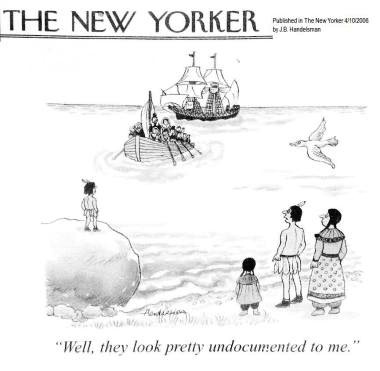
In middle and high school, I challenged (and most likely annoyed) my teachers around this time of the year. I went to school in Plymouth, MA and wondered out loud why Native Americans would want to celebrate Columbus Day. “Shouldn’t it be a day of mourning for them?” I’d ask. I don’t recall any teacher having a good answer to my question or even being willing to engage in meaningful dialogue.
Read More