Everyone else is taken

“The point is that justice was always going to elude Trayvon Martin, not because the system failed, but because it worked.”
– Robin D. G. Kelley

|Photo by Ben Sutherland|http://www.flickr.com/photos/bensutherland/8496877807|
The post below is a somewhat edited version of one that appeared on this blog a year ago. As we have continued to have conversations at IISC and with our partners about the implications of the verdict in the George Zimmerman case, one thing that has become clear about who and where we are as a country is that there is an overall inability and/or resistance to thinking about racism from a systemic perspective. As evidence, we hear comments such as, “Race did not have anything to do with this verdict. The women on the jury are not racist.” Or, “Justice was done. The jury followed the letter of the law.” Read More
Leave a comment
This is for the kids who die,
Black and white,
For kids will die certainly.
The old and rich will live on awhile,
As always,
Eating blood and gold,
Letting kids die.

This morning we came into the IISC Boston office ready for a two-hour staff meeting and a four-hour training. We sat down, looked around the table, and began with a question not about what was on the agenda, and instead about what was present in the room. The question was: How does the Zimmerman verdict affect us and our work at IISC?
5 Comments
The following post has been reblogged from our friends at The Huffington Post and written by Judith Brown Dianis. Important to consider during this painful moment of glaring injustice.
It is distressing that George Zimmerman was found not guilty in the tragic killing of Trayvon Martin, an unarmed black teenager who was gunned down last year by a man who saw him as a threat, not because he posed a threat, but because of the color of his skin. We call on the Department of Justice to act on the violation of Trayvon Martin’s civil rights. There is no more fundamental right than the right to live.
3 Comments“We are what we measure.”
– Whole Measures mantra

From August 20-23, IISC is excited to once again partner with the Center for Whole Communities to offer our jointly created workshop “Whole Measures: Transforming Communities by Measuring What Matters Most” at beautiful Knoll Farm in Vermont’s Mad River Valley. This summer’s offering is meant especially for New England-based and focused food system and food security advocates. This includes those working from different angles (production, distribution, access, public health) and scales (neighborhood, community, state, region). Read More
Leave a commentRegular readers know that facilitating for the Barr Fellows Network has been among the most rewarding work I have ever gotten to do – here is why, part 2
Leave a comment
|Photo by Dave F|http://www.flickr.com/photos/92163630@N00/4025069261/in/photolist-78FwRT-7eEdPY-7rjYoy-7uNgmF-7vfzgW-7S6HqS-ahxM9M-bLxMq2-bLxG9H-bxD6L3-bxD6gw-bLxFGB-bwN9uq-8kt9LS-cTQhiL-bxD1Cb-acnUyb-ack4wz-9Hw99M-8JYow6-8V696G-7Zduf2-dKgycj-9C6fhQ-9HyZKY-bvGe6y-98DdGq-8sEggt-drjdQF-acnRFq-acnRBf-ack1tM-ack1DR-ack1Ag-acnRM3-acnRRY-ack1Qx-acnRrw-acnRP9-aBxDYM-bLxKtB-bLxK5c-bxD3eE-aoY5QL-aD4XFc-ctuFgG-ctuJyu-ctuFK3-ctuGww-ctuJDE-ctuFM3|
I recently was reminded of a truth about resilience. It came in the form of a story told by someone about the root system of red wood trees. These giant and venerable beings, some standing as high as 350 feet and as old as 1000 years, are not so deeply rooted in the soil. Their roots tend to only go to a depth of about 4 to 5 feet, which is extraordinary when you consider how far up they reach. So how do red woods remain vertical amidst storms and the ravages of time? The answer is that they reach out to one another. Below the surface, they stretch their roots out horizontally where they become entwined with those of their neighbors. This becomes the source of the forest’s strength – vast networks of interconnections.
On a day when we like to focus on independence, I like how this story reminds us of the extent to which our ability to survive and flourish is caught up in our common roots and interrelationships.
Leave a comment
As we break bread with our friends and family, lets not forget about the men and women who sacrificed their lives so that we may live free. Thank You for all that you have done. We will never forget you.
Leave a comment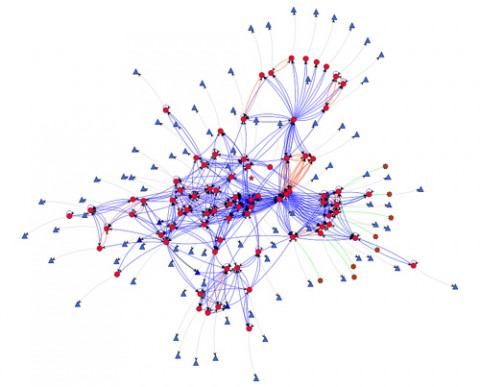
A couple of weeks ago there was an intriguing article in Next City entitled “The Post-Hero Economy: Learning to Lead Through Networks.” In it, Jennifer Bradley and Bruce Katz tell the story of some extraordinary attempts to boost a region in the midwestern United States. The focus is not on a leader or leaders, but on a network. As the authors state, “When telling stories of transformation and turnaround, it is tempting to shape them into personal stories about heroes. One charismatic visionary — a mayor, school superintendent, entrepreneur, outraged citizen — steps up and, with unrelenting vigor and inspirational leadership, starts an irreversible cascade of change. But there is a growing body of research suggesting that, as a system or problem becomes more complex, arriving at a solution requires multiple minds from multiple sectors or perspectives.” Read More
2 CommentsRegular readers know that facilitating for the Barr Fellows Network has been among the most rewarding work I have ever gotten to do – here is why, part 1
Leave a comment
Thanks to our friends at Colorlines.org for calling this post to our attention! Read on and ask yourself, what does it take to be able to create this kind of a “teachable moment” with such poise, grace and clarity.
2 Comments