Posted in Leadership
June 22, 2010

Over the next three days I will have the privilege of training the Interaction Institute’s Facilitative Leadership® workshop. Just yesterday I was talking to my colleague Curtis Ogden and asking him for his latest tips on offering this workshop. As often happens with us, our conversation evolved into a very interesting inquiry. Read More
June 3, 2010
|Photo by DonnaGrayson|http://www.flickr.com/photos/donnagrayson/195244498|
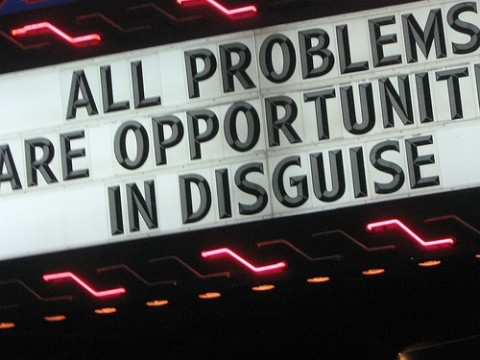
I have been struck by how much guidance an enlightened parenting concept I recently learned offers to the work of leadership and facilitation. The concept comes from a book that a neighbor lent to my wife and me as we were beginning to think more about how best to address some our 4 year old daughter’s testing of limits.
Read More
May 18, 2010

|Photo by laurenatclemson|http://www.flickr.com/photos/laurenmanning/2319032882/in/photostream|
A couple of weeks ago, during a training with early childhood advocates from around Connecticut, an interesting conversation ensued about vision. This was prompted by one participant’s comment that in this day and age, “There is no such thing as vision. There is no such thing as magic or miracles. People are cynical. People just don’t respond to vision anymore.” There was some immediate push back to this comment, and also some acknowledgment that vision may not be what it used to be, thinking of the old standards a la MLK and JFK.
Read More
April 15, 2010

|Photo by John D. McDonald|http://www.flickr.com/photos/psychoactive/2943294866|
Science has confirmed what many of us feel, that we are each more than one person. We are minds and bodies, left brains and right brains, controlled and automatic responders. This last division is due in part to the fact that we each have more than one brain. Our old reptilian brain is what we can depend on to keep us safe from physical harm most of the time. Our newest brain is what gives birth to the wonders of critical thought and creativity. The amazement I feel about the evolution of our higher thinking is dampened somewhat by my understanding and experience that my multiple brains are not often well coordinated. I walk into a meeting on the one hand (or brain) excited to facilitate, while on the other I am anxious, my more primitive wiring believing there’s a saber toothed tiger in the corner). Welcome to what Seth Godin calls “the lizard” inside.
Read More
April 8, 2010

|Photo by xb3|http://www.flickr.com/photos/bofh/150722915|
In a post of a few weeks ago I explored the different dimensions of social space we might be called to attend to as leaders and change agents in creating environments for people to collaborate. I suggested that these dimensions exist in dynamic tension and together form a holistic picture of how we can leverage the potential of groups by respecting the values of autonomy, community, and divinity. In recently reading a book by Tim Kasser and Tom Crompton, I was reminded that how we frame these dimensions matters in terms of what ends we seek and ultimately serve.
Read More
March 9, 2010

Sharing an inspiring vision is one of the seven practices of Facilitative Leadership. Here at the Interaction Institute for Social Change we are fond of saying that “a leader must share an inspiring vision in order to inspire a shared vision.” If you are reading this blog you probably have a vision. You are interested in social change, you want to believe that indeed another world is possible – and you have a role in making it happen. You have a vision of the world you want to see. Read More
February 26, 2010
Thanks to our colleague, Susan DeGenring of Alchemy Learning, for bringing this a blessing about leadership to our attention. It is the work of John O’Donohue, the late Irish teacher and poet, from his last book, To Bless the Space Between Us. Please read and share your thoughts, as I share mine below: Read More
December 31, 2009
One of my favorite poetry finds this year comes from Judy Sorum Brown, whose piece “Fire” ties in nicely with a theme that has been developing for me over the past twelve months. In addition to Judy’s work, I am grateful for the writings of Larry Dressler, which have helped me to embrace the metaphor of “fire tending” (not firefighting) as part of the work we do as leaders, facilitators, consultants, teachers, and perhaps as parents.
Larry’s book Standing in the Fire points out that when we work with groups of people we are to some extent always playing with fire. Fire can burn, of course, but it can also purify and renew, it can serve as fuel, it can warm us, and it can make us uncomfortable enough to get moving. The key is first not to be afraid of the heat. From there it all comes down to the choices we make about how to build and feed the flames in light of what it is we are trying to collectively accomplish.
Read More
December 11, 2009
Yesterday, I was honored to lead a workshop on Facilitative Leadership for 500 women at the 5th Annual Massachusetts Conference for Women. Hosted by the MA Commission on the Status of Women, this mega-gathering attracted over 5,000 diverse women from corporate, government, non-profit, and social change sectors. The vibe was electric and eclectic – with a mix of executives, teachers, job-seekers, entrepreneurs, students, philanthropists, stay-at-home moms and many others. It was a day of focus on issues “that matter most to women, including personal finance, business, entrepreneurship, health and work/life balance”.
My 60 minute session, “The Practice of Facilitative Leadership”, was what we at IISC would call an “experience” of our flagship, 3-day, course. Up front, we acknowledged that, in this shifting socio-historical global context — anyone who claims to lead is merely improvising her way through unprecedented waters along with the rest of us.
Read More
August 28, 2009
By Melinda Weekes
On Wednesday, August 26, 2009, a great public servant and leader died. Massachusetts Senator Edward “Teddy” Kennedy’s legacy of service, championing the under-served and working class of our country, had come to an end in one form, now to transition to a legacy of another sort. It was the second day of the Facilitative Leadership course I was co-training, and of course, that morning, we paused to mourn, reflect, reminisce and examine our study of leadership in the brilliant, shining light of his life long leadership practice.
Later in the day, I came across this blog piece published by the Harvard Business Review, entitled, “How Ted Kennedy Got Things Done,” and couldn’t help but notice how much the observations of his distinguished service track so well with several of the attributes and principles of Facilitative Leadership: Read More
August 28, 2009
On Wednesday, August 26, 2009, a great public servant and leader died. Massachusetts Senator Edward “Teddy” Kennedy’s legacy of service, championing the under-served and working class of our country, had come to an end in one form, now to transition to a legacy of another sort. It was the second day of the Facilitative Leadership course I was co-training, and of course, that morning, we paused to mourn, reflect, reminisce and examine our study of leadership in the brilliant, shining light of his life long leadership practice.
Later in the day, I came across this blog piece published by the Harvard Business Review, entitled, “How Ted Kennedy Got Things Done,” and couldn’t help but notice how much the observations of his distinguished service track so well with several of the attributes and principles of Facilitative Leadership: Read More
July 6, 2009
My son, David, recently wrote an article for the Providence Phoenix about John Maeda, President of Rhode Island School of Design and author of The Laws of Simplicity, The Laws of Simplicity – The MIT Press.
Maeda embodies and articulates facilitative leadership and has embarked on building the collaborative organization which he calls an “open source administration”. Web2ExpoSF 09: John Maeda, “Open Source Administration“ Interestingly, even today, the idea of an accessible, communicative and transparent leader is seen as unusual and breakthrough telegraphing just how hard it is to move from the old to the new.
What is so unique to John Maeda is his combination of talents that are so apt for this moment in time. He is an artist, a designer, a techie; an educator and an MBA not to mention young and hip with a “genuine ability to distill, simplify and inspire”. Like President Obama he models what it means to lead today from a place of thoughtful creativity, wholeness and…..joy.
While John Maeda and Barack Obama are among the famous there are so many leaders across the generations, the sectors and the world that are showing the way simultaneously changing the world one individual, one family, one organization and one community at a time.