Posted in Uncategorized
April 27, 2012
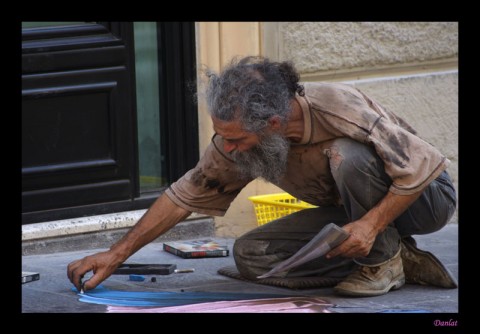
The following post is reblogged from Seth’s Blog. Short and simple , yet full of wisdom. We hope that it will enrich your life and much as it has ours.
Techniques and skill and even a point of view are often handed down, formally or not. It’s easier to get started if you’re taught, of course.
But art, the new, the ability to connect the dots and to make an impact–sooner or later, that can only come from one who creates, not from a teacher and not from a book.
April 26, 2012

I’ve been enjoying David Rock’s Quiet Leadership: Six Steps to Transforming Performance at Work, a book that pulls from neuroscience literature in an attempt to help us understand ourselves better, and to create new pathways to creativity, productivity, and . . . social change! Rock leads with the idea that the highest point of leverage to help someone change behavior is at the level of their thinking – to help them think better for themselves. He goes on to illustrate how what we pay attention to and how largely determines the content and quality of our lives. This includes the way that we pay attention to problems. Read More
April 25, 2012
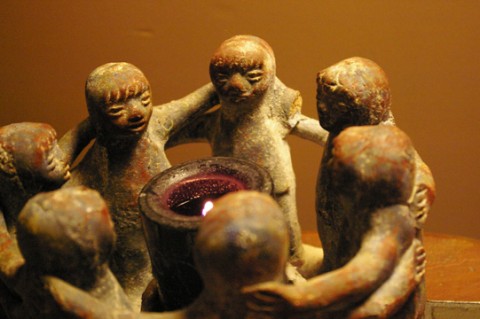
Last weekend I had a most unique privilege. I facilitated the final retreat of a three-year process. I have been working with the Barrboletas, the Barr Fellows cohort of 2009, since their inaugural learning journey to Brazil in June of that year. We have a book worth of documentation. The fellowship as a whole will be highlighted in the May issue of the Stanford Social Innovation Review. This post is a celebration of their last retreat as a cohort – they will continue to participate in an exciting plethora of network activities as they are moved and able.
Read More
April 24, 2012

The following post are 5 tips that will help in your Social Media strategy for any organization. These are just 5 easy tips out of 10 that can be used in order to strengthen any social media platform. We hope that you find these extremely useful.
Why should businesses bother with social media? From Twitter and Pinterest to Facebook and Google+, the social realm can bring the human element to a product or service. A Facebook page enables a company to share behind-the-scenes photos or answer consumer questions. On Twitter, that same company can offer coupons, or get in touch with a person immediately over a complaint.
Read More
April 23, 2012

Wonder why I’m passionate about collaborative process and strong, creative process design?
Join us at Fundamentals of Facilitation for Racial Justice Work on May 8-9 in Boston to explore these ideas and more!
You can’t have peace or justice without it. Consider the following:
“Peace comes from being able to contribute the best that we have, and all that we are, toward creating a world that supports everyone. But it is also securing the space for others to contribute the best that they have and all that they are.” So says Nigerian human rights and democracy activist, Hafsat Abiola. Her words echo those of John Paul Lederach , who wrote in The Moral Imagination that peace is not a condition—a process through which people can build relationships conflicting parties and continually engage to create a reality where “the other” continues to exist.
Read More
April 10, 2012

Last week Seth wrote a blog post titled When execution gets cheaper, so should planning. Provocative statement, specially when planning is at the score of your business!
Here is how he concludes:
The goal should be to have the minimum number of meetings and scenarios and documentation necessary to maximize the value of execution. As it gets faster and easier to actually build the thing, go ahead and make sure the planning (or lack of it) keeps pace.
Read More
April 9, 2012

I picked this up from a Facebook Friend this morning. Apt description of too much of our national (un)civil discourse. At IISC, we have the privilege of working every day with folks who are crafting alternatives to these dangers. What alternatives are you working on?
April 6, 2012
“The most sustainable impact comes from our deriving meaning and then connecting that meaning to our purpose, to what we stand for, and to the contributions we make.”
-Dr. Monica Sharma

There is something about the invitation to health and wholeness and to talking about how to measure it that seems to be a real draw to our Whole Measures workshop, which we offer jointly with the Center for Whole Communities. I can see it in the eyes of many participants as they walk into the room – “Tell us how!” And there is a bit of a disruptive experience that occurs when we let people know it is not so formulaic. One of my favorite quotes comes from my mentor Carol Sanford who has said, “Best practice obliterates essence,” and I think it really applies to what we are talking about here. Read More
April 4, 2012
This post comes courtesy of staff from the Center for Arab American Philanthropy who attended the convening in Michigan that Cynthia and I facilitated last week. As the post mentions, youth played a key role in the proceedings, offering up moving testimonials and powerful elements of a vision for moving the state forward to a place of opportunity for all . . .
Concerned with issues of youth opportunity and racial equity in Michigan, the Council of Michigan Foundations (CMF) hosted State of Opportunity? The Road Ahead for Michigan on March 27. The Center for Arab American Philanthropy (CAAP) was in attendance, representing the Arab American community while the convening tackled structural racism in philanthropy and “cradle to career” grantmaking. Read More
April 3, 2012
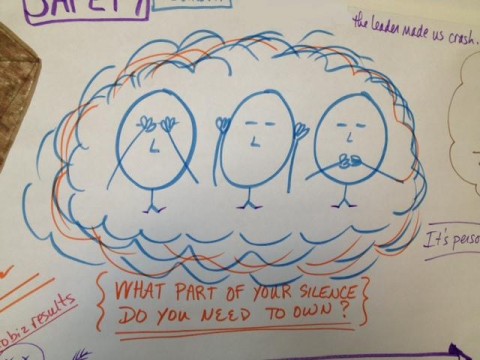
I caught this drawing posted among many other charts in IISC Learning Center. It caught my attention. I have long been familiar with the idea that silence equals complicity. But I always applied it to movement and our work for justice. I never quite thought of it as applying to organizational dynamics.
Read More
April 2, 2012
Last week, I had the privilege of spending a few hours with a delegation from Egypt—four young men who were involved in the April 6th revolution and continue to work for democracy in Egypt. They were at the end of a three week tour of the U.S. focused on the role of social media in politics and elections.They were frankly surprised that here, in the country that gave birth to Facebook, Twitter and Google, we not doing more with social media to advance our democracy. Their visit with IISC was to focus on some of the social technology that fuels social change work. Still, I thought to myself, “No pressure!”
Read More
March 30, 2012

“The New American Academy does a tremendous job of nurturing relationships. Since people learn from people they love, education is fundamentally about the relationship between a teacher and student.”
The following post is a commentary from Stowe Boyd – The New American Academy: Post-Industrial At Last. It called my attention because it makes a link between education and collaboration, learning and relationship. See what you all think!
Read More

