Earlier this year I co-facilitated a learning session on collaborative social change process design and stakeholder engagement approaches for a group of foundation employees from around the country. As we got deeper into the conversation, some of the participants began to speak to their own doubts about the effectiveness of grantmaking, especially when it only focuses on grantmaking. “In the larger scope of things,” said one program officer, “our money is just a drop in the bucket.” “Frankly,” said another, “there are other ways we can add value, but we limit our own validation of these efforts by calling ourselves ‘grantmakers.'” Interesting. As we explored other avenues for change agency, it was as if we were tapping into the work going on here in Michigan through the Council of Michigan Foundations. Read More
The post below is a repost of a piece by Kathia Laszlo on the “Rethinking Complexity” blog from Saybrook University. It captures a lot of what I am exploring these days about systems thinking as an intellectual exercise to greater embodiment of doing systemically. Enjoy!
A system is a set of interconnected elements which form a whole and show properties which are properties of the whole rather than of the individual elements. This definition is valid for a cell, an organism, a society, or a galaxy. Joanna Macy says that a system is less a thing than a pattern—a pattern of organization. Read More
The spectrum of those working towards community food security is culturally and geographically diverse, spanning a broad range of people, places and activities. Organizations and individuals working in the food system and building food secure communities create complex relationships and inter-related activities. Read More
This post is a slightly edited version of something I wrote for the upcoming State of Opportunity convening in Michigan. My colleague Cynthia Parker and I have been working with the Council of Michigan Foundations staff and membership to design this gathering, the focus of which will be philanthropy’s role in increasing social equity in the state. We are looking forward to facilitating the proceedings on March 27th.
The quote above comes from a systems thinking expert with whom we’ve partnered in our collaborative change work here at the IISC. We’ve found it to be a powerful way of introducing the idea that the complex systems (education, health care) that many of us are trying to change to yield better and more equitable opportunities and outcomes are not “out there.” Rather, to rift on the old Pogo saying, when we have truly seen systems, we understand that they are us!Read More
The following post is reblogged from Seth’s Blog. We hope that it will enrich your life and much as it has ours.
The things we fear are probably feared by others, and when we avoid them, we’re doing what others are doing as well.
Which is why there’s a scarcity of whatever work it is we’re avoiding.
And of course, scarcity often creates value.
The shortcut is simple: if you’re afraid of something, of putting yourself out there, of creating a kind of connection or a promise, that’s a clue that you’re on the right track. Go, do that.
Our hearts and spirits have been moved by Melinda Weeke’s love, passion and commitment to our work. The following is a small tribute to a powerful and beautiful sister who has forever shaped our lives for the better. We wish you the best and we will miss you! We LOVE you.
Through thick and thin. Truthful you have been. Hanging with uncertainty
Sashaying with complexity. Witty and musical. Fearless and spiritual
You bring it home. With charm and aplomb. Lead on, my sister, lead on
IISC Senior Associate, Curtis Ogden, reflects on the question asked in a staff learning session, “What do we know from years of doing collaborative capacity building and social change work?” Recorded at Space With a Soul in Boston.
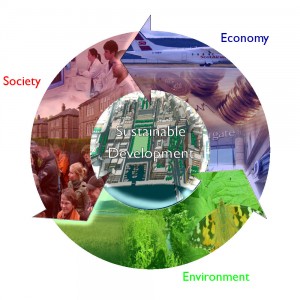
Blogging this morning from the Building Energy Conference, New England’s most established cross-disciplinary renewable energy and green building gathering. If you are here, come visit us at our IISC booth! One of the big topics of this year’s conference and trade show is thinking in terms of systems. In this spirit, the following post draws from an email that I recently sent to the convenor of a state-wide system change initiative that is poised to identify strategic points of leverage within the system and its component systems to nudge it in the direction of serving all people equitably in the state and ensuring community food security. Related to this goal is the desire to support a more robust local economy and to work synergistically with ecosystems. I believe the questions listed pertain to any complex dynamic system change effort, whether one is talking about food, education, or community energy use and production, and I welcome your thoughts . . . Read More
Last night we came together as IISC to bid farewell to the great Melinda Weekes; we are proud that she is moving on to be the Managing Director of the Applied Research Center. But today’s is not a post about Melinda. It is a post about community.
This March 16, 2012 will be my last day with IISC. In April, I begin work as the Managing Director of The Applied Research Center (ARC), headquartered in New York City. ARC is a racial justice think tank that uses popular culture, media, research and activism to promote solutions, and is the publisher of Colorlines.com.
IISC Senior Associate, Cynthia Parker, answers the question asked in a staff learning session, “What do we know from our years of doing collaborative capacity building and social change work?” Recorded at Space With a Soul on February 6, 2012.
I offer this post in memory of my father, John D. Ogden Jr. (1942-2012), who passed away much too young this past Saturday after a two year fight with cancer. Known to all of his friends and family as a good and kind man, my father was also the inspiration for much of my interest in conscious evolution and the fight for justice. From his time as one of the first Peace Corps volunteers in Liberia, he spent his career promoting inter-cultural understanding, most recently as director of international programs at SUNY Cortland. My dad once told me the older he got, the more radical he became. Read More
Make Change Stick Beyond the MeetingTurn ideas into agreements that stick, and keep change going after the meeting ends. Perfect for teams stuck in “great conversation, little action.”
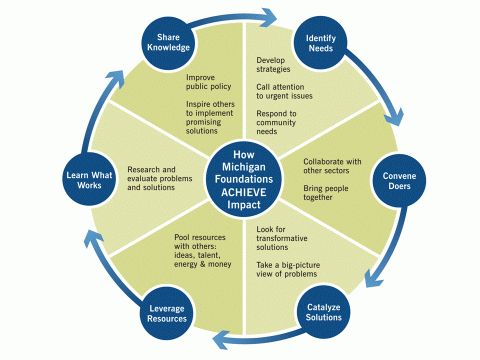 Earlier this year I co-facilitated a learning session on collaborative social change process design and stakeholder engagement approaches for a group of foundation employees from around the country. As we got deeper into the conversation, some of the participants began to speak to their own doubts about the effectiveness of grantmaking, especially when it only focuses on grantmaking. “In the larger scope of things,” said one program officer, “our money is just a drop in the bucket.” “Frankly,” said another, “there are other ways we can add value, but we limit our own validation of these efforts by calling ourselves ‘grantmakers.'” Interesting. As we explored other avenues for change agency, it was as if we were tapping into the work going on here in Michigan through the Council of Michigan Foundations. Read More


 Blogging this morning from the