It is hopefully a sign of things to come. Last night, a multiracial, multigenerational crowd of 3,000 – 5,000 took to the streets of Boston, shutting down parts of the city as part of a protest organized by #BlackLivesMatter Boston (@BLM_Boston). Read More
I have earned a reputation among family and friends as being “no fun” or “too serious” for pointing out the oppressive underpinnings of many elements of popular culture and U.S. traditions. At the risk of reinforcing that reputation, I want to offer a few reflections as Thanksgiving approaches. Read More
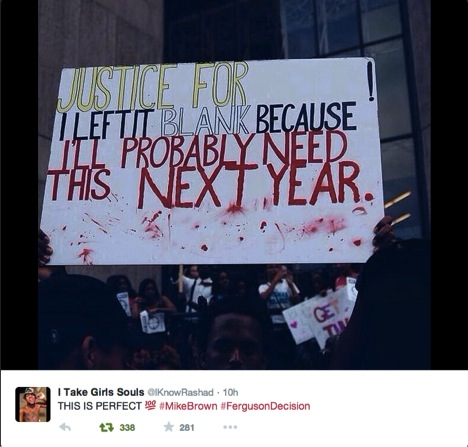
I wish we would only need that sign in another year. It’s crazy to me that it’s already relevant, and that its relevance stretches far into the past as well. In just the past few days alone, Tamir Rice, Tanisha Anderson, and Akai Gurley all died at the hands of police. Twelve-year old Tamir Rice was shot by police while playing with a BB gun in a Cleveland park. Tanisha Anderson died in a police “take down” when she resisted being taken in for mental health services, though her family called for an ambulance, not police. Akai Gurley was killed by a rookie cop in a dark hallway in the Pink Houses in Brooklyn. Gurley was described by Police Commissioner Bratton as a “total innocent” who was shot in an “accident.” His death has already been ruled a homicide. Read More
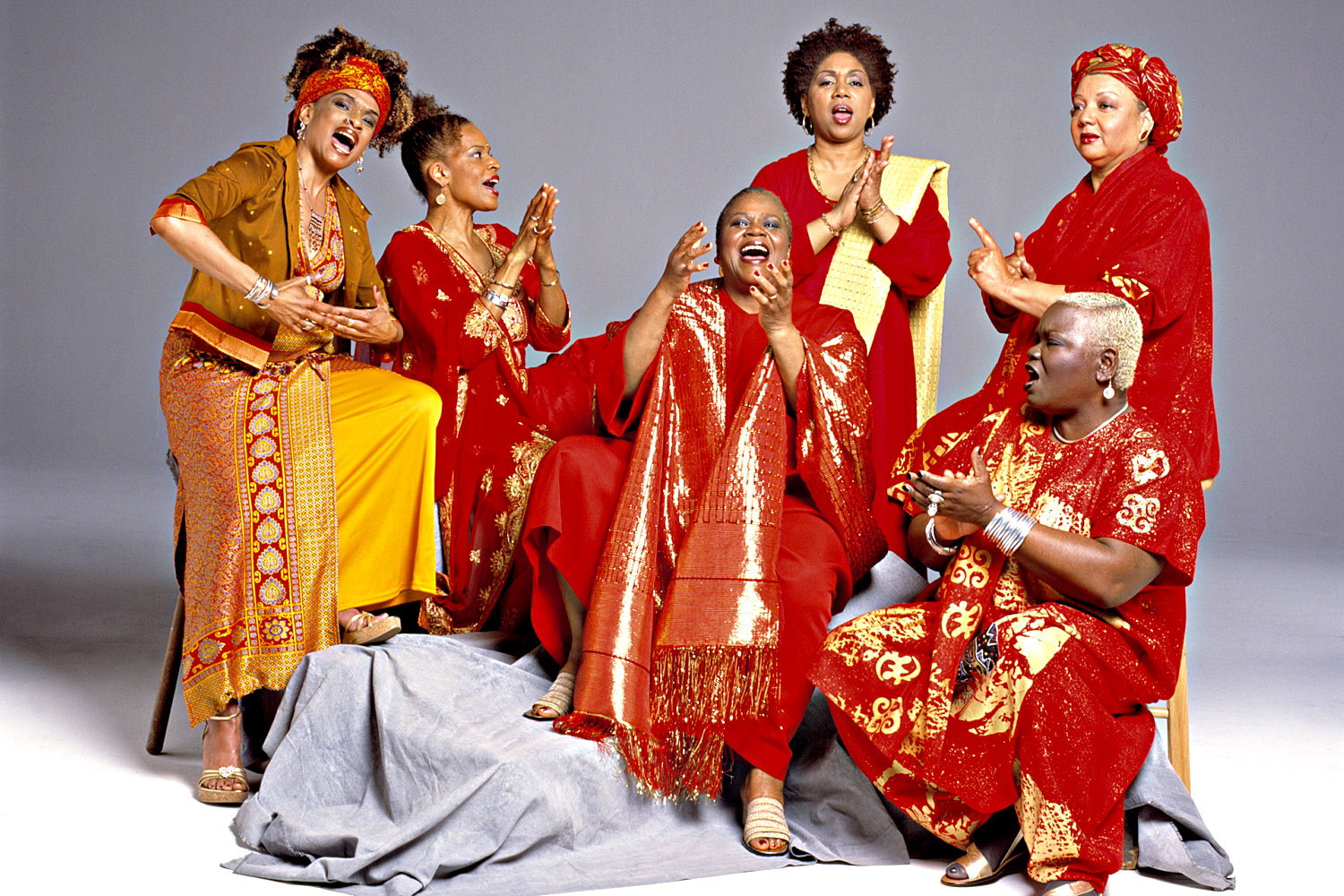
Sitting with the grand jury verdict in the killing of Michael Brown, I’m reminded of a blues song that I first heard sung by Sweet Honey in the Rock more than 30 years ago. It’s as poignant today as it was then.
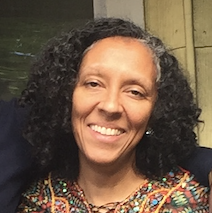
I struggle to find my place in this year of insurrection against the state sanctioned murders of young black men. My knees are too old to run from riot police, my lungs too scarred to survive teargas. I’m wrestling with what it means to be a 50-year-old black American woman who has inherited the benefits of civil rights advancement, and upon whose shoulders the next generations should safely and securely stand. And I am struggling with what it means to have failed.
I have failed to properly name the extrajudicial killings of Sean Bell in 2006 and Trayvon Martin in 2012 and Jonathan Ferrell in 2013 and Eric Garner, John Crawford, Mike Brown and Darrien Hunt in 2014, and I have failed to stop their deaths. I wasn’t there bravely sewing letters on a banner to be dropped in protest that stitched past and present together: “a man was lynched today.” I have failed the memory of 41 bullets striking the body of Amadou Diallo in 1999; failed the decapitated body of James Byrd, dragged to death behind a truck, in 1989. Most of all, I have failed to be watchful and articulate after the revenge killing of Michael Donald in 1981, that moment which destroyed the private club of the Ku Klux Klan and left its role to be taken up by the state.
I want to believe that I stand in solidarity with young activists in Ferguson, but their very existence indicts me.
We have just heard that the Grand Jury did not indict Darren Wilson for killing Michael Brown. The brilliant and courageous young people of Ferguson know that justice has not been served. The relentless profiling, criminalization, harassment and killing of young people of color is a an old an ongoing crisis in this country. It must stop.
I heard a Ferguson resident speak these words on the radio about the actions the Ferguson Police force took in August. And yet, as we await a grand jury decision on whether to indict Officer Darren Wilson in the killing of Michael Brown, most of the media conversation is about whether there will be citizen violence and, assuming yes, requests for calm. Read More
It probably goes without saying that learning requires reflection. This holds true for individuals and groups, and yet what I find is that many collaborative efforts can fail to build adequate reflection time into their work. Often it seems that reflection can be cast aside in favor of “getting stuff done” and because, “There is so much to do!” And ironically, what can ensue is an overall and ongoing sense of impatience and frustration that “we aren’t doing anything or enough.” Experience shows that when people in networks and collaborative change work do pause to reflect, there is much value to be gained.
The other day I worked with the core team of a regional network focused on food system change, and we took time to reflect on what the past couple of years of work have yielded at individual, collective and systemic levels. People offered up their own reflections, as well as those garnered from informal interviews with others in the network. The result was eye-opening, affirming and provided a collective boost. What we agreed is that considerable and important development has occurred over time, including: Read More
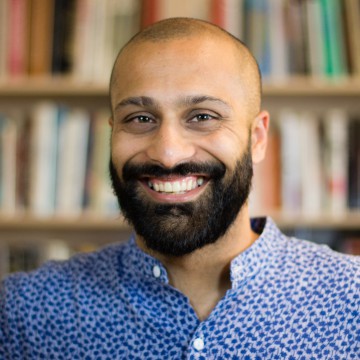
We are pleased to announce the release of Senior Associate Cynthia Silva Parker’s TedX talk. Cynthia shares moments she’s witnessed racism, and how she thinks we can end it. We hope you share this talk with your networks.
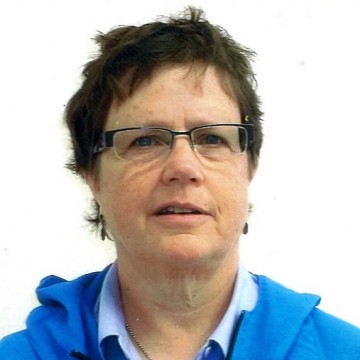
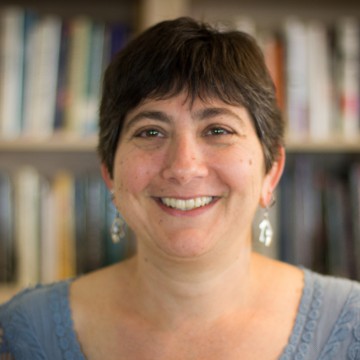
Cynthia has spent decades helping people understand how the system of racism operates. As Senior Associate at Interaction Institute for Social Change, she designs and facilitates collaborative equity and inclusion initiatives. These initiatives make change in organizations, cities, and networks. Cynthia also trains leaders through our public workshops.
She is a life-long advocate for racial equity and social justice, and for deeper awareness of each in our systems and organizations and the wider society. She focuses her observations, personal stories and career on strengthening collaborative networks by building the will, skill, knowledge and strategies to undo racism together.
Boston has a “new gold standard in public engagement”
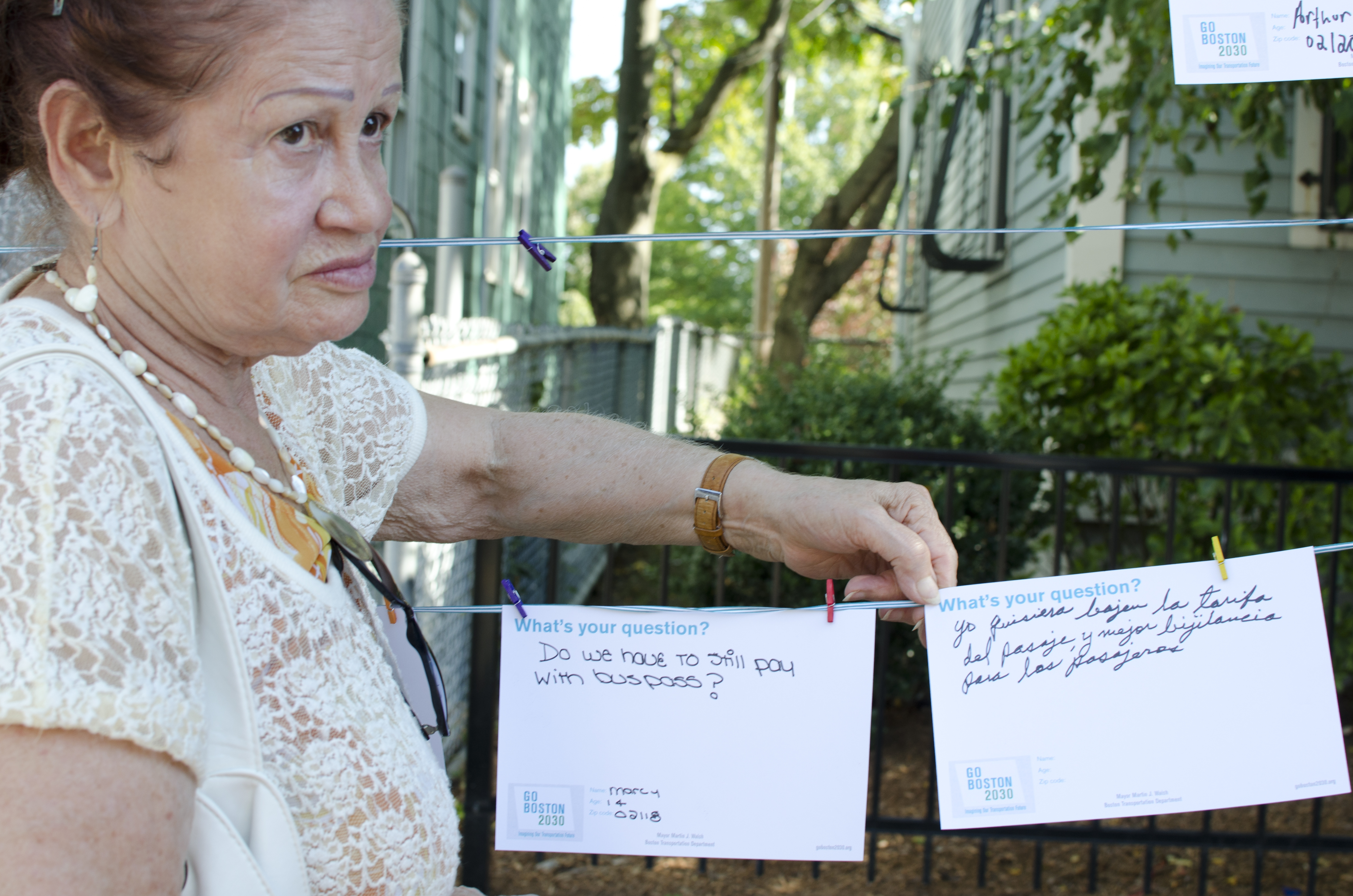
IISC leads public engagement for Boston’s transportation future
“Go Boston 2030 is a City of Boston initiative to envision a bold transportation future for Boston for the next 5, 10 and 15 years. The plan will develop a far-reaching vision that proposes transformative policies and projects to improve transportation for the city’s residents, businesses, and visitors. The two-year process will be driven by data and steered through an unprecedented and inclusive public engagement process.”
IISC designed this process so that the public framed the vision and was involved in ideation. See the story of public participation. This project is still underway.
In the News
Boston’s transportation planning can be fun, Boston Globe
Boston planners tap commuters to shape ideas for 2030, New Boston Post
Go Boston 2030 truck solicits commuter questions, Boston Metro
“The City of Boston launched Go Boston 2030 to better understand the public’s aspirations for transportation throughout the city and to build a bold, innovative transportation future based on an unprecedented level of public engagement,” said Mayor Walsh. “Our transportation Action Plan will lay out an ambitious roadmap to address inequities in underserved neighborhoods, connect our workforce to job opportunities, and prepare our systems for climate change.”
“The Go Boston 2030 initiative is using the latest technology and real grass roots activity to achieve an unprecedented level of community engagement. We’re hearing directly from a broad group of people about what their needs and hopes are for Boston’s transportation future,” said Mayor Walsh. “Together, through this initiative, the public and city officials will build a bold and innovative plan that will improve mobility for residents, commuters, and visitors.”
IISC Designs and Delivers Public Engagement Process
IISC President Ceasar McDowell described the process during a keynote at Grantmakers for Effective Organizations (GEO), reflecting on city planning as an opportunity to build democracy.
Senior Associate Andrea Nagel reflects on IISC Blog about the process.
Question Campaign and Question Review Session
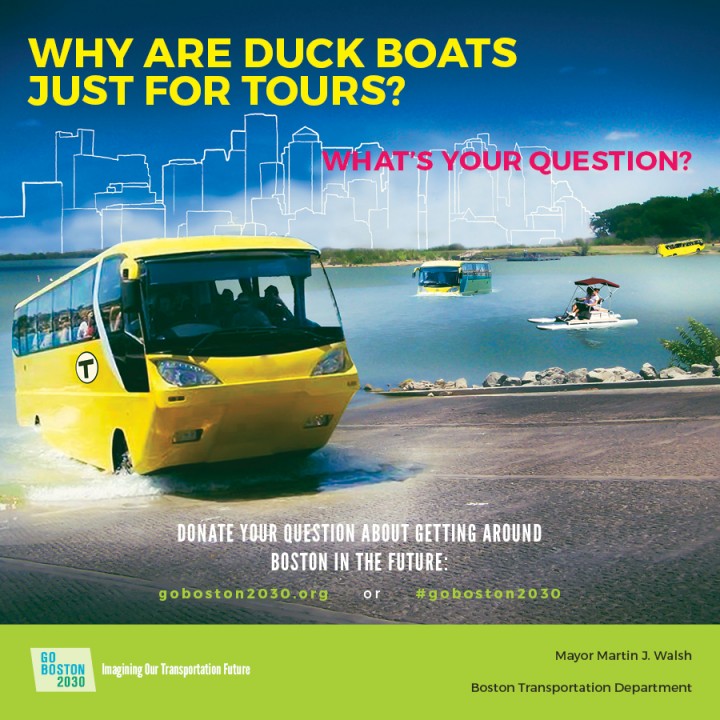
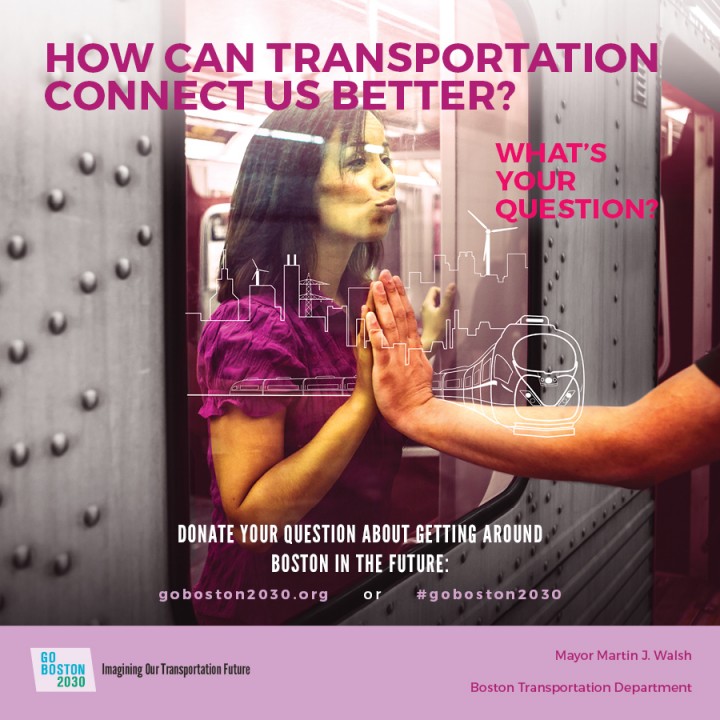
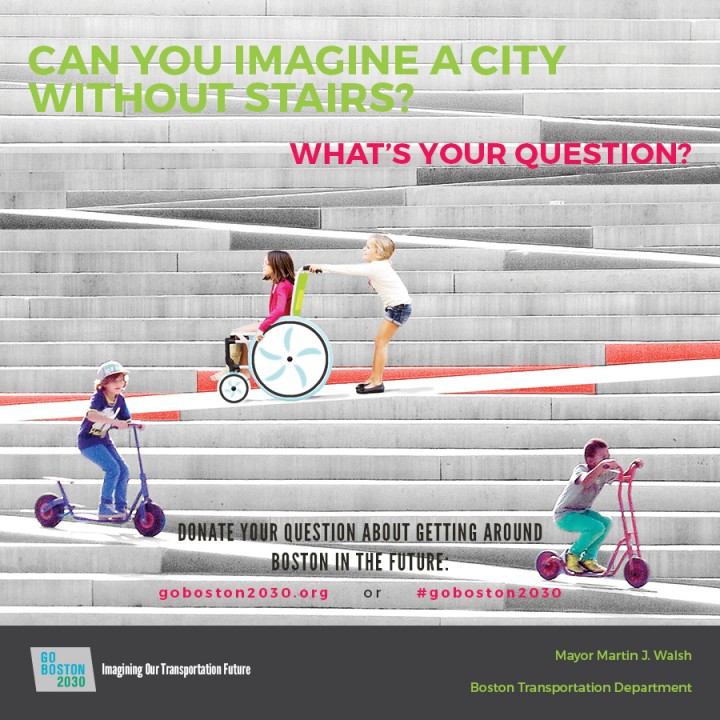
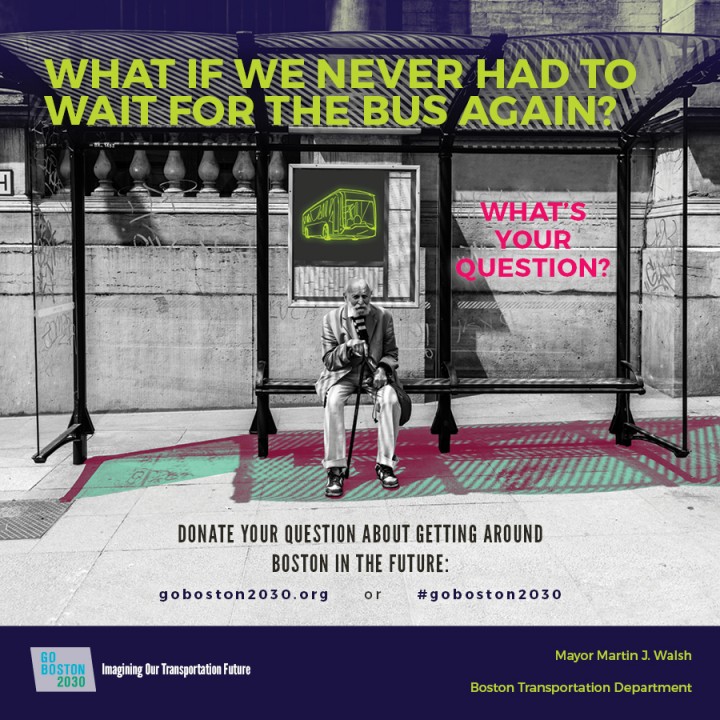
IISC and the city collected over 5,000 questions and touched every neighborhood in Boston. We did this by letting people submit a question in a way that makes sense to them and meeting people where they are.
For example:
People could submit questions via text, email, handwritten cards, Tweet, Instagram, Facebook, and other ways.
We designed an interactive glass truck that went to 15 neighborhoods.
We used digital media to publicize on the city’s social media pages, built a following, and attracted thousands of questions.
We had over 80 partners from city agencies to grassroots organizations committed to bringing their networks into the campaign.
We participated in existing events all over the city.
As the questions came in, they were organized by emerging themes and zip code, and made available for viewing on the website. But how do you move from 5,000 questions to something people can anchor around and build a vision? The Question Review Session was a half-day convening of city officials and community leaders who reviewed all of the questions and worked together to understand and articulate what the public was saying. Participants identified sets of questions that best represented what was most recurrent, provocative, and visionary amongst everything people had said.
Visioning Lab
Next came the Visioning Lab, a place for people to share their vision of our transportation future. It was designed to test the resonance of the themes, questions, and vision ideas that emerged from the Question Campaign and Question Review Session. People were invited to answer some of the key questions and to articulate how they imagine seeing each vision idea come to life.
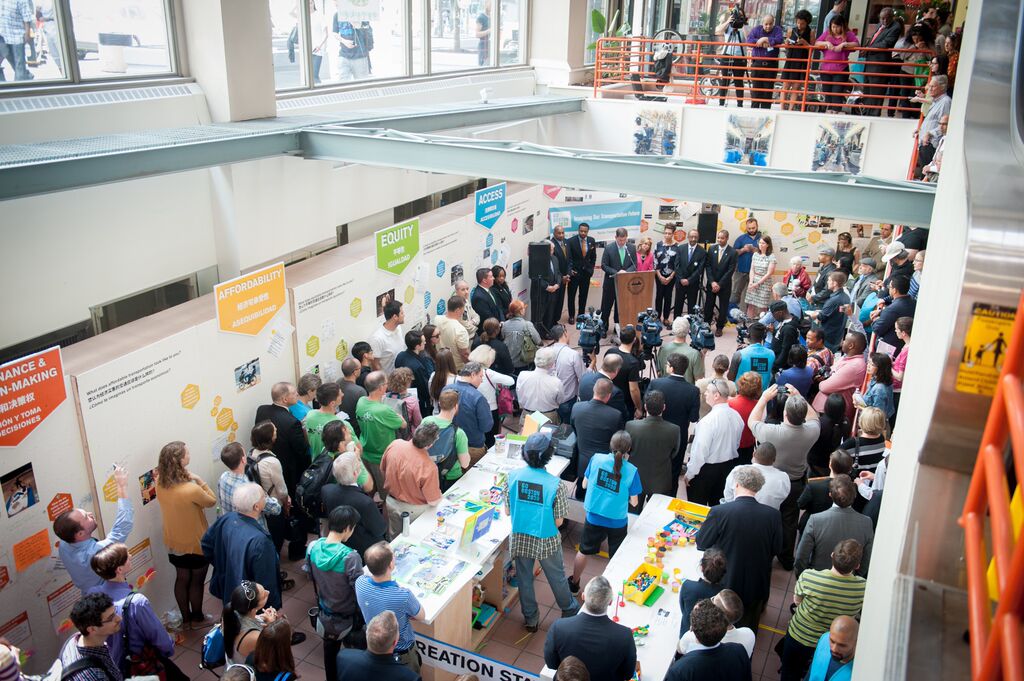
The Go Boston 2030 Visioning Lab took place on May 8 and 9, 2016 at the China Trade Center. Building on the Question Campaign, we asked the public to help us to develop a big vision for the future of mobility. The event was free and open to the public. What people wrote on the walls, designed at the Creation Station, and “liked” with stickers and tokens was used to guide the development of goals and targets for the Vision Report.
Results from this process are published in the draft report, which is available for download at Go Boston 2030.org.
Share Your Trip
“Share Your Trip with BTD” is a part of the Go Boston 2030 initiative that pairs people who work for the Boston Transportation Department with people who live and work in Boston who have volunteered to tell their stories about getting around the City. Combined with project and policy ideas collected this fall at “Ideas on the Street” pop-ups as well as data analysis about future demand, these stories are designed to form the narrative backbone of the Action Plan phase.
Ideas on the Street
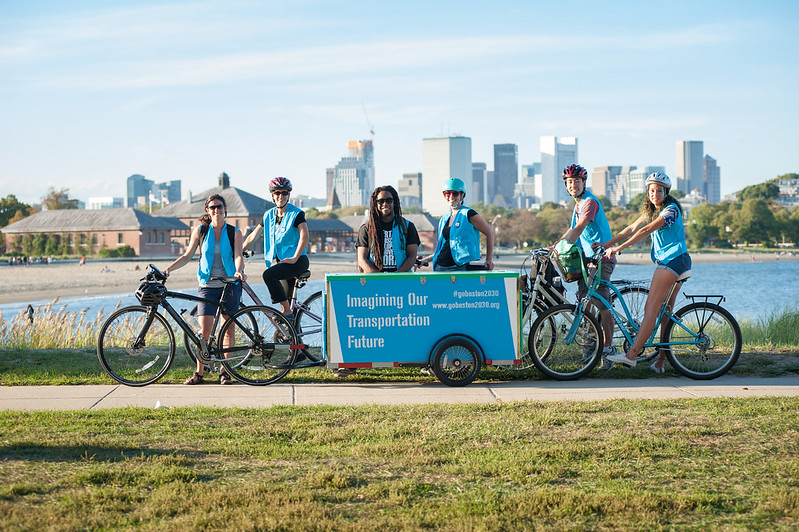
The Ideas on the Street pop-up visited 31 neighborhood locations between September 19 and October 21, 2015. The expandable bike trailer collected project and policy ideas on paper maps and Members of the street team talked with people at events, square, and T stations across the city. An online platform also allowed people to share their project and policy ideas with words and maps using the smart phones or computers. Over 2000 ideas were collected.
Idea Roundtables
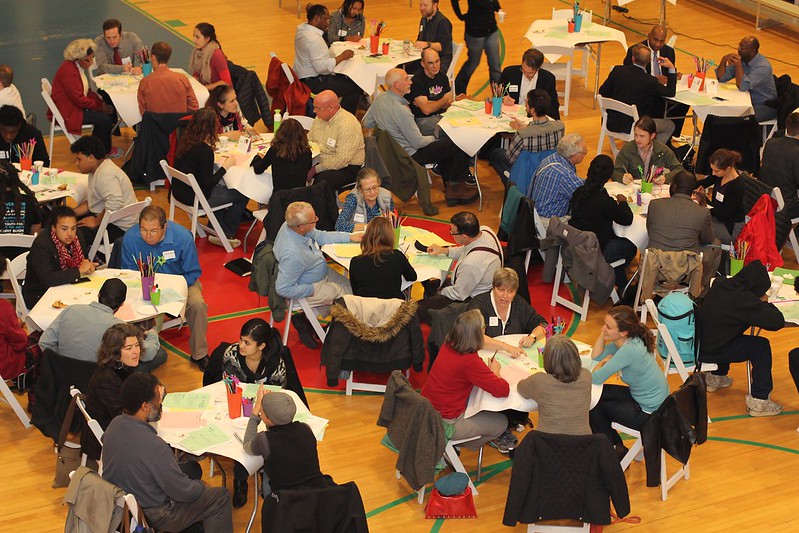
On November 10, November 14, and November 19, Go Boston 2030 hosted three interactive conversations about the future of transportation. Participants sat with people from other neighborhoods and discussed possible ways to address the challenges facing our transportation systems.
Ads will run on public transit and in neighborhoods, in addition to on-the-ground question collection by staff and network partners.
Take a look at some of the groups, initiatives, and blogs that are catching our attention these days!
Center for Whole Communities is a land-based leadership development organization that nurtures multi-disciplinary responses to challenges such as climate change and building economically competitive and equitable communities. at the same time, CWC’s leadership programs directly confront the fragmentation that exists in American society around politics, race, class and privilege.
The nationally recognized Rockwood Leadership Institute specializes in delivering the best practices and methodologies in leadership development to the nonprofit community. Rockwood has a vision of thousands of inspired social change agents trained in partnership, communication, conflict resolution, team building, planning and producing powerful results; and thousands of nonprofit organizations endowed with the skill and heart to bring out the best in their people, collaborate effectively with allies of all kinds and produce lasting change.
The Kirwan Institute partners with people, communities, and institutions worldwide to think about, talk about, and engage issues of race and ethnicity in ways that create and expand opportunity for all. Through interdisciplinary research and other working partnerships, the Institute aims to deepen the understanding of the causes and consequences of racial and ethnic disparities, in order to stimulate change to bring about a society that is fair and just for all people.
Movement Strategy Center. Throughout history, social movements have brought about the most significant changes for racial, economic and gender justice. It has been the actions of people most impacted by injustice that transformed our society’s systems and institutions, as well as our hearts and minds. Today, new ways of building power and creating deep change are unfolding across the country. The Movement Strategy Center works to strengthen these emerging efforts and build the progressive social justice movement by supporting individuals, organizations, alliances and sectors to be more strategic, collaborative and sustainable.
Race Forward: The Center for Racial Justice Innovationadvances racial justice through research, media, and practice. Founded in 1981, Race Forward brings systematic analysis and an innovative approach to complex race issues to help people take effective action toward racial equity. Race Forward was formerly known as the Applied Research Center (ARC).
Colorlines is Race Forward’s daily news site “where race matters.” It is produced by a multiracial team of writers who cover stories from the perspective of community, rather than through the lens of power brokers. Folks at Colorlines.com believe that instead of being defined and divided by racism, we can become uplifted and united by racial justice by confronting explicitly the racism that is so often at the core of our society’s challenges.
We all have people we love who are at risk of losing the support they need to live with dignity. Caring Across Generations is building a movement to defend what we have and create what we need for future generations so we can be a nation that takes care of one another across generations.
Rebuild the Dream. The American Dream Movement is growing stronger by the day, and it’s not going away until Americans can find jobs, afford to go to college, retire with dignity, and secure a future for their children and their communities. Rebuild the Dream is a way to join and support that movement.
Seth Godin has written fourteen books that have been translated into more than thirty languages. Every one has been a bestseller. He writes about the post-industrial revolution, the way ideas spread, marketing, quitting, leadership, and most of all, changing everything. We particularly like his blog.
Our partner organization: Interaction Associates founded IISC in 1993 as an expression of its commitment to social change and as a way of bringing its collaborative methodologies into the social sector. IA literally wrote the books on group process, facilitation, and building collaborative cultures:How to Make Meetings Work by our co-founders David Straus and Michael Doyle; and How to Make Collaboration Work by David Straus. IA’s legacy of innovation continues today in the development of collaborative approaches to coaching, leadership and team development, and change management.
“Our success is built on partnership, sharing success and sharing credit.”
– Sec. Chuck Ross
“The mojo is in the motto.” With these words, Secretary of Agriculture Chuck Ross opened the doors and conversation on the fourth annual Vermont Farm to Plate Network convening last Thursday in Killington. Each of the past four years Secretary Ross has brought some critical words of encouragement and motivation to this fall convening, and by invoking the state motto – “Freedom and Unity” – at this year’s opening he seemed to hit the right chords at a critical moment in the evolution of the network.
In 2011, Farm to Plate launched to great excitement and some anxiety as it positioned itself as a cross-sector collaborative network to carry out a strategic plan to double local food production in Vermont in 10 years time, contributing to job and economic growth as well as food access in a state that sees high rates of poverty. Since then, as both Ellen Kahler of the Vermont Sustainable Jobs Fund (the backbone organization for Farm to Plate) observed and remarked through a plenary retrospective, it has managed to find its collaborative footing and grow significantly in numbers (more than 300 organizations strong). And importantly, it has seen real results in terms of direct, indirect and induced job growth resulting in 9,000 new jobs in the agricultural and food sector in Vermont. Furthermore, success is evident in individual members using network goals to inform and align their organizational goals. Read More
 It is hopefully a sign of things to come. Last night, a multiracial, multigenerational crowd of 3,000 – 5,000 took to the streets of Boston, shutting down parts of the city as part of a protest organized by #BlackLivesMatter Boston (@BLM_Boston). Read More



 “They were so aggressive. They incited violence.”