“Re-examine all that you have been told . . . dismiss that which insults your soul.”
– Walt Whitman
Developmental theory is the source of some good healthy discussion within the Interaction Institute for Social Change. On the one hand, some point out that the notion of “stages of development” has been used to classify and oppress people, especially when theories come from privileged and powerful purveyors, are overly deterministic and linear, and do not account for cultural location and variation. On the other hand, some point to the “empowering” notion of evolution and development that can help liberate people from fixed and mechanistic views of the world and humanity. I had this all very much in mind as I read Reinventing Organizations by Frederic Laloux. Laloux brings developmental and so-called “integral theory,” including the work of Ken Wilber, into the palpable realm of organizational practice and through his research, posits an evolutionary trajectory from aggressive (Red) to bureaucratic (Amber) to achievement-oriented (Orange) to culture/empowerment-oriented (Green) to self-actualizing/authentic (Teal) organizations.
Last year, in the aftermath of the Boston Marathon Bombing, I was facilitating a group of students and faculty at MIT reflecting on the impact and meaning of the bombing. The participants ranged from people who had been at the marathon site to those who witnessed it on TV. All experienced the lock down that occurred in Cambridge and felt the impact of the death of eight-year-old Martin William Richard, and many of them shared something deeper, the trauma of being an unwilling victim and sometimes perpetrator of planned, unexpected, unwarranted or thoughtless violence. From a former Israeli solider, who asked “do I kill these 4 men in my line of sight because of the threat they may pose?” to a woman who survived a brutal rape, the bombing made visible the deep trauma so many people live with from day to day.
But something remarkable happened that evening. As we sat in circle listening to each story a young veteran spoke up about his experience with violence in the streets of LA and the deserts of Iraq. He spoke with a deep passion that disrupted the quiet reflection of the group. “We can’t just sit around and talk about this. If things are going to change we have to shift something fundamental in ourselves in order to stop the massive violence in our world.” He continued, “For me it is the following commitment I have made to myself and that I tell each person I am engaged with I Will Not Harm Your Children.” Then he stopped.
His words rang true to all of us sitting in the room that night. From that meeting a commitment statement was drafted, that if we were each brave enough to accept and live by, would change the world.
I will not harm your children.I commit to live by this statement.I will do this by asking the following question before I act in the world: Will my action, policy, investment, statement harm children?If that is a possibility, I will find a way to change what I am about to do so that I do not harm a child.
Perhaps it is too simple. Yet I believe the simplicity is what makes it so powerful. Those who want to build a more just world are often hampered by competing visions of what framing should lead. Is it race, economic solidarity, workers rights, women’s rights? Each of these are important to know and understand. But none of them alone provide a guidepost that can help us act collectively across these differences. If we would allow ourselves to honestly commit to saying to those who we are about to engage with “I will not harm your children,” and commit to examining our actions for any possible harm that might occur, we could make a difference.
But for it to work we have to be honest about the multitude of ways in which we can harm children. Some harms are self-evident, like the over 100 children killed and scores injured or left without parents as a result of the bombing of Gaza, or the kidnapping of 200 young girls by Boko Haram, or the 11 year-old killed in a drive by shooting in Chicago, and the mass murder of 20 children in Newtown, CT and the 15 children killed in the Oklahoma bombing.
Each of us probably has our own list of the self-evident harms done to children. But some harms are not as self-evident, though just as wrong. Everyday 25,000 girls are forced to marry, 250 million of the worlds primary school children are not able to read, 16 million children in US live below the poverty line, and before the age of 18 the typical US child will be shown over 16,000 murders on television.
There are many ways we harm children in this world. We can best change that by what each of us chooses to do. So today as you go about your life, ask yourself: Will my action, policy, investment, statement, harm children? If that is a possibility, agree to find a way you can change what you are about to do so that you do not harm a child.
I just facilitated the 6th Creative Change Retreat at the Sundance Institute in Utah. The amazing experience leaves me grateful to my friends at the Opportunity Agenda for trusting me with the design and facilitation of such a significant convening.
Today more than ever I am convinced that the change we want to see in the world is a change that demands the evolution of consciousness and culture. As the artist and the activist come together – as they become one – we will be able to join into a different kind of intervention.
The following article appeared in an email newsletter from the Vermont Farm to Plate Network (VTF2P) one of IISC’s clients in network and collaborative capacity building. The author is Beth Cullen, co-chair of the Farm to Plate Consumer Education & Marketing Working Group and owner of Root Consulting, who attended the New England Food Summit that Cynthia Parker and I helped to design and facilitate. It is great to see the power of that two day convening and conversation continuing to ripple out into the region. VTF2P plans on integrating the conversation about equity into their upcoming October convening . . .
New England Food Summit targets social justice to drive change in the food system
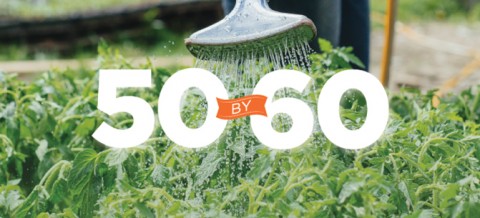
The 4th Annual New England Food Summit, organized by Food Solutions New England, convened over 110 delegates in June to discuss racial equity and food justice in the region. Summit organizers unveiled the New England Food Vision, a regional aspiration to locally produce at least of 50 percent of the fresh, fair, just, and accessible food consumed by New Englanders by 2060.
There is growing awareness that current organizational structures can breed irresponsibility. That is, arrangements are created where people are less able to be responsive in helpful ways. This happens, for example, when accountability is bottlenecked in hierarchies and decision-making is distanced from where the action is most timely and relevant. Read More
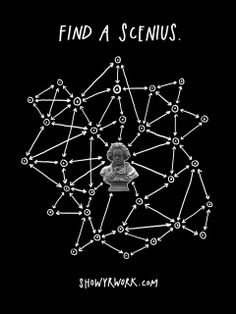
I recently read an opinion piece that seems to validate the work we have been doing for the last number of years. In “The end of genius” Joshua Wolf Shenk successfully argues that “the lone genius is a myth that has outlived its usefulness. Fortunately, a more truthful model is emerging: the creative network.”
THIS! My friends, is what we have been working on.
We partnered with a foundation as they built a network of leaders who shared a deep passion for their city. In the beginning, many of the leaders wanted to do something together quickly. We encouraged them to pause, build deeper relationships, and see what emerged. Read More
The following article appeared last month in the Northeast Sustainable Agriculture Working Group (NESAWG) newsletter. NESAWG is a 12-state network of over 500 participating organizations. Together, they unite farm and food system practitioners and allies to build a sustainable, just and economically vibrant region. From one network to another, the article profiles Food Solutions New England (FSNE), a network building effort now going into its third year of intentional development. It captures where FSNE was just prior to the New England Food Summit, which advanced connectivity and commitment to both regional action/identity and work for racial equity. NOTE: I have added links, bolded text, and pictures to the body of the article.
I have never observed the Fast of the 17th of Tamuz. Yesterday, I did. I fasted in solidarity with others who were making a stand with our bodies for peace and in mourning lives lost in Palestine/Israel. At a time of horrific violence and avowed enmity between so many Muslims and Jews, it was a comfort to be fasting together, during Ramadan.
The fasting helped me to reflect on the fear and brutality that lead a nation to choose bombing as a means of protection. I have been deeply saddened not only by the murder of four teenagers but the ensuing violence that has left many in fear and over 190 Palestinians and 1 Israeli dead. The disparity in numbers is not to be overlooked, it speaks to power and institutional might. The violence inflicts a wound on all our souls.
We have too many wounds, both our peoples. I am moved by the coverage that has people recognizing our shared humanity: children saying they don’t want children “on the other side” to be in fear either, Israelis visiting the family of Mohammed Abu Khdeir, members of an interfaith alliance in Jerusalem breaking their fasts together last night. It is love – seeing the legitimacy of the other — against the odds. It is love that liberates, that sheds the centuries (for Jews) of scars and fear and chooses instead to be whole.
Let us rejoice that, despite all, we have many acts of love and generosity and bravery, the kind of bravery that is about taking risks and standing together rather than relying on weapons and destruction. May Israel use her power for right, end the racism, and value the lives of Palestinians. May righteous leaders, on all sides of the Israel/Palestine conflict, emerge who can hone the path of peace and love.
“The ideas of self-organization are very important to understand the autonomy, the authenticity and basic humanity of people.”
-Fritjof Capra
One principle of “thinking like a network” that I like to highlight is the notion of moving from permission and perfection (looking for the one right answer) to self-organization and emergence. Self-organization is a defining characteristic of living systems and connected to their adaptive capacity and development. I like this short video as an introduction to self-organization and how it highlights the importance of diversity, connectivity and “local interactions.” NOTE: It starts to get into “network effects” and social organizations around 2:30. The significance of understanding self-organization is essentially that we develop a better understanding of how life, including social systems, actually works and are able to work better with systemic potential, rather than trying to command and control what is much too complex.
“I think self-organization and the newer understanding of life and complexity, when it is applied to the social realm and human organizations, can help people to find their authenticity as human beings.”
Thanks to Deborah McLaren for putting this slide show together that references the good work of June Holley, Chris Brogan, and Beth Kanter. I find that there are many people out there who naturally get the concept of “network weaving” and many others still who are still learning to understand its value, and to see it as a function of leadership in a networked world.
At IISC, we like to talk about “Facilitative Leadership” as a practice of “creating and inspiring conditions” that deliver on the promise of collaboration (innovation, rapid diffusion, equity, resilience, adaptation, etc.). In this vein, I particularly like what Chris Brogan suggests as the following leadership practice related to network weaving:
Spend 20 minutes every day thinking about your network
Spend 10 minutes every day cultivating your network
Deliver 2 or 3 times as much value as you ask from your network
“In spite of current ads and slogans, the world doesn’t change one person at a time. It changes as networks of relationships form among people who discover they share a common cause and vision of what’s possible.”
For the past two years, I’ve had the fortune of partnering with Carole Martin to create and deliver a network leadership development program for regional and economic development in “the north country” (northern NH, southern Quebec, eastern VT). This opportunity was made possible by funding from the Neil and Louise Tillotson Foundation and took the form of something we called the Community Practitioners Network (CPN). Subsequently, some of the members of the first cohort have taken to calling it the “Community Placemakers Network” (more on that another time).
One of the first steps Carole and I took in creating the program was to begin with a set of principles, which, in good network fashion, evolved over time. These principles guided our design and facilitation of the program as it emerged, and we offered them to and co-evolved them with the cohort as they considered how to bring them to their own leadership in their organizations, communities, and beyond. Here is a condensed version of the lastest iteration of the principles:
Look for what is beyond the immediate sight lines and intersections – Part of the power of networks is emergence; expect and delight in the unexpected that comes from the meeting of different minds and perspectives.
Design for serendipity – Don’t try to control and account for all outcomes. First of all, it’s impossible. Secondly, as Andrew Goldsworthy once said, “Too much control can kill a work.”
Periphery, not (just) center – Network action is not simply about what is happening “in the room” but what transpires “after the meeting,” not what goes on at a “steering group” level, but what happens in two-sies and three-sies that form/partner/innovate “out there.”
Contribution before credential – Contributions are what count, and can come from anyone.
Feed the network through questions so that it has a life of its own – Using inquiry can help to unlock network potential in the pursuit of unique and context-specific answers.
Always eager to hear others and how you have put them to use . . .




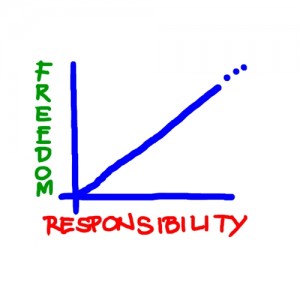 There is growing awareness that current organizational structures can breed irresponsibility. That is, arrangements are created where people are less able to be responsive in helpful ways. This happens, for example, when accountability is bottlenecked in hierarchies and decision-making is distanced from where the action is most timely and relevant.