The discipline of mourning takes on new depths today. I mourn for the lives lost in the past week at the hands of police. I mourn for the lives lost in Dallas overnight. I fear for the lives of peaceful protesters who will be painted with the same brush as the Dallas snipers. I wonder how we will recover from this latest development and how we will keep it from spawning an escalating cycle of violence. Praying for wisdom, peace, justice, healing.
Tonight there will be a full moon, that time every month when the sun, moon and earth are in complete alignment. It is also the summer solstice when the sun (from the perspective of the earth) is at its highest point in the earth’s northern hemisphere marking the longest number of daylight hours in the year and the official beginning of summer.
According to many this will be the first time that these two astronomical events have coincided since June of 1967, during what was in the United States, the Summer of Love for many, and a summer of continued oppression for African Americans continuing the long struggle for Civil Rights, Justice, and Equality. Yesterday many of us celebrated Juneteenth, when we commemorate the day when the last enslaved Africans in the US finally received news of their freedom.
Earlier this year I had the opportunity to sit in on a session in Detroit with Adrienne Maree Brown, writer, editor, facilitator and consultant to social movement organizations. Adrienne’s offering was on the potential of “radical science fiction” to realize empowering visions of a just and sustainable future. After sharing some of her own writing, she encouraged participants to play with a sense of imagination grounded in realistic projections of current social and environmental conditions and trends.
For example, while acknowledging the reality of ecosystem-depleting capitalism, mass incarceration and climate change, we were invited to think about reality-based characters with “special powers” who might help yield more desirable means and ends. The intent was, as Adrienne explains, “to create innovative ways of understanding the world around us, paint visions of new worlds that could be, and teach us new ways of interacting with one another.” It is this impulse that led her and co-editor Walidah Imarisha to organize Octavia’s Brood (in honor of science fiction writer Octavia E. Butler), “the first book to explore deeply the connections between … ‘visionary fiction,” and movements for social change through the vehicle of short stories.” The collection features a number of short stories by artists and activists.
Since that session, I’ve continued thinking about the practice of creatively reimagining futures that hover between dystopian (depressing, undesirable) and utopian (impossible, also undesirable) views. Then last week an article appeared in Nautilus entitled “An Astro-Biologist Asks a Sci-Fi Novelist How to Survive the Anthropocene,” in which astrobiologist David Grinspoon interviews Kim Stanley Robinson, science fiction and political novelist. Robinson’s recent book, 2312, “permits humans to survive near-extinction and populate the solar system over the course of 300 years.” In their discussion, Grinspoon asks Robinson what he sees as being keys to humanity getting through mounting social and environmental challenges. His answer struck me as sensible and breaks down more or less into the following:
Work continuously for universal justice and education
Grinspoon and Robinson also talk briefly about the Fermi Paradox, which points to the contradiction between the high probability of intelligent life existing beyond our planet and the fact that we have yet to see any confirmed evidence. One explanation offered for the paradox is that intelligent civilizations tend to destroy themselves, done in by the technologies and practices that contribute (at least for some time) to their so-called “advancement.” This suggestion should have us taking a hard look in the mirror and the facts, then, perhaps dusting off our visionary imaginations to push beyond the strictures of current thinking that seem to have us on a precarious path.
Embrace diversity Unite– or be divided, robbed, ruled, killed By those who see you as prey. Embrace diversity Or be destroyed.
From Octavia Butler’s “Earthseed: The Books of the Living,”Parable of the Sower.
“Out on the edge you see all the kinds of things you can’t see from the center.”
~Kurt Vonnegut
Last week while having a discussion with a group about food system economics, I was reminded that the word “externalities” does not always refer to something bad. An externality can also be something beneficial that is not formally accounted for by “the market.” This had me reflecting on what can happen in networks, really any collaborative endeavor, where some of the real “goods” remain out of sight, on the edges of peripheral vision, at least with respect to where people typically tend to concentrate focus. Read More
Image by Judy Gallagher, used under provision of the Creative Commons Attribution License 2.0.
The following is a slightly modified post from a little over a year ago. In recent months, the notion of puttingcare at the center of “net work” – to ground it, make it real and people accountable – has surfaced a number of times and strengthened. The original post included the phrase “the empathic turn.” Since that time I’ve come to see “caring” as a more appropriate word, rather than “empathy,” as it evokes for me not simply feeling but action. This re-post is inspired by the activists and thought leaders who are about to gather in Oakland, CA for the “Othering and Belonging” Conference, hosted by the Haas Institute for a Fair and Inclusive Society.
In an essay that I continue to revisit, the poet/essayist/novelist/farmer/ conservationist and champion of sanity, Wendell Berry, talks about what he calls “the turn towards affection.” Having spent many years reflecting on and pushing back against the unfortunate demonstrated human capacity to despoil landscapes and demonize “the other,” he takes a strong stand for both deep rooted connection and . . . imagination:
“For humans to have a responsible relationship to the world, they must imagine their places in it. To have a place, to live and belong in a place, to live from a place without destroying it, we must imagine it. By imagination we see it illuminated by its own unique character and by our love for it.”
In other words, by his assessment, imagination thrives on contact, on an intimate form of knowing that is not simply intellectual, but intimate and holistic. For Berry it is only this kind of knowing that can lead to truly “responsible” action.
Others, past and present, hold the truth and power of this kind of fuller bodied knowing to be self-evident, in environmental conservation and social justice efforts and in what it means to be a responsible human. Professor john a. powell writes in his book Racing to Justice:
“There is a need for an alternative vision, a beloved community where being connected to the other is seen as the foundation of a healthy self, not its destruction, and where the racial other is seen not as the infinite other, but rather as the other that is always and already a part of us.”
The following article appeared in an email newsletter from the Vermont Farm to Plate Network (VTF2P) one of IISC’s clients in network and collaborative capacity building. The author is Beth Cullen, co-chair of the Farm to Plate Consumer Education & Marketing Working Group and owner of Root Consulting, who attended the New England Food Summit that Cynthia Parker and I helped to design and facilitate. It is great to see the power of that two day convening and conversation continuing to ripple out into the region. VTF2P plans on integrating the conversation about equity into their upcoming October convening . . .
New England Food Summit targets social justice to drive change in the food system
The 4th Annual New England Food Summit, organized by Food Solutions New England, convened over 110 delegates in June to discuss racial equity and food justice in the region. Summit organizers unveiled the New England Food Vision, a regional aspiration to locally produce at least of 50 percent of the fresh, fair, just, and accessible food consumed by New Englanders by 2060.
“A beautiful question is an ambitious yet actionable question that can begin to shift the way we perceive or think about something – and that might serve as a catalyst to bring about change.”
– Warren Berger
One of my favorite reads of the past six months is Warren Berger’s A More Beautiful Question: The Power of Inquiry to Spark Breakthrough Ideas. It strikes me as being an important read for any social change agent. Early on, Berger begins with the following provocative statement, that rings true to personal experience:
“Well meaning people are often trying to solve a problem by answering the wrong question.”
In some cases this is because they have not paused long enough, if at all, to consider the underlying question their efforts are trying to solve. Or, as my colleague Cynthia Parker has said, they are “solving for solution,” essentially promoting and/or fighting over their own preferred approaches. And so they continue to offer the same old, ineffective and outdated, approaches or products. This is especially problematic in a time of such change and flux, when we can’t fall back reliably on what we already know. Read More
The settlement of the case of the Central Park 5 is a great day for the five individuals, add a great day for the cause of racial justice. The case of Antron McCray, Raymond Santana Jr., Kevin Richardson, Yusef Salaam and Kharey Wise is a textbook case of structural racism: implicit bias, coupled with strong-arm institutional police practices used against young men of color, and a media too eager to believe the hype, leading to the conviction of five innocent young black men for a horrendous crime. The documentary about these young men, by Ken Burns, captures the intense impact of the wrongful accusation and imprisonment on the lives of the five young men and their families.
I confess that I wept as the film told of confessions wrested from frightened, exhausted 14 year olds who were ready to say whatever would make it possible to go home to their families. I wept as I saw the assumptions drive what looked to me like extremely sloppy police work—although the actual assailant (who would confess after meeting one of the five in prison some 13 years later) was already known for other sexual assaults in the neighborhood, no one bothered to consider his possible guilt. I wept as I saw the wasted years, the broken families, and the pain that these men continue to suffer even after their release. The older my sons get (now 17, 20 and 25), the more and more young men of color around me cause me to think “That could be my son.” I feel it in my chest. I have cause to grieve almost every night, just watching the news. That kind of visceral empathy is, I think, a manifestation of the love that does justice—a love that says “I can’t bear to see anyone go through this or be treated like that.”
Today is a vindication, though it cannot undo the impact on these young lives and their families and friends. Let it serve as inspiration to redouble our efforts to undo racism in all of its manifestations.
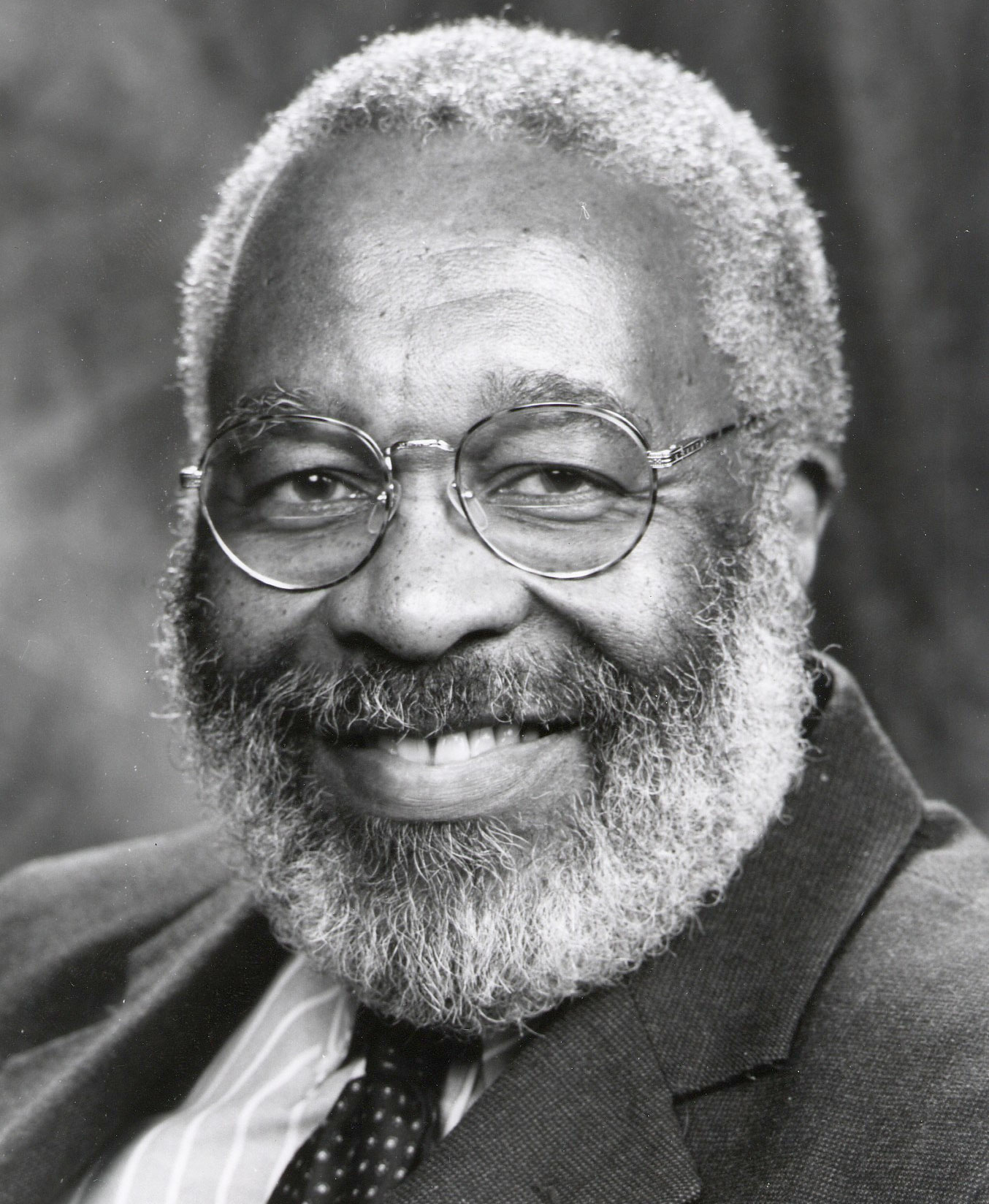
Vincent Hardingdied on Monday and our world is emptier for it. Vincent is an unsung hero of the Civil Rights era, whose work as a speechwriter for Dr. Martin Luther King, Jr. was essential if not widely known. His best-known speech was Dr. King’s speech Beyond Vietnam, where Dr. King boldly extended his critique to U.S. foreign policy, connecting the struggle for civil rights in the U.S. with struggles for justice in other parts of the world. You can hear Vincent explain the significance of the speech in an interview with Democracy Now! You can hear or read some of his thoughts on spirituality and justice in an On Being podcast called Dangerous Spirituality. Read More
“Our minds automatically justify our decisions, blinding us to the true source, or beliefs, behind our decisions. Ultimately, we believe our decisions are consistent with our conscious beliefs, when in fact, our unconscious is running the show.”Howard Ross, Kirwin Institute, 2008
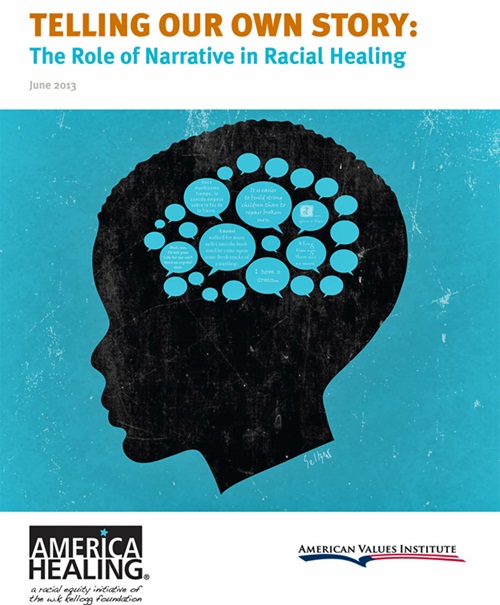
Last week, Curtis Ogden wrote about the power of narrative to build engagement and shape the action in networks. We’ve also been taking a deep dive into the role of narrative in racial healing. That is, focusing on the need to expose and transform the deeply embedded narratives about race that allow racism to persist through unconscious bias, individual behaviors and micro-aggressions, institutional practices, and structural arrangements in this society. The report “Telling our Own Story” describes the ways in which narratives about race have shaped the U.S. culture and values, and laid the foundation for social structures based on false stories about the value of people based on a racial hierarchy. Here are a few opening ideas. We hope you will read the full report.Read More

 Tonight there will be a full moon, that time every month when the sun, moon and earth are in complete alignment. It is also the summer solstice when the sun (from the perspective of the earth) is at its highest point in the earth’s northern hemisphere marking the longest number of daylight hours in the year and the official beginning of summer.