Tag Archive: relationships
December 23, 2013

The following blog post was written by our friend Julie Quiroz at The Movement Strategy Center. We hope you enjoy it at as much as we did!
Remember this spring, when the Associated Press finally dropped the I-word, and youth of color defeated prison-to-pipeline policies in Los Angeles public schools?
Or remember back in February when 50,000 people rallied in DC against the XL Pipeline? And then in October when the protests of 5,000 young people linked the pipeline, fracking, and the whole mess of fossil fuel development?
Read More
December 18, 2013

Adam Grant is a professor at the Wharton School of Business whose research focuses on “motivation, prosocial giving and helping behaviors, initiative and proactivity.” His work and writing, including his book Give and Take: A Revolutionary Approach to Success, seem to have something to offer those interested in and engaged in developing networks for social change, as much of it points to data showing that organizations of all kinds benefit from fostering cultures of giving. Read More
December 10, 2013

“A Temporary Autonomous Zone is a liberated area of land, time or imagination where one can be for something, not just against, and where new ways of being human together can be explored and experimented with. Locating itself in the cracks and fault lines in the global grid of control and alienation, a T.A.Z. is an eruption of free culture where life is experienced at maximum intensity. It should feel like an exceptional party where for a brief moment our desires are made manifest and we all become the creators of the art of everyday life.”
via beautifultrouble.org
Read More
December 4, 2013
“Ultimately if we are to avoid failure in the most critical work of this century, the deepest reaches of our beings must be brought to bear in honestly reevaluating and shifting the most basic structures of our society.”
– john a. powell
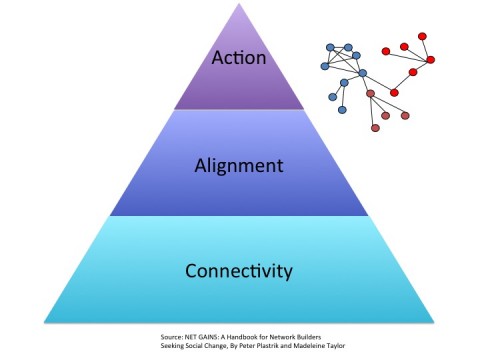
The following is a textual recapturing of a Pecha Kucha-like presentation that I gave at an ARNOVA Pre-Conference Session in Hartford, CT two weeks ago. This was part of a 3-hour interactive conversation, co-designed and facilitated with Dr. Angela Frusciante of the William Caspar Graustein Memorial Fund, focusing on the power of networks for learning and social change, primarily with academic researchers and philanthropists.
At the Interaction Institute for Social Change, we are in agreement with Professor john a. powell when he points to the need to consider and make fundamental structural changes in our country and communities for the causes of greater social justice and sustainability. Read More
November 22, 2013

The following is a letter by Akaya Windwood, President of the Rockwood Leadership Institute and member of the IISC Board of Directors. We hope you enjoy it as much as we did and don’t forget to join the conversation!
Recently, four friends of mine lost parents and siblings. Rockwood has had a few unanticipated challenges this year. The ripples of the 2008 recession are still affecting the nonprofit sector, and many organizations are struggling. The instability of our national government in recent months has made things very difficult for many folks.
Read More
November 22, 2013
The following is a letter by Akaya Windwood, President of the Rockwood Leadership Institute and member of the IISC Board of Directors. We hope you enjoy it as much as we did and don’t forget to join the conversation!
Recently, four friends of mine lost parents and siblings. Rockwood has had a few unanticipated challenges this year. The ripples of the 2008 recession are still affecting the nonprofit sector, and many organizations are struggling. The instability of our national government in recent months has made things very difficult for many folks.
Read More
October 28, 2013
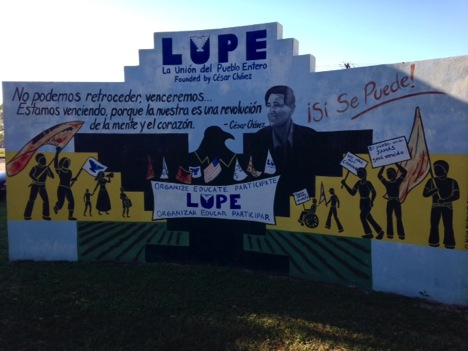
“We can’t retreat, we will win… We are winning because our revolution is one of the mind and the heart.” César E. Chávez
During a visit to LUPE, the community union founded by César E. Chávez and the United Farm Workers, Annie E. Casey Foundation’s Partner Organizations of Color explored the connections between child welfare, juvenile justice, community organizing and immigration. One participant spoke a word of caution to capacity builders and organizers who seek to engage and mobilize community residents. “We can’t be another broken promise to the people.”
Read More
October 8, 2013

“Love” is now a category on the IISC Blog. How appropriate! Love is one of the three lenses that give shape to our work. And love is at the very heart of this project of social transformation. Love is path and goal. Love is how we get there and it is where we want to go.
Read More
September 24, 2013

I always describe IISC as a “Collaboration Shop.” The founder of Interaction Associates, David Strauss, authored the seminal book “How to Make Collaboration Work.” I’m all for people working together to achieve a common goal. I make a living helping them do that.
Read More
September 23, 2013

Several persistent questions keep us learning and experimenting.
How do we avoid re-traumatizing people of color in this work? Often, people of color in racially mixed learning spaces bear the burden of teaching through telling their own stories. While sometimes liberating, this can also re-open wounds and create resentment at having to prove one’s reality to people who may be reluctant to accept what they have not experienced. And, over time, it can be disheartening to keep extending grace to different people in different spaces for the same mistakes. Racially homogeneous caucuses are one useful antidote. How else can we avoid these dynamics, particularly working in mixed-race settings?
Read More
September 15, 2013

The following post is part 2 of a 2 part series on some collaborative tools and strategies to help us change our selves, change our organizations and change the world. We hope you find it helpful. We encourage you to join the conversation!
We are compelled by a quote from Theory U, attributed to William O’Brien “The success of an intervention depends on the interior condition of the intervener.” Collaborative tools and strategies are only truly useful in the hands of practitioners whose hearts are big enough to hold the complexities, struggles, hopes and fears that accompany the work of transforming racism. Read More
September 10, 2013

I’m proud to call Billy Parish a friend; he is an incredibly sweet person. I am a fan of his commitment and imagination. I’ve been hearing about his company, Mosaic, since it was but an idea. I was blown away to see it featured in today’s New York Times – A Bet on the Environment. Read More