October 7, 2016
 In light of a recent conversation with Jana Carp, an academic who has studied the underlying principles of the “slow movement” and how they connect to sustainability, place-making and livabily, I am revisiting, revising and reposting the piece below. Jana and I were connected by a mutual colleague with the Fire Adapted Communities Learning Network, given our mutual interests in public engagement, community-building and sustainability (inclusive of justice), and had an interesting conversation about slowness and networks.
At one point, the question came up as to whether networks might cut against slowness, especially when the emphasis is on rapid growth, diffusion, and trans-local connections. My thought at the time was that this certainly could be the case, and that is why it is important to think about both the breadth and depth dimensions of networks, as well linking different scaled networks (local, regional, global). The importance of networks for social change can certainly reside in their reach and rapid scaling. Their potential also resides in the nature and quality of connection, how deep the ties that bind are and what they help to create and circulate. And this brought me back to these reflections on how to think about “social velocity” in networks and collaborative work …
My friend Joel Glanzberg is a constant source of provocation and insight. The way he sees the world, through a living systems and pattern-seeking lens, is not only refreshing but unnerving in that it is evident how simultaneously critical and rare his perspective is. Joel is great at helping me and others to see beyond objects and structures to underlying patterns and processes, and how these are what animate living systems. Read More
September 13, 2016
Think like a network, act like a node.
At IISC, we continue to emphasize that networks, not organizations, are the unit of social change. Part of the reason for this is that networks at their best are able to leverage what are known as “network effects.” These effects, as described by Madeleine Taylor and Peter Plastrik, include the following:
Rapid Growth and Diffusion
Through its myriad nodes and links, as well as the ongoing addition of participants and new pathways, a dense and intricate network can expand quickly and broadly. This can be critical for spreading information and other resources and mobilizing actors in ways that organizations simply cannot achieve.
Small World Reach
As a network adds connections, between and beyond organizations, and those connections in turn add their own connections, the overall reach of the network can easily shrink geographic and other forms of distance and separation. The subsequent ability of participants to discover and work with one another across expanses and barriers means that new partnerships and ideological convergences can happen, leading to greater efficiency, shared intelligence, and innovation.
Resilience
Provided a network (including a community or social movement) is not overly centralized and dependent upon a limited number of larger hubs (holding most of the connections to other nodes), it can stand up to certain pressures, including the loss of some of its nodes and links as it reorganizes around disruptions or bottlenecks. Furthermore, redundancy of and overlapping functions and knowledge enhance a network’s ability to absorb shocks without collapsing.
Adaptive Capacity
To the extent that it is intricately connected, diversely composed, with free flowing information, not to mention nimble/able to self-organize, a network can respond quickly to environmental shifts, assembling a variety of capacities/responses and disassembling them as needed.
Systemic Change
Though implied above, it is important to note that in a network it is not just the number and pattern of links that matter, but the quality and depth of the connections and what these can facilitate in terms of what flows through the various channels. Furthermore, it matters who is connected to whom, and what resources flow between these actors. As patterns of connection shift and strengthen and flows of resources are enhanced in different ways to different parts of a network, this can add up to systemic change.
“Systems change when new networks supplant the old.”
-June Holley
Behaviors to Leverage Network Effects
All this said, what can network participants do alone and/or together to maximize network effects? Here is a list of 20 helpful behaviors/practices (with recognition of the thought leadership of the likes of June Holley, Harold Jarche, john powell, Sally Goerner, Gibran Rivera, Beth Tener, Cynthia Parker, Robin Chase and others) to which I heartily invite additions:
- Weave connections and close triangles – create intricacy in the network
- Create connections across boundaries/dimensions of difference – invite and create diversity in the network
- Promote and pay attention to equity throughout the network (racial equity impact assessments are an example of a helpful tool on this front)
- Be aware of how implicit bias impacts your thinking and actions in the network; practice de-biasing strategies
- Think, learn and work out loud
- Keep information and other resources flowing/don’t hoard
- Articulate your own needs and share them with others
- Think about others’ needs and how you might help to meet them
- Make ongoing generous offers to others – services, information, connections
- Help connect needs and offers throughout the network
- Stay curious and ask questions; inquire of others to draw out common values, explicit and tacit knowledge, other assets
- Listen, listen, listen – for values, needs, assets, patterns/themes
- Identify and share underutilized assets/excess capacity
- Promote others’ and their work
- Express authentic appreciation of others
- Share credit
- Create and use platforms (in-person convening and virtual sites) that allow people to find one another, create new connections, match interests and needs/offers and needs, and share information freely
- Curate information/data to make it more accessible, attractive and digestible
- Support and practice self-organization
- Celebrate small and large successes/key developments all along the way
August 30, 2016
“A good solution solves more than one problem, and it does not make new problems.”
– Wendell Berry

An essay that I return to now and then, including over these past summer months, is Wendell Berry‘s “Solving for Pattern.” Published in 1981, the piece essentially considers systemic approaches to more “sustainable “agriculture, though the concept alluded to in the title has wider application. The phrase “solving for pattern” is an invitation to take a larger and longer view of “problem-solving,” to think about interventions that serve a bigger picture in more sustained and multiply beneficial ways.
Solving for pattern, according to Berry, runs counter to reductionist and mechanical solutions, which lend themselves to more predictable and relatively contained situations. When reductionist solutions are applied to more complex and systemic situations, they are more prone to failure and to exacerbating negative aspects. Real-life examples include:
Read More
August 23, 2016
“Processes aimed at racial equity change can overlook the privileged side of inequity.”
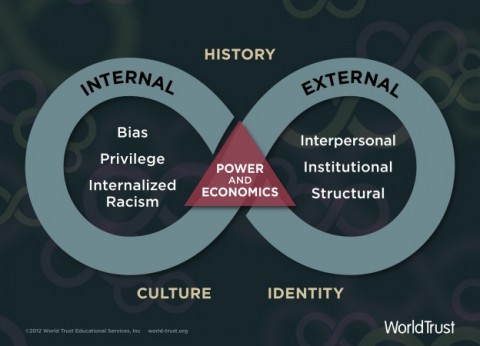
In numerous social change networks that we support at IISC, racial equity has been put at the center of the work, whether or not that was the initial impetus for coming together. This is not seen as ancillary to the change effort, but now understood as foundational, in that systemic inequity around race is part and parcel of the water in which we swim. In a few of these networks where there is a majority of white participants, increasing numbers of people are asking what they can do about structural racism, and one response is that there is important work to be done around whiteness and white privilege. As Gita Gulati-Partee and Maggie Potapchuk point out, this is often a critical missing link in racial equity work. Read More
August 17, 2016
 Networks, or webs, are core to living systems. Thinking and looking through a network lens can help people to understand the patterns and quality of connection that either make life possible and enable liveliness or threaten life and livelihood.
Chilean biologists Humberto Maturana and Francisco Varela, in their work on “cognition” in living systems, propose that there is no knowing outside of connecting or relating.
“The world as we know it emerges out of the way we relate to each other and the wider natural process.”
In other words, according to Maturana and Varela, it is through connecting and relating that “a world is brought forward.” The quality and qualities of that world depend, in large part, upon how people and other elements of living systems connect and relate to one another. Read More
August 9, 2016
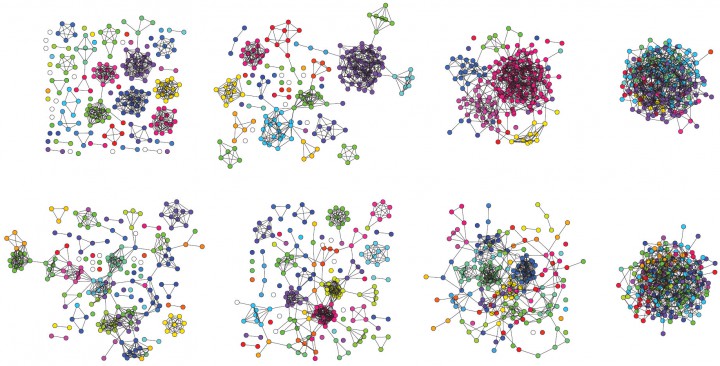
Social change networks are complex, compared with other human organizational forms; they are not so easily controlled, directed or predicted. And that is as it should be, especially when dealing with real life diversity and uncertainty. This can cause some anxiety on the part of those who would like to be able to better control for outcome and process and may not be very comfortable with emergence and self-organization. But these are the life blood of complex networks, part of their intelligence and effectiveness, even as people may struggle to wrap their heads around the full picture of what is happening. That’s the way life works.
That said, experience suggests that there is an important effort to be made and role to be played in tracking (even if imperfectly and incompletely) the unfolding story of a social change network over time. This is especially important for those in pursuit of hard evidence of effectiveness and/or some kind of guarantee that there is return on one’s investment of time and other resources. I have noted previously and continue to be struck by the fact that seeing signs of network impact can indeed be difficult, perhaps because of a kind of conditioning around what constitutes “action” and “success.” Furthermore, the pace of life can cut against an appreciation for what is moving right before one’s eyes in fairly nuanced and perhaps more measured ways. Read More
August 1, 2016

I recently re-read portions of Limits to Growth: The 30 Year Update by Donella Meadows, Jorgen Randers and Dennis Meadows. This second update to the original 1972 report from the Club of Rome affirms that current business-as-usual resource usage globally has our socioeconomic systems headed toward collapse shortly after the year 2050. The update reiterates the necessity of taking the impending crisis seriously and mobilizing quickly to adopt strategies such as:
While all of this serves as a strong wake-up (or stay awake) call, what most caught my attention was the concluding chapter, where the authors move from discussion of the technical fixes required to get us on the right track to a serious appeal to more adaptive approaches. Read More
July 7, 2016
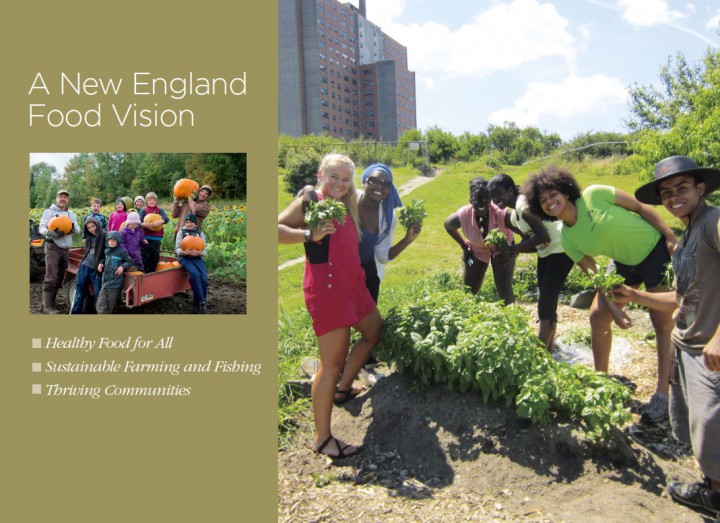
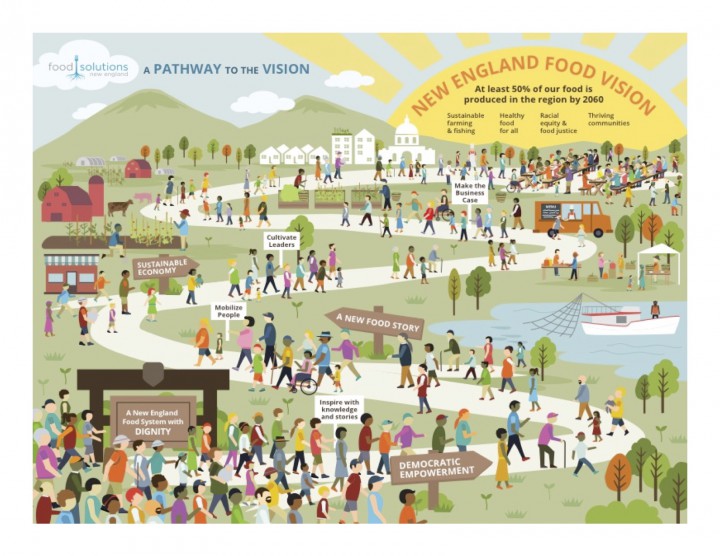
For the past 4 years, IISC has supported Food Solutions New England (FSNE) in developing a network and collaborative practices to forward its work for “an equitable, ecological regional food system that supports thriving communities.” In the past year, this work has included conducting a system mapping and analysis process to identify leverage areas for regional strategy development. One of these leverage areas is “making the business case for an equitable ecological regional food system,” which includes thinking at the levels of individual food-related businesses, economic development, and political economy. Strategy development will begin in earnest this fall, and as a precursor, IISC and FSNE facilitated a convening of businesses and community members in the Boston area to discuss how business are already aligning with the New England Food Vision and the real challenges that stand in the way. What follows is a summary of that evening’s conversation.
“You have to be patient, develop trust, and have people go with you.” These were words from Karen Masterson, co-owner of Johnny’s Luncheonette in Newton, MA as she talked about what it takes to align her business with the aspirations of the New England Food Vision. Read More
June 16, 2016
Last week over 190 delegates attended the 6th annual New England Food Summit in Bridgeport, Connecticut. This marked the completion of a cycle through all six New England states and an important moment in the evolution of Food Solutions New England, a network of networks that has been in development with IISC’s support around a bold Food Vision that sees the region becoming more connected and self-sufficient while supporting a more equitable, eco-logical and vibrant food economy.
Leading up to the Summit, the FSNE Network Team engaged in a year-long system mapping and analysis process that yielded a few key systemic health indicators associated with the Vision as well as a set of leverage areas for framing and advancing regional strategies in the direction of the Vision:
- Engaging and mobilizing people for action
- Cultivating and connecting leadership
- Making the business case for a more robust, equitable and eco-logical regional food system
- Weaving diverse knowledge and inspiration into a new food narrative
Read More
June 7, 2016

re·gen·er·a·tion
rəˌjenəˈrāSH(ə)n/
Renewal, revival, restoration; spiritual transformation; an aspect of living systems without which there would be no life; a process through which whole new organisms may be created from fractions of organisms; an adaptive and evolutionary trait that plays out at different systemic levels.
Readers of this blog know that at IISC we do not see building networks simply as a tactic, rather networks are more fundamental as structures underlying healthy living systems (ecosystems, human communities, economies, etc.). This is especially true when there is focus on the regenerative potential of social-ecological networks. That is, in paying attention to qualities of diversity, intricacy and flow in network structures, people can support systems’ ability to self-organize, adapt and evolve in ways that deliver vitality to participants and to the whole.
In my conversations with the Research Alliance for Regenerative Economics, we have been developing a list of design principles for and indicators of the human factors in healthy (regenerative) networks. Here is a working list of 12 and readers are invited to offer adjustments, additions, and comments: Read More
May 31, 2016

Last week I attended another meeting of the Research Alliance for Regenerative Economics (RARE) and we deepened our conversation about a “regenerative framework” for guiding system change. Underlying our conversations is the premise that many living systems – ecological, economic, social – are reaching or have already reached a point of crisis where they can no longer respond to changing conditions in such a way that humanity, or significant portions thereof, can thrive. Another way of saying this is that these systems are losing their capability for resilience (to “bounce back” from perturbations) and regeneration (to self-organize and evolve). Our discussions are focused specifically on the dynamics of networks, human and otherwise, and what these can tell us about why we are where we are socially and ecologically and what can be done to alter current conditions and humanity’s long-term prospects.
Breeding disconnection, diminishing diversity and stemming resources flows is “irresponsible.”
Read More
May 18, 2016
 In a recent interview with Krista Tippett, on her radio program On Being, the poet/philosopher David Whyte offers up some beautiful reflections about the story behind and theme that runs through his poem “Working Together.” Having been commissioned to write a poem to celebrate the completion of a wildly successful group project, Whyte found inspiration one day while looking out the window of his descending airplane and watching the misty air rushing around the wing, marveling at how the elements of the air and the particular shape of the wing come together to make flight possible. He then rifts on this observation to consider the elements inside of himself, inside everyone, that have yet to be combined, or even discovered, and wonders about the distances that might be bridged as a result. Read More