“For a seed to achieve its greatest expression, it must come completely undone. The shell cracks, its insides come out, and everything changes. To someone who doesn’t understand growth, it would look like complete destruction.”
In the late spring, we had an unseasonably sticky stretch of days where I live, and after school one day, my wife and I took our girls to a local swim hole to cool down. As we eased into the cold water, one of our seven-year-old twins clutched desperately to my torso, not yet willing to put more than a toe or foot in. As the sun beat down, I began to feel both the weight of her body and the ebb of my patience, and I managed to negotiate her to a standing position in water that came to her waist. She continued to clutch my arm vice-like with both of her hands.
After another few minutes it was definitely time for me to go under water. But Maddie was unwilling to release me. I continued to encourage her to let go first, to get her head and shoulders wet. Initially totally reluctant, she got to a point where she was in just up to her neck but was still anxiously squeezing my hand. We did a bit of a dance for a few minutes where she would get to the end of my finger tips with her right hand, seemingly ready to take the plunge, and then the same part-anticipatory part-terrorized expression came to her face and she was back against me.
I kept coaxing her, and then let her know that whether she let go or not, I was going under, and if she was still holding on to me, that she would be doing the same. “Okay, okay!” she yelled, stamping her feet and once again got to the tips of my fingers while breathing rapidly. And this time … she let go. She pushed off and immersed her entire body in the water. She came up shrieking but with a big smile on her face, a bit shocked but also more at home in the water, moving around quite gracefully, actually. She splashed me and laughed and then I dived in. A few minutes later she was swimming along next to me.
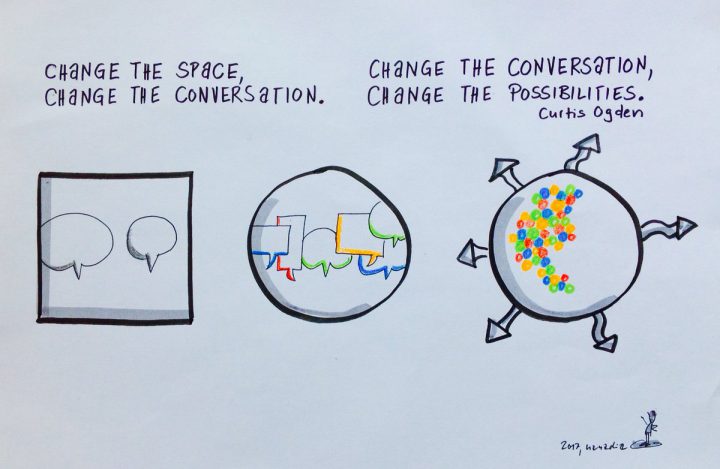
Graphic from Nadia von Holzen, used with the artist’s permission.
I love Twitter.
On the heels of the Hunts Point Resiliency Collaboration Lab (about which a blog post is forthcoming) that a team of us from IISC facilitated a couple of weeks ago, I tweeted the following –
“Change the space, change the conversation. Change the conversation, change the possibilities.”
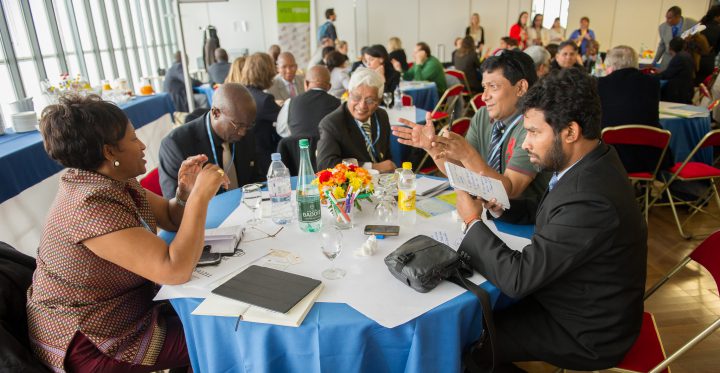
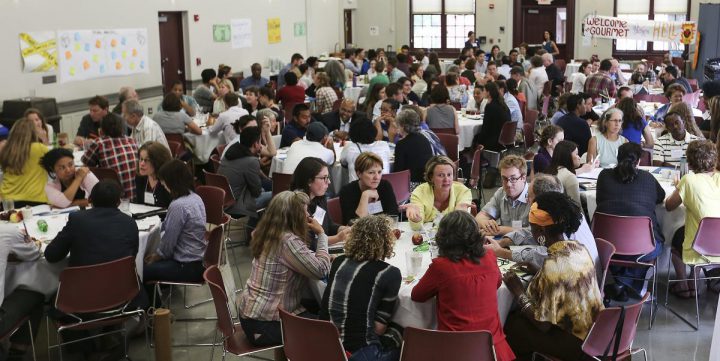
Without getting into all of the details, by shifting what might otherwise might have been a typical meeting through the use of art, music, tactile objects, intentional arrangement of seating, delicious food, robust opportunities for interaction, etc., those in attendance acknowledged that we were able to get to authentic and important conversations that many had been eager to have. And these have opened some opportunities about which people are very excited.
My almost off-handed tweet was picked up and retweeted by a few people, including Nadia von Holzen, who then put together the wonderful graphic above and put it back into the Twittersphere. I love the enhancement and contribution. Thanks, Nadia!
This is another example of what can happen when you “think or work out loud.” In this intricately connected world, you never know who is listening and what gifts they stand poised to bring to your humble offerings.
Author Note: I am saddened to learn that Mila Baker passed away recently. While I did not know her personally, she was a mentor from a distance. A few years ago, I read her book about peer-to-peer leadership and found it both enlightening and validating as I continued my journey to uncover more about the promise of seeing and doing in networked ways.
Mila N. Baker
Mila Baker was a writer, teacher, philanthropist, cross-sector leader and artist. At the time of her passing, she served on the Board of Directors for the Berrett-Koehler Foundation, was a member of the adjunct faculty at Columbia University Teachers College, as well as a Principal Research Investigator at the Institute for Collaborative Workplaces, and Visiting Professor at Kuwait University. The following is a post I wrote after reading her book published in 2014.
I just finished reading Mila Baker’s Peer-to-Peer Leadership: Why the Network is the Leader, which adds to the growing case for more widespread network thinking, foregrounding of human relationships, and shifting traditional conceptions (and myths) of leadership in business and beyond. Baker’s book echoes the spirits of Margaret Wheatley, Clay Shirky, Carol Sanford, Nilofer Merchant, Kevin Kelly, and Harold Jarche, and I appreciate how she couches her writing in the evolving leadership and organizational development literature and thinking.
Baker begins by making the case that the still dominant individualized and command-and-control leadership lexicon is insufficient for our changing, complex, and interconnected world. She goes on to promote the use of peer-to-peer (P2P) IT architecture as a model for framing thinking about leadership and how people organize themselves. In P2P arrangements, everyone becomes a generative and recipient node in a network, and has easy access to other nodes. Going forward, Baker believes that the following concepts will be critical for organizations to embrace to remain relevant:
“node community” (instead of hierarchy)
“equipotency” (instead of fixed positional authority)
“relational dynamics” (instead of purely role-based and transactional modalities)
Where this leads, as evidenced by a few examples offered by Baker, are arrangements where everyone leads and follows, reciprocity and transparency are fundamental values, and survival and thriving come through connection.
While there is much from the book that could be mentioned here, I wanted to focus on what Baker lifts up as the four developmental steps for P2P organizations to go through on their way to leveraging individual and collective potential for greater adaptability, resilience, and responsibility. These are:
Internalizing values and purpose
Creating opportunities (permeable boundaries and multiple channels) for mutual and continuous exchange of input and output (flow!)
Reconciling polarities and abstractions (harmonizing destructive internal dissonance)
According to Baker, an organization must go through the first three steps if it is to realize the fourth. What this suggests is that leadership becomes about the collective work of creating conditions for an organization (or community of nodes) to:
align at different levels around commonly held ground and direction,
build and deepen connectivity,
take self-organized action (cooperation and collaboration),
continuously monitor and course correct.
In other words, the focus is on stewardship, relationship, and interaction.
I am struck by how this seemingly validates and extends what we at IISC uphold as the need for more wide-spread and skillful Facilitiative Leadership. And I am sitting with the implications for how mindsets need to continue to shift to seeing the greater potential of the networks that support us and the peer-to-peer world. Thank you, Mila Baker, for the bequest of your gifts.
In the past couple of posts, I have referenced Nora Bateson’s book Small Arcs of Larger Circles: Framing Through Other Patterns, a collection of essays, poetry, personal stories and excerpts of talks focused on systems theory and complexity thinking. I just finished the book and have underlined and tweeted a number of provocative lines that resonated and gave me pause (in a good way). Here are a few gems from the book that I continue to contemplate in different contexts:
“The problem with problem-solving is the idea that a solution is an endpoint.”
“Systems theory is struggling inside a system that doesn’t actually accommodate it.”
“We cannot know the systems, but we can know more. We cannot perfect the systems, but we can do better.”
“What does it mean to be healthy in an unhealthy system?”
(I want to give a BIG shout out to Marsha Boyd for helping to inspire this post with her words and spirit. Thank you, Marsha, for your collegiality, mentoring, and leadership by example!)
For the past couple of weeks, I have been savoring a book by Nora Bateson entitled Small Arcs of Larger Circles: Framing Through Other Patterns. Bateson is a filmmaker, writer and activist, and also the daughter of Gregory Bateson, ground-breaking anthropologist, philosopher, systems thinker, cyberneticist and author of Steps to an Ecology of Mind. Small Arcs of Larger Circles is a mind-stretching and heart-opening amalgamation of essays, poetry, personal stories and excerpts of talks. Throughout Bateson offers a ranging exploration of systems theory and complexity thinking with an invitation to embrace a broader epistemological lens (what people think of as sources of legitimate knowledge) including embodied knowing and aesthetic experience.
In an essay entitled “The Fortune Teller,” Bateson explores the human tendency to stave off consciously or unconsciously anticipated disaster and decline by trying to keep things stable or as they have been. Think the most recent financial crisis. A recent article on the site Evonomics entitled “It Takes a Theory to Beat a Theory” reminds us of the story of former Federal Reserve chairman Alan Greenspan, a champion of unfettered capitalism. Greenspan fought against initiatives to rein in derivatives markets even as there were signs of turbulence and calls to make substantial changes. On October 23, 2008, Greenspan admitted he was wrong, making the following statement to the House Committee on Oversight and Government Reform: “Those of us who have looked to the self- interest of lending institutions to protect shareholders’ equity, myself included, are in a state of shocked disbelief.” But what has significantly changed? Or consider a very recent article about local government efforts in Ventura County, California to site a new fossil fuel plant on a beach starting in 2020 that ignore protests from organized low-income residents concerned about air quality and lack of access to the beaches, and environmental organizations pointing out the real danger stemming from underestimations of sea level rise.
While in some ways understandable (few of us probably like the idea of collapse and chaos), actions taken to preserve a certain kind of order and direction (not to mention power and privilege) can be particularly perverse when they reinforce the very patterns that are leading us down the road to collective ruin. And what more people are beginning to sense is that many social, economic and political patterns that have been established and gotten us to where we are must change for the sake of long-term survival and thriving. Read More
“Mutual learning is only possible when all participants are willing to be wrong … willing to learn, to explore new ideas, to go off the map, out of the known, and together grope in the shadowy corners of new ideas, new plans, new territories.”
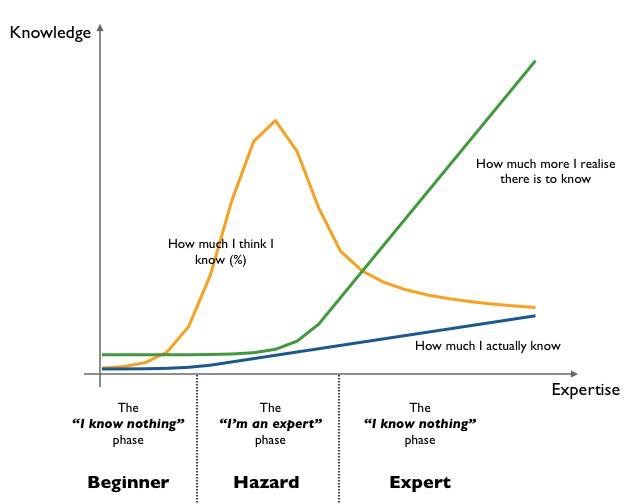
“Expertise” is one of those concepts that seems to get a good vetting every now and then, and in the current climate of VUCA (volatility, uncertainty, complexity, ambiguity) and networked approaches to change, there is certainly good reason for this. Mark Twain once quipped that what made the expert an expert was being from someplace else. There may be some truth and value to this view; when a set of “outside” eyes can lend fresh new perspective to a situation. And it is also the case that deference is often given to this version of expertise at the expense of local and other diverse sources of knowledge. Read More
“Life moves toward other life… If we trusted more in these cohering motions, we could move into an essential role … supporting the system to explore new connections, new information, new ways of being. It means focusing on opening the system in all ways.”
Margaret Wheatley and Myron Kellner-Rogers, a simpler way
“Bridging” in the work of network development speaks to the act of creating connections between socially heterogeneous groups (or putting it a bit more crassly, building bridges between “us” and “them”). The benefits of bridging include making it possible for diverse groups to share and exchange information, creating new forms of access, as well as leveraging new ideas and spurring innovation between groups representing different interests and/or backgrounds. Bridging widens social capital by increasing the “radius of trust.” Unlike “bonding,” or more in-group relationship building (think “birds of a feather flocking together”), bridging can help create more inclusive structures that can have implications for long-term resilience and more equitable development. The following is a story of a network engaging in intentional bridging work for more robust connectivity, flows and opportunity …
Food Solutions New England (FSNE) is a regional, collaborative network organized to “support the emergence of a New England food system that is a resilient driver of racial equity and food justice, sustainable farming and fishing, and thriving communities.” FSNE is convened byFor the past 5+ years, IISC has worked with the convening “backbone organization,” UNH Sustainability Institute, to launch and structure itself as a formal network, as well as to concretize and evolve its core commitment to racial equity as it has become more diverse and inclusive and worked for systemic change.
Eighteen months ago, FSNE was faced with making a decision about where to hold its annual Food Summit. The Summit was originally conceived to bring together delegates from across New England to strengthen collaboration for regional food system sustainability. The commitment was made early on by the convenor to move the Summit around the region, holding it in each of the six New England states once before going to any of them for a second time.
Delegates to the 2015 New England Food Summit gathered in Boston, MA.
In 2016, Connecticut was the last state to host the New England Food Summit. The network’s backbone organization was faced with a decision about the specific location within the state. Previous Summits had been held in prominent hubs in the other states – Portsmouth (NH), Burlington (VT), Portland (ME), Pawtucket/Providence (RI) and Boston. While places like Hartford and New Haven might have been natural considerations given their respective amenities and relative centrality in the state, the choice was made to bring the Summit to Bridgeport. This decision was spurred in no small part by the leadership of State Senator Marilyn Moore, who hails from that city and is a member of the FSNE Network Team. Senator Moore pointed out that not only would it be significant for Bridgeport to play host, given it is often overlooked in favor of its more well-known and regarded neighbors, it would also be enlightening for Summit delegates to see reality on the ground. Furthermore, this choice was viewed as an expression of FSNE’s commitment to racial equity and food justice.
I recently received an email from the NorthSky Nonprofit Network about a practice group they have called the “Network Sandbox.” They introduce a tool (for “Tuesday Tool Time”) and invite members to play with it. I was happy to be told that they recently incorporated “connection stories” as a tool. Here is their invitation to participants to stretch and innovate:
This week’s tool is inspired by the new connections catalyzed by the mini-grants. While the survey we used collected some anecdotal information about the new connections, it left all of us wanting more… richer, deeper stories about these connections. Curtis Ogden from the Interaction Institute for Social Change (IISC), calls connection stories “critical nutrients” for networks that “feed a network forward.”
Purpose: Collect and share stories of connections that have happened because of networks and share them back to the network to inspire more of the same.
From Curtis’s blog: Making these stories more explicit and accessible can have a number of different impacts:
They model the importance of reaching out across boundaries and to “the other”
They encourage network behaviors that build a foundation of trust and understanding, which …
Contribute to “network effects” such as resilience, adaptation, and innovation.
“Clearly, we made some people uncomfortable. Good. For too long, our comfort has come on the backs of many who have been uncomfortable for a long, long time.”
Food Solutions New England (FSNE) is a regional, collaborative network organized to “support the emergence of a New England food system that is a resilient driver of racial equity and food justice, sustainable farming and fishing, and thriving communities.”
For the past 5 years, IISC has supported FSNE to launch and structure itself as a formal network, as well as to concretize and evolve its core commitment to racial equity as it has become more diverse and inclusive and focused on systemic transformation. Over the winter, editorial staff from the Othering and Belonging Journal at the Haas Institute for a Fair and Inclusive Society solicited an article submission from FSNE to tell the story of why and how the network has operationalized its commitment to racial equity and food justice.
“While Othering processes marginalize people on the basis of perceived group differences, Belonging confers the privileges of membership in a community, including the care and concern of other members. As [john a.] powell has previously written, ‘Belonging means more than just being seen. Belonging entails having a meaningful voice and the opportunity to participate in the design of social and cultural structures. Belonging means having the right to contribute to, and make demands on, society and political institutions.'”
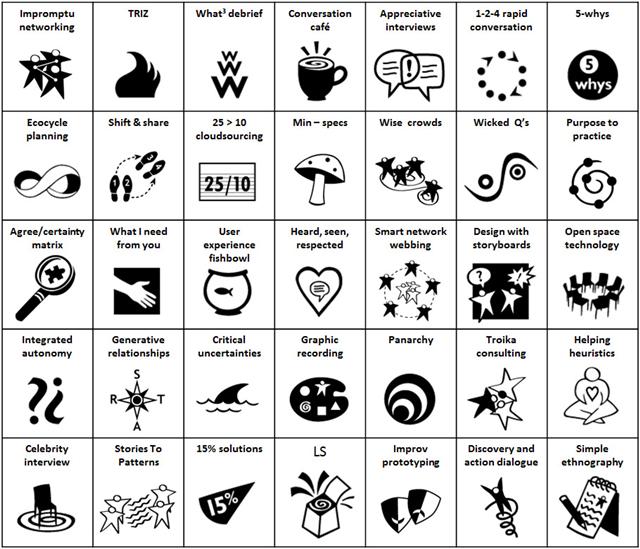
With inspiration from Nancy White – thank you! (and make sure to check out Nancy’s blog) – I have been returning to and reviewing the list of Liberating Structures created and collected by Henri Lipmanowicz and Keith McCandless for application to some strategy development work with a couple of social change networks. As described on the website:
Liberating Structures are “easy-to-learn microstructures that enhance relational coordination and trust.
Liberating Structures are meant to foster enlivening participation in groups of all sizes, making it possible to truly include and unleash everyone.”
In reviewing the various structures, I’ve pulled out and added to a list of strategic questions that could be offered in concert with different group processes (World Cafe, Open Space, pair shares, fishbowls, individual reflection, etc.) to open up possibilities … Read More
In sustainable agriculture you hear talk about no and low-till farming. These are approaches that emphasize minimal disturbance of soils to preserve their structural integrity and also to keep carbon in the ground. No-till increases organic matter, water retention and the cycling of nutrients in the ground. As a result it can reduce or eliminate soil erosion, boost fertility and make soils more resilient to various kinds of disruptions. This flies in the face of mainstream approaches that recommend ongoing and significant intervention, “fluffing” soil and digging down to considerable depths to get rid of weeds and aerate the ground. What actually happens can be quite destructive to the long-term productive and regenerative capacity of the soil.
“When we harvest, weed, rake or trim gardens and landscapes, we remove the organic material that feeds the soil.”
I like this as a metaphor for what can happen when there is failure to see and respect the networked structures that already exist in communities, organizations and other living systems.
“You’ve got to keep asserting the complexity and the originality of life, and the multiplicity of it, and the facets of it.”
– Toni Morrison
Once again, I’ve been re-reading Niels Pfleaging’s short book Organize for Complexity(and eager for the release of the English version of Complexitools) amidst the growing demand we are hearing at IISC from people who want to liberate their organizations and themselves to be able to intelligently respond to change and to come back to life! Here’s the gist – as things shift more, and more rapidly, some people’s inclination may be to try to exert greater control or dig in to what is familiar, but does not work. The more one does so, the worse things can get. As Pfleaging writes, we see a “high price for the illusion of control.” Within organizations this takes the form of various gaps – social, functional, and temporal – that make them increasingly irrelevant, ineffective and irresponsible.
Responding to complexity requires (to borrow a phrase from Eugene Eric Kim) new muscles and mindsets.
Make Change Stick Beyond the MeetingTurn ideas into agreements that stick, and keep change going after the meeting ends. Perfect for teams stuck in “great conversation, little action.”