Archives
April 12, 2016
Start a Conversation
Remixers and meme-makers, we have a tool for you. We are pleased to be partnered with Center for Story-based Strategy in the release of an illustration kit: the4thbox.com
Imagery is a huge factor in framing the terms of a conversation. This kit is meant to inspire imagery that provokes new interactions between people. We believe these interactions will help open up imagination towards the liberated, equitable society we want.
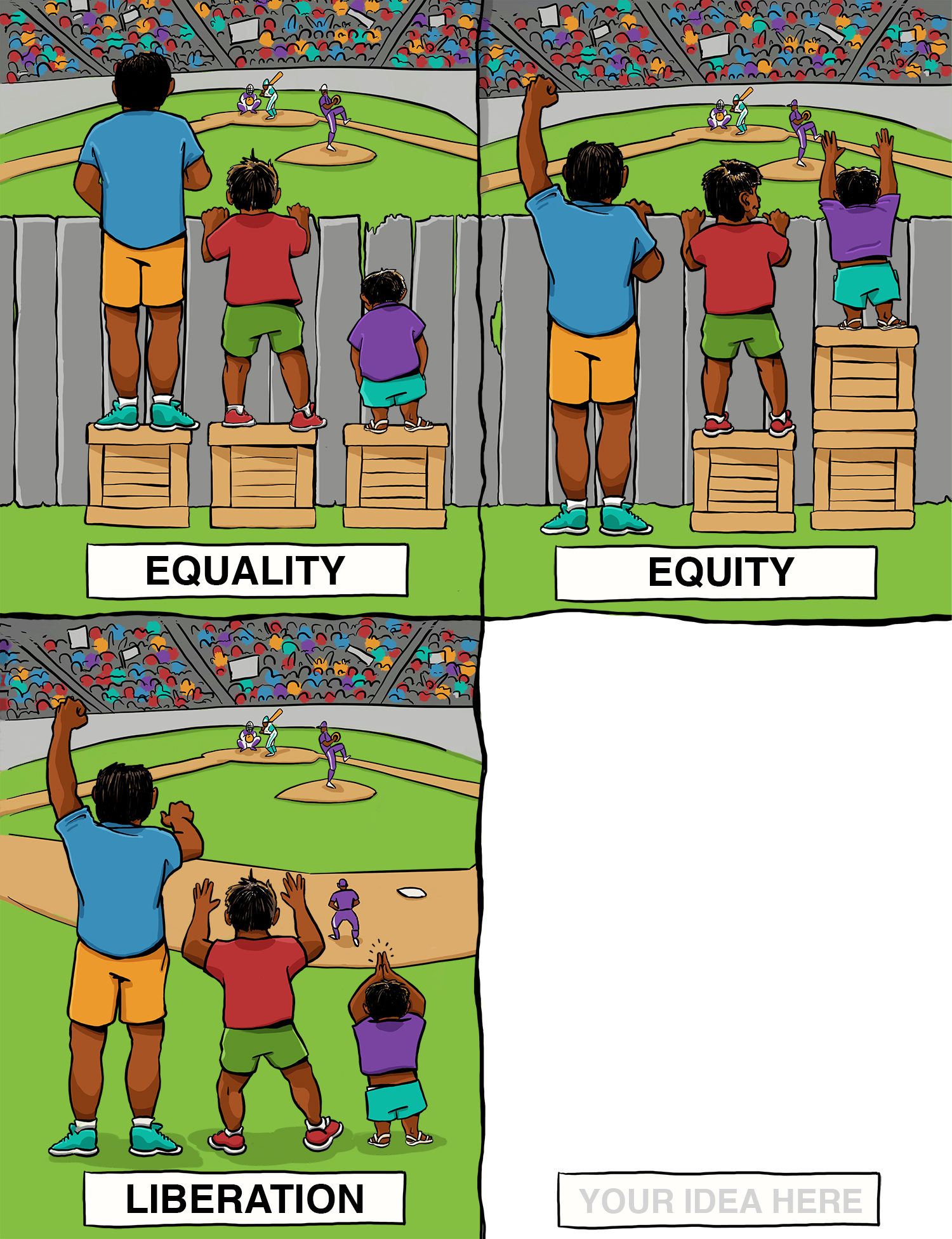
Artwork by Angus Maguire: http://beclouded.net/
Read More
April 10, 2016
On April 10, 2016, Food Solutions New England (FSNE) launches the 21-Day Racial Equity Habit Building Challenge with more than 600 participants who want to normalize the conversation about race and racism. IISC is a co-sponsor because we agree that skill building and conversations are key for collective capacity to identify and address the different manifestations of racism, whether internalized, interpersonal, institutional, or structural.
Do you want to grow, learn, and support racial equity? You can join here on the FSNE website.
You can also connect to this project on Facebook or by using the hashtag #FSNEEquityChallenge on Twitter.
IISC Senior Associate Curtis Ogden has been helping to weave FSNE’s network for over five years. He is a member of this year’s Racial Equity Habit Building team, which will include blogging about racial equity and promoting the conversation on social media. Additionally, IISC’s communications team, Lawrence Barriner II and Danielle Coates-Connor, have been supporting this year’s Racial Equity Habit Building Challenge with communications and engagement strategy.
=

April 6, 2016
“If you don’t know the kind of person I am
and I don’t know the kind of person you are
a pattern that others made may prevail in the world
and following the wrong god home we may miss our star.”
– William Stafford, From “A Ritual to Read to Each Another”

A couple of weeks ago I was a participant in a SSIR webinar on network leadership. I spent my air time talking about Food Solutions New England as an example of a social change network that has been leveraging authenticity, generosity and trust to address issues of racial inequity in the food system. In telling the story, I realized that much of it amounts to a gradual process of shedding layers and “making the invisible visible.” Specifically, it has been about making visible power and privilege, connection and disconnection, tacit knowledge and diverse ways of knowing, and complex system dynamics. As a result, many in the network sense we are now in a better position to build from what we have in common, and that it is more likely that the vision of a vibrant, equitable and eco-logical food system will be realized. Read More
March 22, 2016
What does it really take to catalyze diverse groups of people, within organizations or across sectors, to build trust, take action, and work together to achieve uncommon results? This is the question driving a panel hosted by Stanford Social Innovation Review on “The Network Leader.” The panel will take place on Tuesday, March 22 at 2PM EST.
IISC Senior Associate Curtis Ogden will reflect on the unfolding story of Food Solutions New England, a network he has been involved with for about five years.
“We are seeing people drawn to the network because of this commitment to justice and authenticity,” says Ogden. “We are seeing other organizations take up internal work around power and privilege. This network is more impactful because it sees more fully and clearly what is going on and what must be done.”
Read More
March 22, 2016
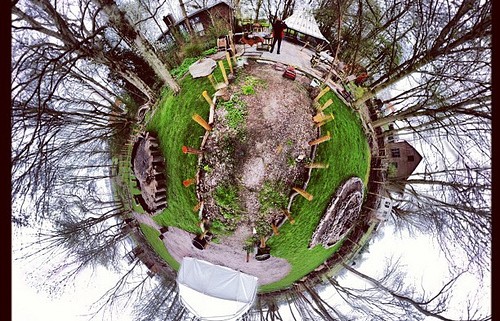
Not long ago, at a gathering of the Food Solutions New England Network Team, one member, Dorn Cox, told the story of a farmer who has become renowned for the health of his soil. Remarkably, the soil health consistently increases, due to on-farm practices created over years of close observation and experimentation. This is significant as it has boosted the quality of the farm’s produce, reduced the need for and cost of inputs (helping to increase revenues), increased the soil’s ability to handle extreme precipitation and dry conditions brought on by climate change, and mitigates carbon release.
This accomplished practitioner has subsequently been sought out by academics and has served as lead author on numerous peer reviewed academic articles about his soil health practices. Dorn then relayed that the farmer recently reported that because of academic protocols he cannot get access to the very articles he has co-authored. Dorn punctuated his story with the lesson that:
To support learning, equity and resilience, knowledge wants and needs to be free and accessible.

This is a key principle for leveraging networks to make change. In the old world, knowledge was owned and proprietary. But in this increasingly volatile world, to help people be adaptive to change, there is need for robust flows of information that are equitably generated and accessible. This was a lesson learned by professor Anil K. Gupta, before he started the Honey Bee Network in India.
By his own admission, Dr. Gupta had been engaged in the practice of extracting information from people that served his own or purely academic purposes, without ensuring that the information made it back into the hands and minds of practitioners. He realized that “on efficiency and ethical grounds,” this could not continue. Read More
March 17, 2016

There is a difference between being a network by default and being one by intention. Sometimes that can be a big difference. I encounter a fair number of networks that are networks in name and in standing, at least in that they are connected entities. But that is pretty much it. Experience shows there are any number of different ways to structure a network, and name it for that matter.
And what I find is most important is the underlying intention to maximize network effects, including: speeding the spread of resources, ensuring resources reach everyone in the network, ensuring everyone has the opportunity to share resources, growing the overall pie of resources, strengthening adaptive capacity and collective intelligence, growing abundance and equity in many different ways.
What this boils down to is a set of network ethics, which I would summarize (certainly incompletely, and to which I invite additions and alterations) in the following way: Read More
March 15, 2016
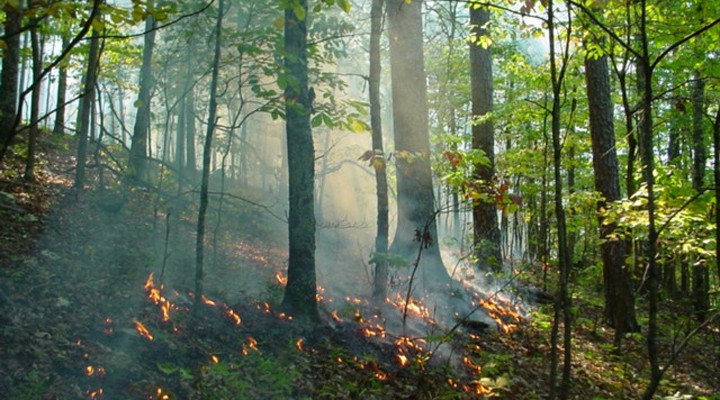
I’ve had the pleasure of supporting some important work happening through The Nature Conservancy’s Fire Adapted Communities Learning Network. According to the FAC website, a fire adapted community “acknowledges and takes responsibility for its wildfire risk, and implements appropriate actions at all levels.” Actions in these fire-threatened communities “address resident safety, homes, neighborhoods, businesses and infrastructure, forests, parks, open spaces and other community assets.” In addition, the point is made that every community is unique in terms of circumstance and capacities, so that local action may look different from place to place.
While there may be differences from community to community in the FAC network, it is also united by a common belief that there is need for more of the right kinds of fire that support the regenerative capacity of ecosystems. As I’ve learned from members of these communities, “cool fires” can be used to help build resilience into forests, feeding and encouraging new growth and diversity. This is actually a practice that goes back a long ways in indigenous communities, which used “prescribed burns” to support the long-term health of the forested landscape, to enrich soil, clear pathways for fauna and support biodiversity, which supported the health of their own communities. However, many of these practices were outlawed and the result of the newer management practices was a drop in health of the forests and a rise in vulnerability of those living in or near them. As one person in the network recently put it, they are now trying to “reclaim” fire and “give fire back to people.” Read More
March 10, 2016

Photo by Randy Read|http://www.flickr.com/photos/randyread/3583187019|
In an article in Fast Company, entitled “The Secrets of Generation Flux,” Robert Safian writes that in these uncertain times, there is no single recipe for success. Safian profiles a number of leaders who have been relatively successful at riding the waves in different ways, and notes that they are all relatively comfortable with chaos, trying a variety of approaches, and to a certain degree letting go of control. This resonates with our experiences at IISC helping people to design multi-stakeholder networks for social change. For example, even in a common field (food systems) and geography (New England) we witness different forms emerge that suit themselves to different contexts, and at the same time there are certain commonalities underlying all of them.
The three networks with which we’ve worked that I want to profile here exhibit varying degrees of formality, coordination, and structure. All are driven by a core set of individuals who are passionate about strengthening local food systems to create greater access and sustainable development in the face of growing inequality and climate destabilization. They vary from being more production/economic growth oriented to being more access/justice oriented, though all see the issues of local production and equitable access as being fundamentally linked and necessary considerations in the work.
Read More
February 25, 2016

Ikeda Center Podcast Episode 5: Ceasar McDowell – On the Evolving Nature of Community
Here is Part 3 of The Ikeda Center Podcast’s interview series with Ceasar McDowell.
In this final segment of our three part interview, Dr. Ceasar McDowell introduces some early experiences that have inspired his work in community development. He also discusses the evolution of how we organize ourselves as human beings in community. He comments that while in the past we were born into specific communities or chose communities that were local and familiar, now “all of that has changed.” He adds that “we often find ourselves in places where we can’t then build an integrated community, so we look at how do we then take care of that other part of ourselves, which we can say is spiritual, relational, whatever it may be…For some people, they start to do it around work, or they do it around their habits, or they do it around church…All of that still keeps us separate, because now you’re holding this multiplicity of the places where you’re finding your identity and yourself and your connection, and it ends up being fragmented in some ways.” Dr. McDowell continues by exploring this new space that we find ourselves in, one of transition and change.
February 24, 2016
“Network entrepreneurs are keenly aware that they are few among many working across the larger system, and in this way they embody a special type of … leader[ship].”
– Jane Wei-Skillern, David Ehrlichman, & David Sawyer

Image from Taro Taylor – https://www.flickr.com/photos/tjt195/30916171
The concept of leadership has been undergoing an evolution. In this “network age” there appears to be both an expanding appreciation that leadership has always been about more than the singular heroic individual, and that going forward, leadership really must be much more of a shared endeavor.
In our collaborative consulting work at IISC, leadership (or what we often call Facilitative Leadership) is about “holding the whole,” thinking expansively about the state of a given complex system (community, economy, ecosystem, etc.) and paying attention to what will be required to ensure resiliency and/or change for more equitable and sustainable benefit. In these situations, the traditional top-down images of leadership fall far short.
Network leadership is at best a dynamic, diverse, more decentralized and multi-dimensional phenomenon. Many of those with whom we partner at IISC understand this implicitly, and we have found it important to help them be more explicit about this by clearly delineating the roles that leadership can embody in a collaborative/networked change endeavor. Read More
February 22, 2016
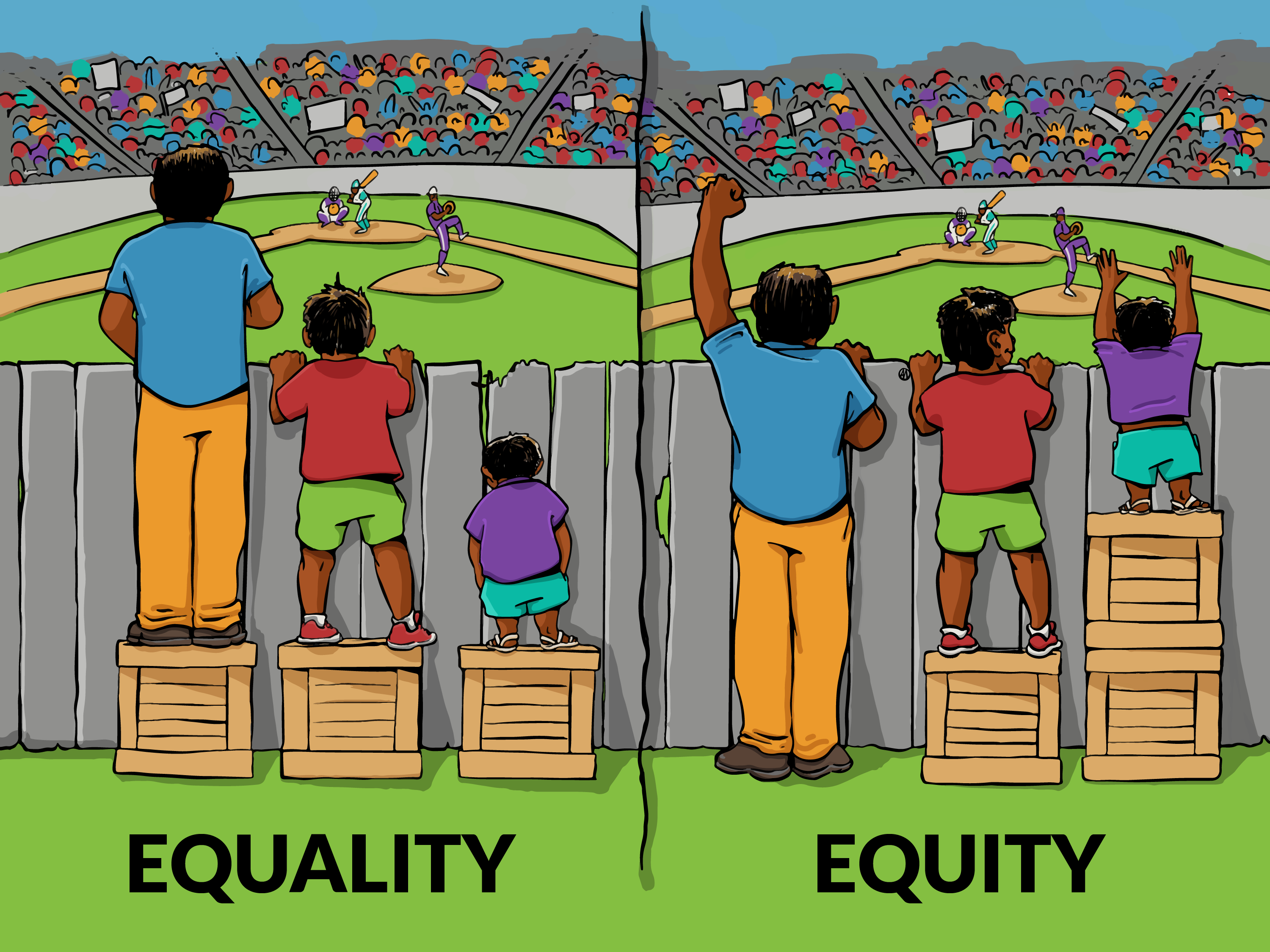
ATTENTION FRIENDS! Can you use the equality vs equity illustration in your book/video/presentation/etc?
Yes! You do not need written permission to reproduce the work. Read below for information on the license under which the illustrations are released.
In late 2015, Danielle and I collaborated with our friend and colleague, Angus Maguire, to produce the above adaptation of an old favorite (original blog post here). In the wake of the virality of the graphic on our social media channels, the three of us wanted to share a little of what we’ve been thinking since we released it into the wilds of the Internet a little over a month ago. – Lawrence
Lawrence: In all honesty, frustration was a primary driver of my interest in this project. I have seen this graphic in 15+ presentations and yet every time it seemed to be more pixelated than the last. I wanted our practitioners (and the world) to have a higher quality tool.
Angus: Collaborating with IISC on this little project was great. It wasn’t a complex project brief: essentially we set out to improve on the presentation of an internet classic. For me, it started as a great chance to experiment with a new illustration workflow – this is the first time I’ve done a cartoon like this digitally, start-to-finish. Software and hardware tools are now at a point where that’s possible for me, and I’m just getting started on the possibilities for experimentation and iteration.
Danielle: This image is popular because it creates an opening for more conversation. What works about it is that there are multiple points of entry. For the person who has never thought about equality or equity, they can see there is a difference, and begin to shift their thinking. Read More
February 16, 2016
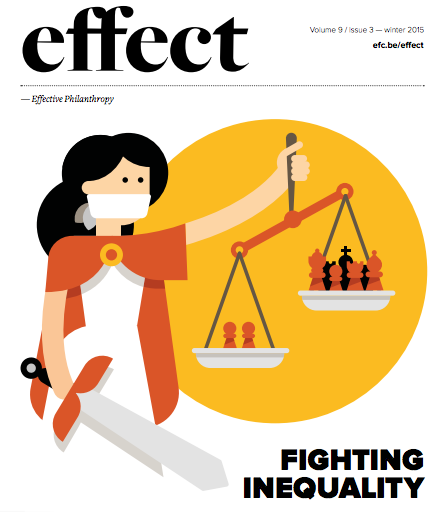
This article was published in the winter 2015 edition of effect – Effective Philanthropy by the European Foundation Centre.
As we consider the changing socio-economic context in Europe and further afield, as the complexity of multi-faceted issues becomes ever more apparent and foundations try to figure out what to do to make change happen, one thing is certain. Conversations need to be started, understanding needs to be reached, agreements need to be built. This is where facilitation comes in. Facilitation creates the kind of safe spaces for people to discuss the most difficult and controversial issues. Our local work in Northern Ireland is a reminder of the need to engage in building peace and nurturing shared societies at local levels, group by group, community by community. At the core of this work is creating the conditions whereby people can begin to hear each other and be, to quote J P Lederach, ‘paradoxically curious’. Curious about each other, about how we see the world and about what drives us to hold – and defend – the positions we adopt.
 Read More