Archives
August 12, 2014
In my early days many of my friends called me too serious because of comments I would make about the racism and sexism in a Disney film or the rampant misogyny and conspicuous consumption in popular music. My kids still think so. But having come to see systems of oppression, it’s hard for me to “un-see” them when I turn to entertainment. Spoken word poet Madiha Bhatti puts out a powerful message. Much better to listen to the whole thing, but check out the refrain to whet your appetite!
Read More
August 11, 2014

Photo by Synopia
A number of readings I’ve come across lately reference the important consideration of organizational structure and how it encourages or discourages collaboration. In a post from last week, I highlighted the book Reinventing Organizations by Frederic Laloux, which focuses on “evolutionary (Teal) organizations” that embrace an ethic of self-organization to facilitate more purpose-driven, holistic and responsible engagement on the part of organizational members. In order to encourage self-organization and intrinsic motivation, these entities adopt less formally hierarchical and fixed-role structures in favor of fluidity and networked leadership. According to Laloux, this brings more timeliness and relevance to the inner workings and responsiveness of these organizations. Read More
August 1, 2014
University of California researcher, Paul Piff, and his colleagues have been studying privilege.
In one study, they set up a rigged game of monopoly. The players who had been randomly assigned to get more money and other advantages began to demonstrate some disturbing differences from the other players. They began to move their pieces around the board more loudly, displayed “signs of dominance and nonverbal displays of power and celebration,” ate more pretzels, and came “ruder, less and less sensitive to the plight of the poor players, and more likely to showcase how well they were doing.” After the game, the rich players attributed their success to their skills and strategy, not the systematic advantages they had over the other player, even though they knew the advantages were real and were randomly assigned.
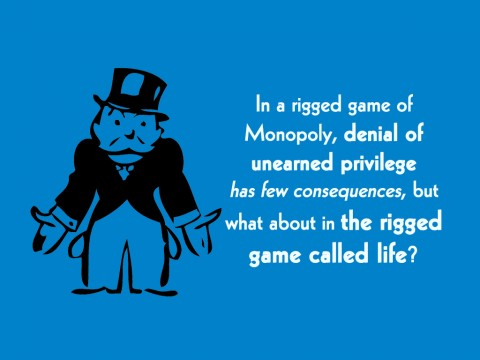
In a rigged game of Monopoly, denial of unearned privilege has few consequences, but what about in the rigged game called life?
Read More
July 30, 2014
“Re-examine all that you have been told . . . dismiss that which insults your soul.”
– Walt Whitman

Developmental theory is the source of some good healthy discussion within the Interaction Institute for Social Change. On the one hand, some point out that the notion of “stages of development” has been used to classify and oppress people, especially when theories come from privileged and powerful purveyors, are overly deterministic and linear, and do not account for cultural location and variation. On the other hand, some point to the “empowering” notion of evolution and development that can help liberate people from fixed and mechanistic views of the world and humanity. I had this all very much in mind as I read Reinventing Organizations by Frederic Laloux. Laloux brings developmental and so-called “integral theory,” including the work of Ken Wilber, into the palpable realm of organizational practice and through his research, posits an evolutionary trajectory from aggressive (Red) to bureaucratic (Amber) to achievement-oriented (Orange) to culture/empowerment-oriented (Green) to self-actualizing/authentic (Teal) organizations.
Read More
July 29, 2014
Last year, in the aftermath of the Boston Marathon Bombing, I was facilitating a group of students and faculty at MIT reflecting on the impact and meaning of the bombing. The participants ranged from people who had been at the marathon site to those who witnessed it on TV. All experienced the lock down that occurred in Cambridge and felt the impact of the death of eight-year-old Martin William Richard, and many of them shared something deeper, the trauma of being an unwilling victim and sometimes perpetrator of planned, unexpected, unwarranted or thoughtless violence. From a former Israeli solider, who asked “do I kill these 4 men in my line of sight because of the threat they may pose?” to a woman who survived a brutal rape, the bombing made visible the deep trauma so many people live with from day to day.
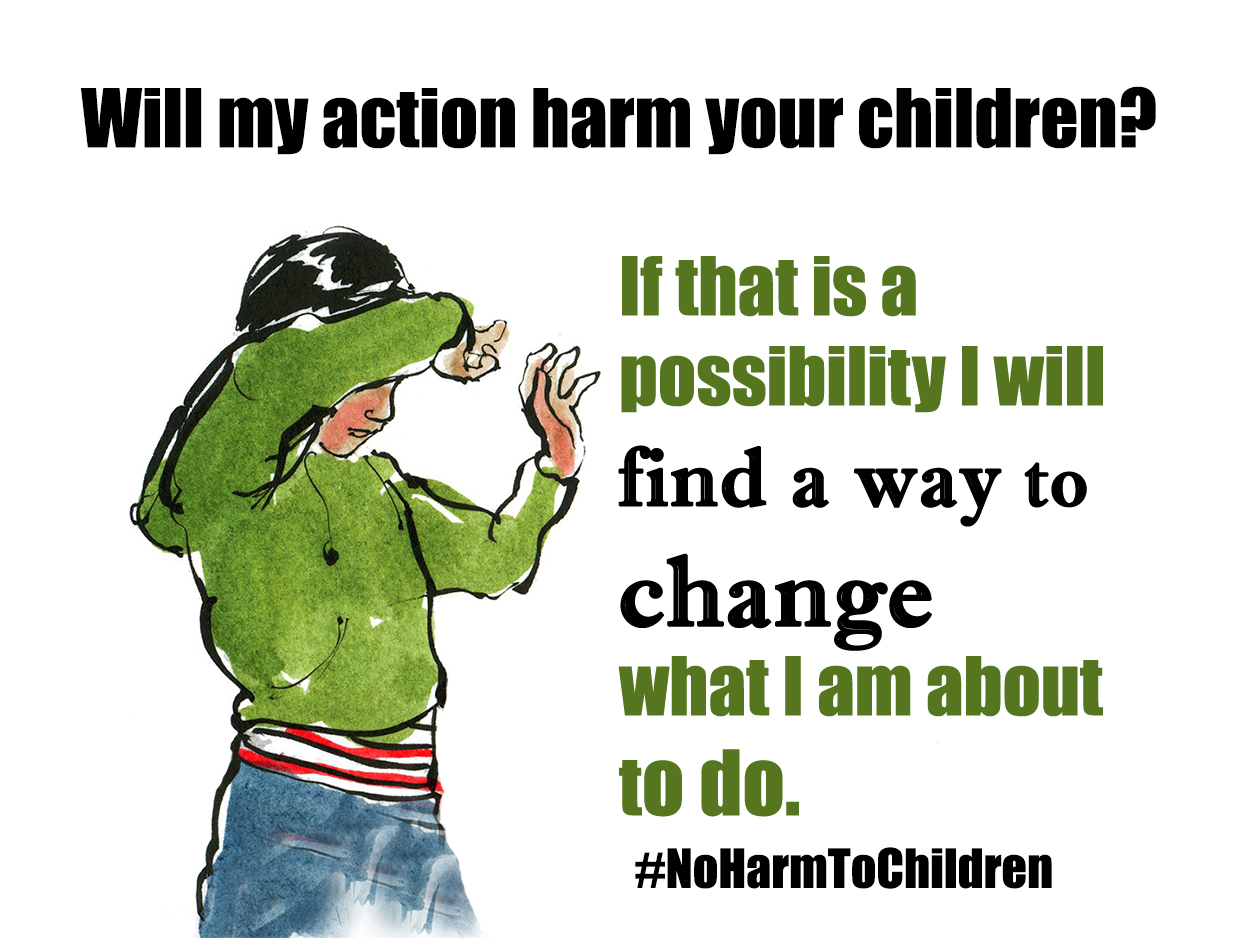
But something remarkable happened that evening. As we sat in circle listening to each story a young veteran spoke up about his experience with violence in the streets of LA and the deserts of Iraq. He spoke with a deep passion that disrupted the quiet reflection of the group. “We can’t just sit around and talk about this. If things are going to change we have to shift something fundamental in ourselves in order to stop the massive violence in our world.” He continued, “For me it is the following commitment I have made to myself and that I tell each person I am engaged with I Will Not Harm Your Children.” Then he stopped.

Read More
July 29, 2014
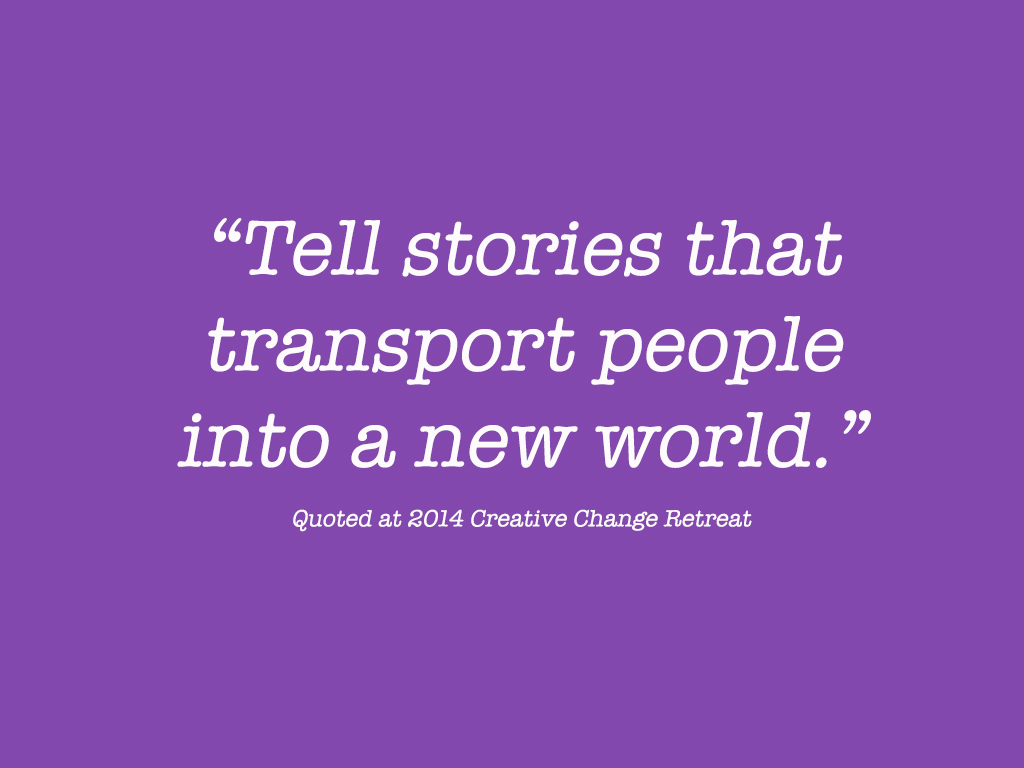
I just facilitated the 6th Creative Change Retreat at the Sundance Institute in Utah. The amazing experience leaves me grateful to my friends at the Opportunity Agenda for trusting me with the design and facilitation of such a significant convening.
Today more than ever I am convinced that the change we want to see in the world is a change that demands the evolution of consciousness and culture. As the artist and the activist come together – as they become one – we will be able to join into a different kind of intervention.
 Read More
July 24, 2014

The following article appeared in an email newsletter from the Vermont Farm to Plate Network (VTF2P) one of IISC’s clients in network and collaborative capacity building. The author is Beth Cullen, co-chair of the Farm to Plate Consumer Education & Marketing Working Group and owner of Root Consulting, who attended the New England Food Summit that Cynthia Parker and I helped to design and facilitate. It is great to see the power of that two day convening and conversation continuing to ripple out into the region. VTF2P plans on integrating the conversation about equity into their upcoming October convening . . .
New England Food Summit targets social justice to drive change in the food system
The 4th Annual New England Food Summit, organized by Food Solutions New England, convened over 110 delegates in June to discuss racial equity and food justice in the region. Summit organizers unveiled the New England Food Vision, a regional aspiration to locally produce at least of 50 percent of the fresh, fair, just, and accessible food consumed by New Englanders by 2060.
Read More
July 23, 2014
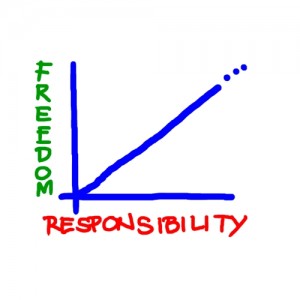 There is growing awareness that current organizational structures can breed irresponsibility. That is, arrangements are created where people are less able to be responsive in helpful ways. This happens, for example, when accountability is bottlenecked in hierarchies and decision-making is distanced from where the action is most timely and relevant. Read More
July 22, 2014
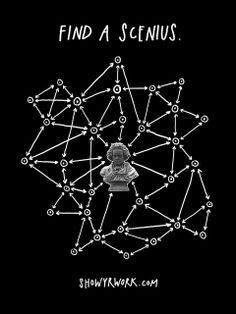
I recently read an opinion piece that seems to validate the work we have been doing for the last number of years. In “The end of genius” Joshua Wolf Shenk successfully argues that “the lone genius is a myth that has outlived its usefulness. Fortunately, a more truthful model is emerging: the creative network.”
THIS! My friends, is what we have been working on.
Read More
July 18, 2014

We partnered with a foundation as they built a network of leaders who shared a deep passion for their city. In the beginning, many of the leaders wanted to do something together quickly. We encouraged them to pause, build deeper relationships, and see what emerged. Read More
July 17, 2014

The following article appeared last month in the Northeast Sustainable Agriculture Working Group (NESAWG) newsletter. NESAWG is a 12-state network of over 500 participating organizations. Together, they unite farm and food system practitioners and allies to build a sustainable, just and economically vibrant region. From one network to another, the article profiles Food Solutions New England (FSNE), a network building effort now going into its third year of intentional development. It captures where FSNE was just prior to the New England Food Summit, which advanced connectivity and commitment to both regional action/identity and work for racial equity. NOTE: I have added links, bolded text, and pictures to the body of the article.
Read More
July 16, 2014
I have never observed the Fast of the 17th of Tamuz. Yesterday, I did. I fasted in solidarity with others who were making a stand with our bodies for peace and in mourning lives lost in Palestine/Israel. At a time of horrific violence and avowed enmity between so many Muslims and Jews, it was a comfort to be fasting together, during Ramadan.

Read More