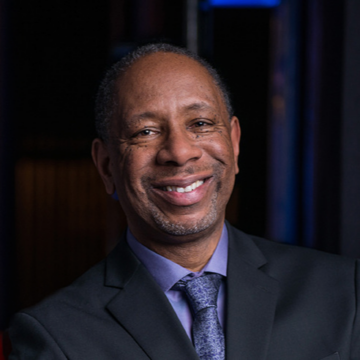
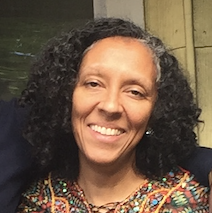
In this final segment of our three part interview, Dr. Ceasar McDowell introduces some early experiences that have inspired his work in community development. He also discusses the evolution of how we organize ourselves as human beings in community. He comments that while in the past we were born into specific communities or chose communities that were local and familiar, now “all of that has changed.” He adds that “we often find ourselves in places where we can’t then build an integrated community, so we look at how do we then take care of that other part of ourselves, which we can say is spiritual, relational, whatever it may be…For some people, they start to do it around work, or they do it around their habits, or they do it around church…All of that still keeps us separate, because now you’re holding this multiplicity of the places where you’re finding your identity and yourself and your connection, and it ends up being fragmented in some ways.” Dr. McDowell continues by exploring this new space that we find ourselves in, one of transition and change.
“Network entrepreneurs are keenly aware that they are few among many working across the larger system, and in this way they embody a special type of … leader[ship].”
Image from Taro Taylor – https://www.flickr.com/photos/tjt195/30916171
The concept of leadership has been undergoing an evolution. In this “network age” there appears to be both an expanding appreciation that leadership has always been about more than the singular heroic individual, and that going forward, leadership really must be much more of a shared endeavor.
In our collaborative consulting work at IISC, leadership (or what we often call Facilitative Leadership) is about “holding the whole,” thinking expansively about the state of a given complex system (community, economy, ecosystem, etc.) and paying attention to what will be required to ensure resiliency and/or change for more equitable and sustainable benefit. In these situations, the traditional top-down images of leadership fall far short.
Network leadership is at best a dynamic, diverse, more decentralized and multi-dimensional phenomenon. Many of those with whom we partner at IISC understand this implicitly, and we have found it important to help them be more explicit about this by clearly delineating the roles that leadership can embody in a collaborative/networked change endeavor. Read More
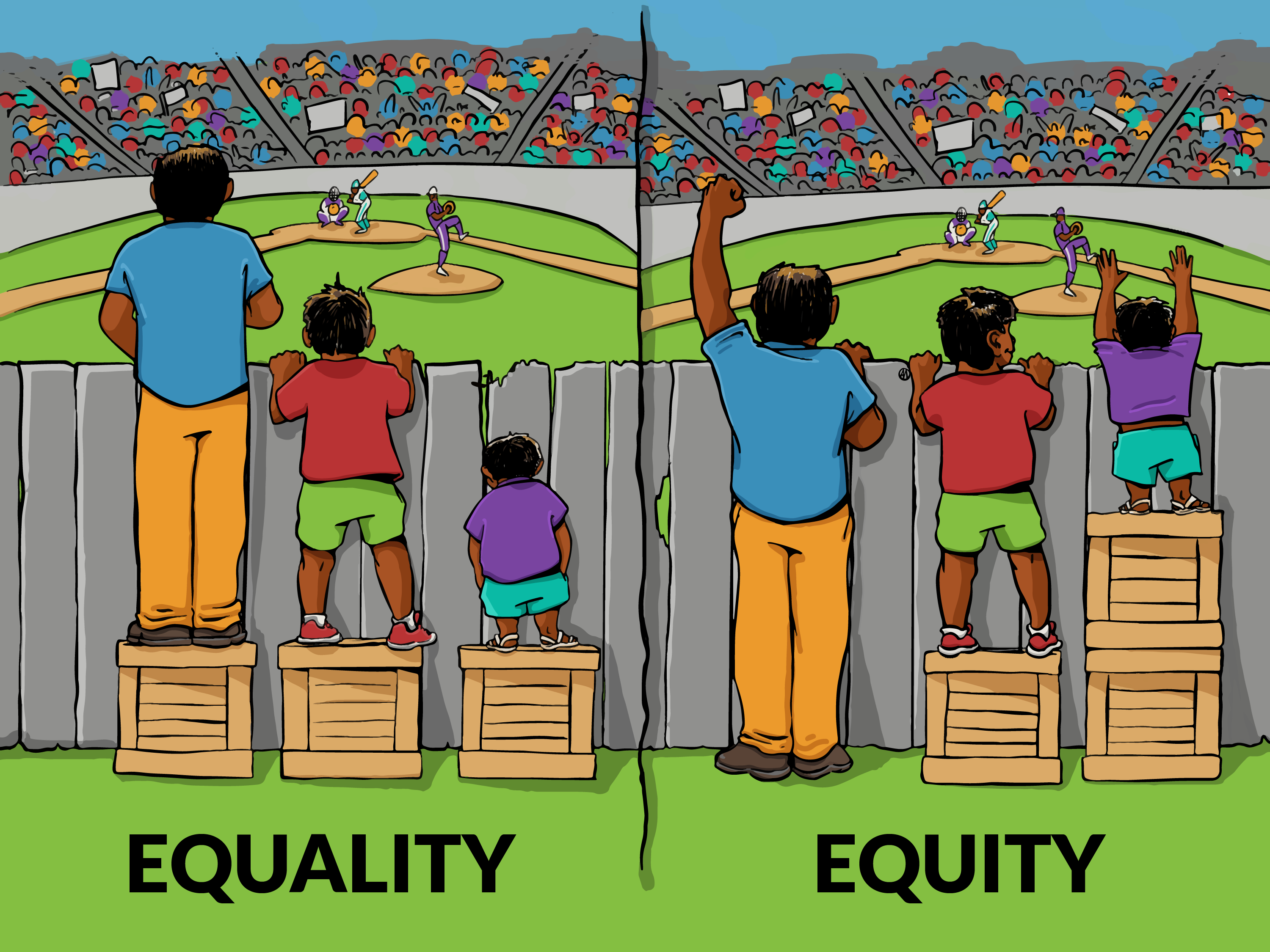
ATTENTION FRIENDS! Can you use the equality vs equity illustration in your book/video/presentation/etc?
Yes! You do not need written permission to reproduce the work. Read below for information on the license under which the illustrations are released.
In late 2015, Danielle and I collaborated with our friend and colleague, Angus Maguire, to produce the above adaptation of an old favorite (original blog post here). In the wake of the virality of the graphic on our social media channels, the three of us wanted to share a little of what we’ve been thinking since we released it into the wilds of the Internet a little over a month ago. – Lawrence
Lawrence: In all honesty, frustration was a primary driver of my interest in this project. I have seen this graphic in 15+ presentations and yet every time it seemed to be more pixelated than the last. I wanted our practitioners (and the world) to have a higher quality tool.
Angus: Collaborating with IISC on this little project was great. It wasn’t a complex project brief: essentially we set out to improve on the presentation of an internet classic. For me, it started as a great chance to experiment with a new illustration workflow – this is the first time I’ve done a cartoon like this digitally, start-to-finish. Software and hardware tools are now at a point where that’s possible for me, and I’m just getting started on the possibilities for experimentation and iteration.
Danielle: This image is popular because it creates an opening for more conversation. What works about it is that there are multiple points of entry. For the person who has never thought about equality or equity, they can see there is a difference, and begin to shift their thinking. Read More
As we consider the changing socio-economic context in Europe and further afield, as the complexity of multi-faceted issues becomes ever more apparent and foundations try to figure out what to do to make change happen, one thing is certain. Conversations need to be started, understanding needs to be reached, agreements need to be built. This is where facilitation comes in. Facilitation creates the kind of safe spaces for people to discuss the most difficult and controversial issues. Our local work in Northern Ireland is a reminder of the need to engage in building peace and nurturing shared societies at local levels, group by group, community by community. At the core of this work is creating the conditions whereby people can begin to hear each other and be, to quote J P Lederach, ‘paradoxically curious’. Curious about each other, about how we see the world and about what drives us to hold – and defend – the positions we adopt.
IISC Senior Associate Cynthia Silva Parker presented “Race Talk: Moving Beyond the Surface” at the Q Commons. On February 11 at 7PM the conversation continues at Grace Chapel in Watertown, MA. She and Colin Stokes, whose TedX talk on White Privilege will also screened, are leading a “deeper dialogue on racism, systemic injustice, bridge-building and reconciliation.”
Boston is abuzz with the Company One (C1) and Arts Emerson presentation of An Octoroon, the “hottest play from 1859” which has returned to the stage, coming off a sold-out NYC run. Since the play first came out over 150 years ago slavery in the US was abolished, yet audiences today can clearly see how many racial injustice and equity issues remain the same.
C1 is committed to making the connection between theater and civic life. Last week they invited educators to a panel discussion: Theater and Education on the Front Lines of Boston Communities. The event featured five brilliant panelists for a discussion on race and representation, including Ceasar McDowell (President, IIISC), Summer L. Williams (Director, An Octoroon), Tracy Strain (Director, The Lorraine Hansberry Documentary Project), Kendra Taira Field (Professor, History and Africana Studies at Tufts University), James Milord (Theater Teaching Artist, Company One).
“Long term prosperity is primarily a function of healthy human webs.”
– Sally J. Goerner
Over the past several years of supporting self-declared “networks” for social change, we at IISC have been constantly evolving our understanding of what is new and different when we call something a network, versus say a coalition, collaborative or alliance. On the surface, much can look the same, and one might also say that coalitions, collaboratives and alliances are simply different forms of networks. Yes, and . . . we believe that what can make a big difference is when participants in a network (or an organization, for that matter) embrace new ways of seeing, thinking, and doing. So let us propose here that network approaches at their best call on people to lead with some of the following:
How can democracy result in an equitable, sustainable society?
New animation produced with Nimblebot explores turning patterns of exclusion into Big Democracy.
People’s participation in our democracy is hindered by unequal access and structures that are hard to navigate. In Big Democracy the public sets the agenda, society designs solutions for those most in need, and institutions are directly accountable to the public.
IISC presents a new animation which explores Big Democracy from multiple vantage points. There is a mayor, firm in her belief that people know exactly what they need to solve the problems of today. There are newly engaged residents, reluctant to trust that their participation will result in changes. And there are people, moving through the city, experiencing the triumphs and failures of the system.
“Grateful living brings in place of greed: sharing; in place of oppression: respect; in place of violence: peace. Who does not long for a world of sharing, mutual respect, and peace?”
The following is a slightly edited re-post from a couple of years ago. The impetus for both the re-posting and editing was a recent conversation on On Being with Brother David Steindl-Rast, Benedictine monk, writer/speaker on the topic of gratitude, and known for his participation in interfaith dialogue and his work on the interaction between spirituality and science.
In a recent interview with Brother David Steindl-Rast, On Being host Krista Tippett introduces the topic of gratitude, by saying that at times it can come across as fairly cerebral or precious without much gravitas. Case in point, writer Barbara Ehrenreich, approaches gratitude with considerable skepticism, seeing it as another “feel good” way to be self-satisfied and unconcerned with the world and people who are suffering and oppressed. Yet Brother David, who has lived through war, the end of an empire, and the fascist takeover of his country (Austria), teaches what he calls “gratefulness” as a deep and important spiritual practice.
Gratefulness in Brother David’s view and experience is not at all superficial, or a practice purely for the privileged. It allows for and leans into the very real anxieties of life, and when invoked in “full-bodied ways” can help prevent those anxieties from becoming disabling fear. Brother David acknowledges the tragedies and injustices of the world, while saying: Read More
In the second of this three part interview, Dr. Ceasar McDowell details his vision for democracy as an ongoing process of interaction and engagement. He shares that the work of democracy is “how people come to know and understand both each other, the issues that are important to them, and how they want to make meaning together.” He adds that his current work is focused on the idea of Big democracy which he describes as, “an aspiration. And at the core of this aspiration is the belief that the public is fully capable of working together to create sustainable, just, and equitable communities. But to do so the public must have ongoing, peaceful ways to interact around traditions that bind them, and interests that separate them, so they can realize a future that is an equitable improvement on the past.”
Since the origins of this country we have been embedded in a belief about the hierarchy of human value, a belief that some lives are more important than others. Two examples of this clearly expressed are racism and sexism. As long as this belief system persists, it will undermine democracy. One way it shows up is as microaggressions, those little bitty acts that say to someone, “you don’t belong, you can’t be trusted, you’re less-than”. It’s a message a black man gets crossing the street in front of a car when people lock their doors. Or the catcalls a woman gets walking down the street. Brain scientists are teaching us that these types of aggressions are deeply wired in our brain and to change them we actually have to change the experiences that people have.
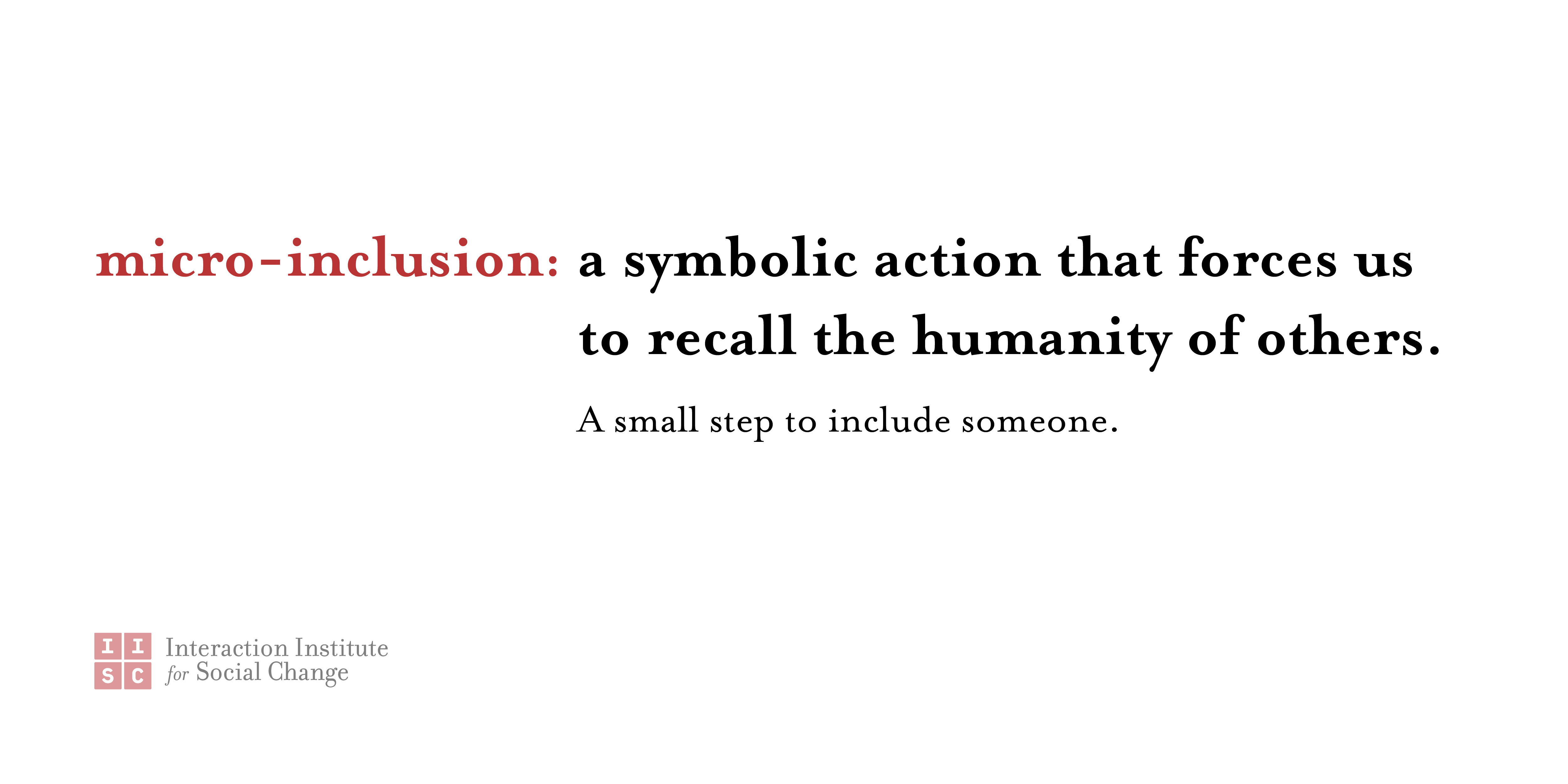
An antidote to microaggressions are micro-inclusions. These are little symbolic actions that force us to recall our humanity. They’re acts of humanity that signal to those at the margins they are included.
How focusing on diversity, flow and structure in human networks can be a foundation for great change.
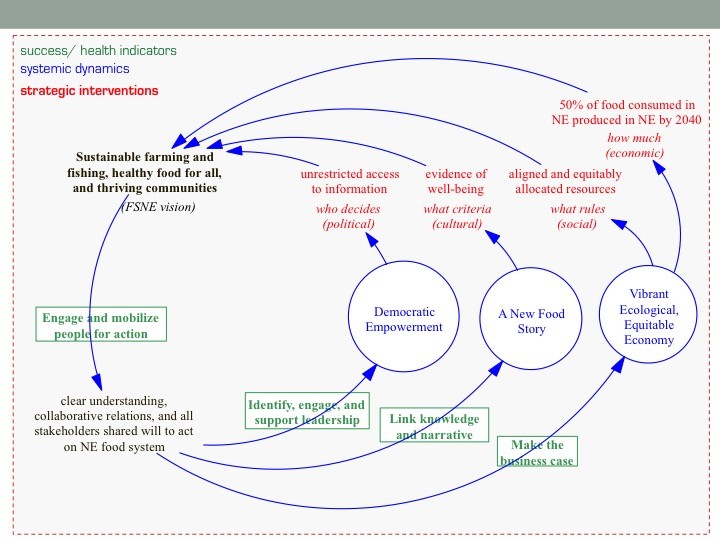
Over the past couple of years, we at IISC have partnered with a few different social change initiatives that have engaged in system mapping to both align diverse stakeholders and surface leverage points for collective intervention. In looking back at these different mapping processes, it is striking the similarities of the areas of focus that have been identified, despite the variety of issues being addressed (food system fragility to educational disparities to public and environmental health). Across these efforts, common areas of leverage have surfaced around:
Changing the dominant narrative.
Each effort has recognized that there is a dominant story that supports the existing system’s legitimacy. This has profound impact on what different players see as being possible. It is noteworthy that the narrative shifts each has called for are in the direction of more expansive and equitable definitions of health and development.
Changing information flows/making information more transparent and accessible.
Communcation is the lifeblood of social systems, and each of these initiatives has recognized that power gets bound up in who has timely access to and also who shapes critical information, as well as what kind of information is valued.
Creating more equitable access to and determination of resources.
From financial to social to living and material capital, each of these initiatives has also recognized that inequitable distribution of resources has contributed to social disparities and overall systemic vulnerability. Another significant factor is who gets to say what is deemed to be valuable in the first place.
This leverage area flows as a matter of course from the two above. Systemic sickness and brittleness is evident in the fact that fewer people and power brokers are shaping systemic opportunities and outcomes, and often for their own benefit. Each of these efforts see more distributed decision-making and implementation as key to justice, sustainability and true prosperity.
Working with government to change incentives and supports in favor of healthier and more equitable opportunities and outcomes.
Each initiative recognizes the important role of government in changing policies and procedures in the direction of more just and sustainable means and ends.
It’s interesting and perhaps not accidental that these leverage areas align with what the late system thinker Donella Meadows identified as some of the deeper leverage points to affect change in any complex human system –
the mindset (story) out of which the system arises;
the power to add, change, evolve, or self-organize system structure;
the rules of the system; and
the structure of information flows.
To get at any of these leverage areas clearly requires considerable clout – a network of diverse actors. And from our perspective at IISC, that network is not simply a means to an end.
Viewed in a certain way, and in consideration of the leverage areas mentioned above, intentionally developing human networks can be an important end in and of itself.
Part of the new story emerging across these various change efforts referenced above is a focus on what Sally J. Goerner calls “dynamic evolution,” which transcends the picture of a world built on competition, supremacy and selfishness. Through their multi-disciplinary study of energy network sciences (ENS), Goerner and her research colleagues point to an understanding of societal health as predicated upon more intricate human and organizational networks. Importantly, to deliver multiple goods in sustainable fashion, these networks must be characterized by:
social diversity
distributed empowerment and intelligence
widely circulating information and effective communication
synergistic exchanges of resources (or “capital”) of many kind
In other words, given unhealthy biases toward “efficiency,” streamlining, monoculture, concentration of resources and systemic brittleness, Goerner and colleagues see more robust network connections, flow and variety as being fundamental to social change and long-term resilience.
Taking this one step further, the Capital Institute (to whom Sally Goerner is Scientific Advisor) has created a list of 10 indicators for systemic healthwith direct ties to human network development (see their paper “Regenerative Development: The Art and Science of Creating Durably Vibrant Human Networks“). These give more specific guidance as to what systemic change initiatives might pay attention to as signs that they are on the right track.
Measures of Flow
Robust cross-scale circulation: Assesses how rapidly and well a variety of resources reach all parts of the social body.
Regenerative return flows: Assesses how much money and other resources the system recycles into building and maintaining its internal capacities, including human capital.
Reliable inputs: Assesses how much risk and uncertainty there is for critical resources upon which the system depends.
Healthy outflows: Assesses how much damage the system’s outflows do externally.
Measures of Human Factors
Degree of mutualism: Assesses the ratio of win-win vs win-lose relationships within the network.
Constructive vs exploitative: Assesses the level of value adding and capacity building activities vs. draining or “gradient degrading” (extractive) ones.
Adaptability (place in the adaptive cycle – see image above): Assesses the system’s readiness for change and its place in a classical S-curve cycle of development (related to degrees of diversity and formalized organization).
Measures of Structure
Number and diversity of roles: Assesses both the diversity and number of players perspectives in different activities critical to system functioning.
Distribution of resources: Assesses where resources, including money, go.
Balance of efficiency & resilience: Assesses the balance between levels of diversity and flexibility (resilience) and streamlining of throughput (efficiency).
I am curious to hear reactions and experiences with applying this kind of a network lens to system change efforts, and as a new member of the Research Alliance for Regenerative Economics, I look forward to sharing additional insights from energy network sciences.